
Office Desk Assembly Planning for Large Teams and Open Workspaces
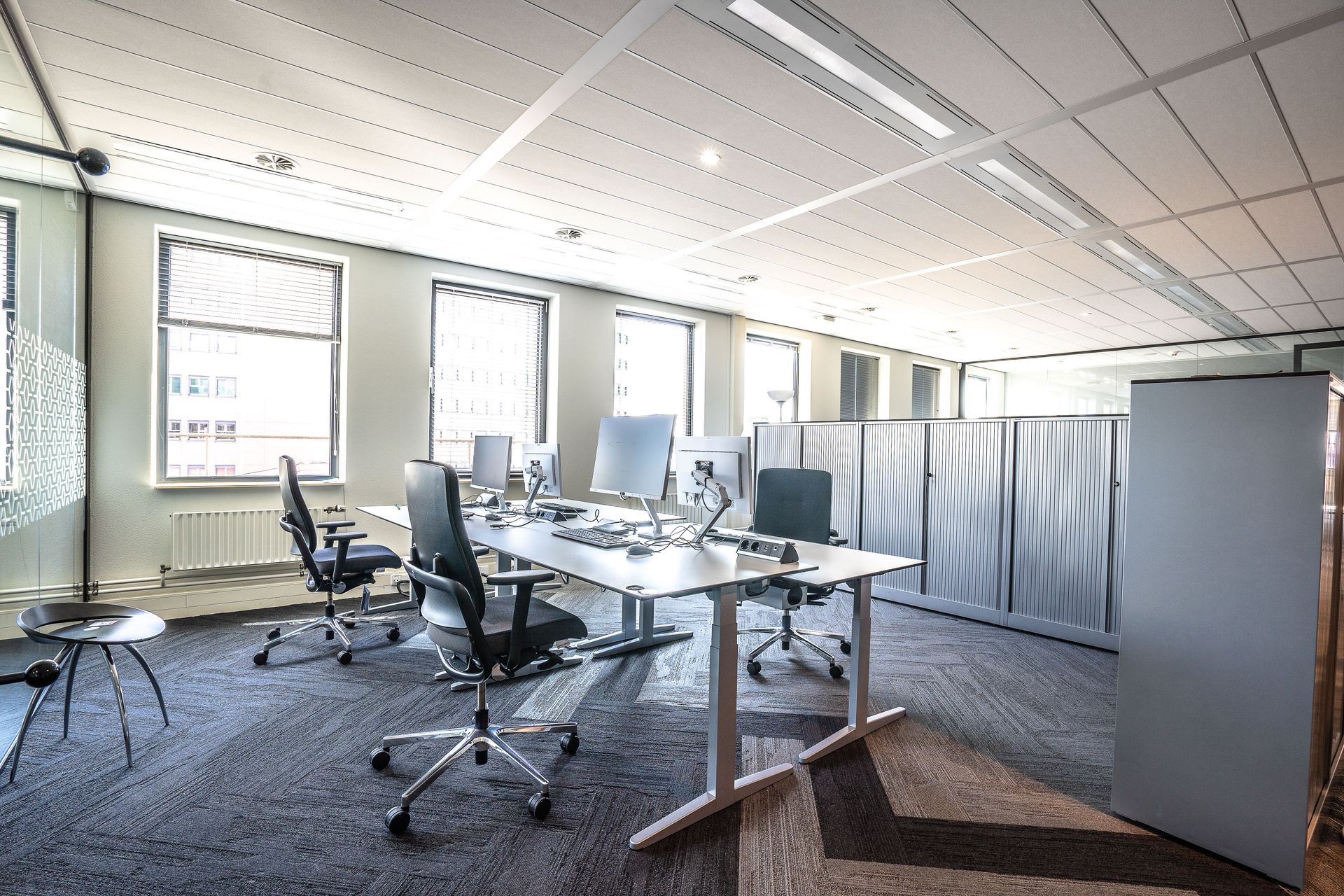
Office desk assembly planning helps large teams and open workspaces stay organized by coordinating layout, desk placement, workstation spacing, cable access, hardware tracking, walkway clearance, employee flow, and installation timing. The right plan depends on team size, desk style, room shape, power access, accessibility needs, delivery schedule, and floor protection. It also shifts based on whether the space is a startup office, coworking space, corporate floor, medical office, legal office, or flexible hybrid workplace.
- Map desk layout and daily workflow before any boxes arrive.
- Space workstations to support large teams, comfort, and walkways.
- Plan cable routing, hardware tracking, and power access in advance.
- Protect floors, walls, and pathways during the entire installation.
- Use professional assemblers to open the office faster with fewer issues.
Desk Assembly Planning That Keeps Big Teams Moving
Setting up desks for a large team or open workspace sounds easy until the office fills with boxed furniture, missing screws, blocked walkways, tangled cables, unclear seating charts, and a tight move-in date. Without a plan, employees lose hours, floors get scuffed, and layouts end up needing expensive changes.
Professional office desk assembly planning solves this for startups, coworking spaces, corporate teams, medical offices, legal offices, and growing commercial workplaces. It turns a chaotic delivery day into a smooth, predictable install where every desk lands in the right spot the first time.

Open Workspaces Need a Desk Layout Before Boxes Arrive
An open workspace works best when the desk layout is finalized before furniture is delivered. A clear plan defines bench rows, shared workstations, walkway widths, and quiet zones, so installers know exactly where each desk belongs the moment shipping arrives.
Open offices often mix sit-stand desks, bench seating, and collaboration pods. Without a layout, those pieces get scattered, and teams end up squeezed into awkward corners. Reviewing the floor plan early also helps confirm aisle widths, meeting room access, and seating near natural light. For inspiration on bench styles and shared surfaces, many planners review commercial desk and table options before finalizing the floor plan.
Use a layout checklist that covers:
- Primary walkways and emergency exits
- Desk clusters by team or department
- Shared printer, supply, and breakroom zones
- Natural light and HVAC airflow positions
- Quiet areas separated from high-traffic flow
For coworking and hybrid spaces, flexibility matters even more. Hot desks, drop-in benches, and reservable workstations should sit near power columns to avoid long cable runs across the floor.
Large Teams Need Workstations Built Around Daily Flow
Large teams need workstations placed around how people actually work each day. That means grouping departments that collaborate, separating noisy roles from focused ones, and leaving enough room between desks so employees can move, stand, and meet without bumping into chairs.
Call centers, reception teams, and customer support groups often need tight clusters with shared cable trays. Legal and medical offices usually need more privacy, wider spacing, and acoustic separation. For a quick way to compare common open office spacing, this table helps planners size desks correctly.
| Team Type | Desk Width | Spacing Between Desks | Walkway Clearance |
|---|---|---|---|
| Call center pods | 48 to 55 inches | 24 inches | 36 inches |
| Open team benches | 55 to 60 inches | 30 inches | 42 inches |
| Corporate workstations | 60 to 66 inches | 36 inches | 44 inches |
| Medical or legal desks | 60 to 72 inches | 42 inches | 48 inches |
| Hybrid hot desks | 48 to 60 inches | 30 inches | 42 inches |
Following ADA office design standards guidance is also important for clear accessible routes, especially in larger commercial buildouts. Working with office furniture assembly for large teams keeps spacing consistent across long bench runs.
Cubicles and Desks Should Be Installed With the Same Plan
Cubicles and desks should be installed together using one coordinated layout. When panels, work surfaces, and freestanding desks are planned separately, alignment problems show up fast, including uneven rows, mismatched heights, and cables that cannot reach shared power points.
A combined plan covers panel direction, desk-to-panel attachment, storage placement, and shared overhead lighting. It also helps installers stage parts in the right order so cubicle frames go up before desks slide in. For complex builds, teams often bring in office cubicle installation for workstations so both systems line up correctly.
Matching Cubicle Heights to Workflow
Lower panels suit collaborative teams and open marketing floors. Taller panels fit legal, finance, and medical roles that need privacy. Mixing heights without a plan creates visual clutter and uneven sightlines across the floor.
Coordinating Storage and Filing
Pedestals, lateral files, and overhead bins should be mapped before assembly. That avoids last-minute drilling, blocked drawers, or storage that crowds walkways. Some larger projects also use modular workstation assembly for offices to keep cubicles and desks consistent.
Power Access and Cable Paths Can Make or Break the Setup
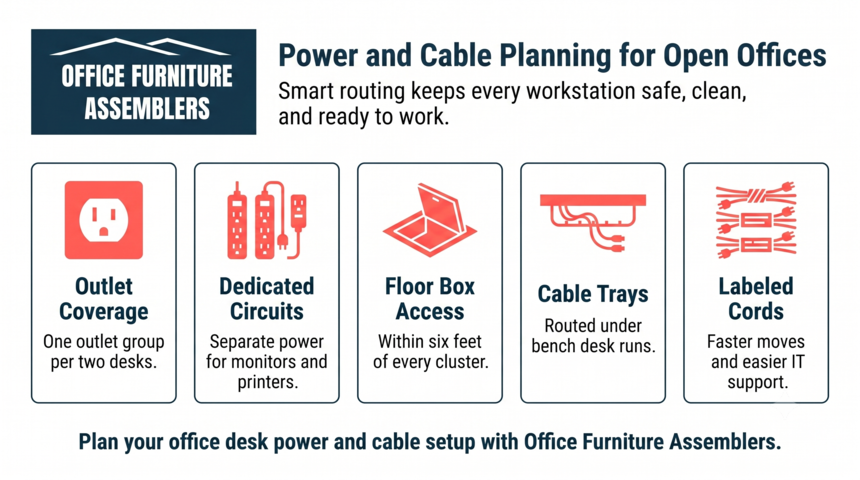
Power and cable planning decide whether an open office feels clean or chaotic. Every desk needs reliable access to outlets, data ports, and charging points, with cables routed through trays, grommets, or floor channels rather than draped across walkways.
Map power columns, floor boxes, and wall outlets before placing desks. Long extension runs across open floors are a tripping hazard and a code issue in many commercial buildings. Cable trays under bench desks also keep monitors, docks, and laptops tidy as teams grow.
Helpful planning points include:
- One outlet group per two workstations minimum
- Dedicated circuits for monitors and shared printers
- Floor box access within six feet of each desk cluster
- Cable trays or spines along bench desk runs
- Labeled cords for easy moves and IT support
For practical guidance on why this matters, many facility teams review professional office furniture assembly reasons when scoping new builds.
Floors, Walls, and Walkways Need Protection During Assembly
Floors, walls, and walkways need protection from the moment delivery trucks arrive. Heavy desks, cubicle panels, and storage units can scratch hardwood, dent drywall, and crush carpet edges if installers move them without padding, ramps, or proper dollies.
A protected install uses floor runners, corner guards, door jamb covers, and felt pads under heavy components. Elevators, lobby tile, and tenant common areas often have strict building rules that require these protections during commercial tenant improvements. Teams planning a relocation usually combine assembly with move office furniture without damage services to keep both the new and old space clean.

Startups and Growing Teams Need Flexible Desk Planning
Startups and growing teams should plan desks for change, not just for opening day. Headcount can double in a quarter, so layouts need bench desks that extend, modular cubicles that reconfigure, and storage that moves with the team instead of locking the floor plan in place.
For early-stage offices, lightweight benches and adjustable workstations from sources like office desks for team workspaces often pair well with modular panels. Many founders bring in startup office furniture installation planning so their first space scales smoothly into a larger one.
Office desk assembly planning means reviewing the floor plan, desk types, team size, power access, cable paths, walkway clearance, hardware, installation schedule, and final workstation layout before any desk is built or placed.
Office Moves Require Careful Desk Disassembly and Placement
Office moves work best when desks are disassembled, labeled, and mapped to their new positions before the truck loads. Skipping this step leads to missing hardware, scratched surfaces, and hours of guesswork when desks arrive at the new space.
A clean move includes a numbered floor plan, bagged hardware per desk, padded transport, and a reassembly sequence that matches department flow. Sensitive gear should travel separately, and many teams rely on guidance for moving electronics and computer equipment to protect monitors, docking stations, and servers. Larger relocations also benefit from structured office furniture disassembly before relocation so nothing is forced apart or damaged in transit.
Professional Assemblers Help Offices Open With Less Downtime
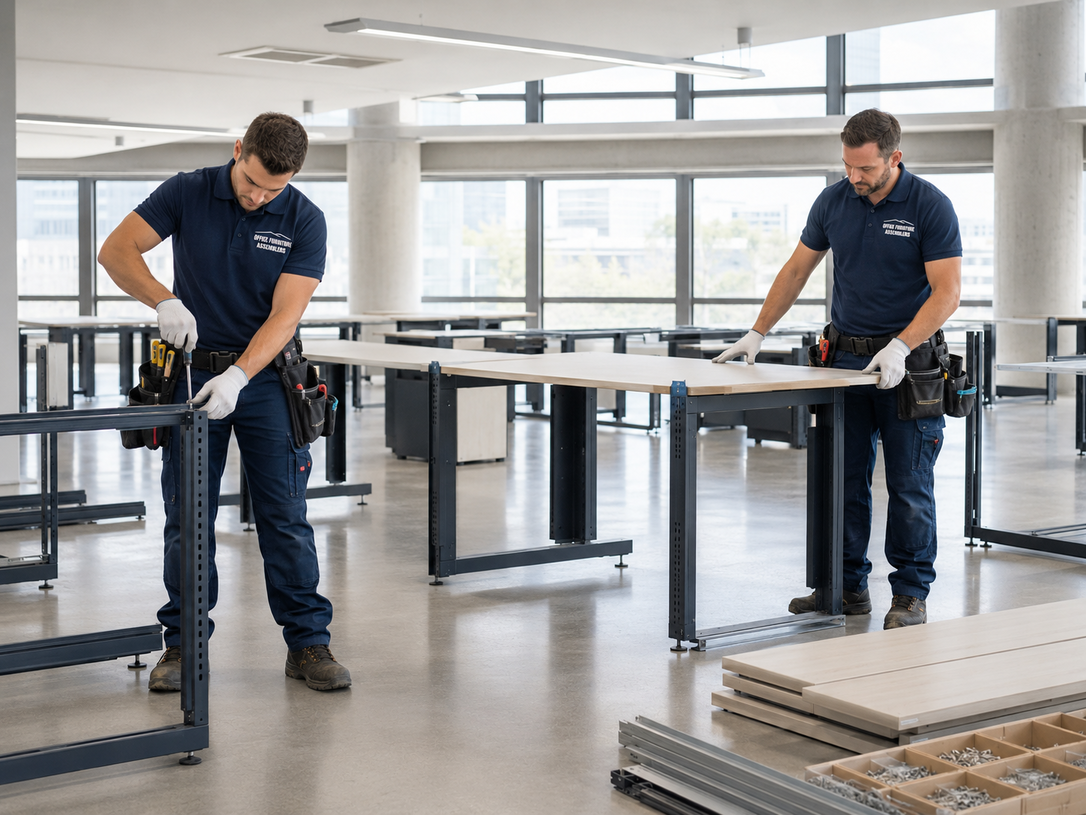
Professional assemblers reduce downtime by handling layout, build, and adjustments in one coordinated visit. Instead of pulling employees off their work to wrestle with manuals, businesses get a finished, inspected workspace ready for day one.
Experienced crews also catch common issues early, including mismatched parts, unstable bench legs, uneven cubicle panels, and cable paths that block outlets. Many corporate offices, medical practices, and legal firms schedule office cubicle installation service support or general office furniture assembly service support so their internal teams stay focused on clients, patients, and revenue work.
Schedule Office Desk Assembly With Office Furniture Assemblers
Office Furniture Assemblers handles desk assembly planning, workstation placement, cable routing, floor protection, and open workspace flow for large teams, startups, and commercial buildouts. Every install is built around your floor plan, schedule, and team workflow.
Beyond desks and cubicles, our crews also assist with workout rooms, breakroom furniture, and even professional basketball hoop installation for corporate wellness areas, so your full office build stays on one trusted timeline.
Ready to open faster and cleaner? Schedule office desk assembly help for cubicle installation, workstation setup, startup office installation, relocation support, and open workspace planning today.
FREQUENTLY ASKED QUESTIONS
What should be planned before office desk assembly?
Confirm the floor plan, desk styles, team size, power locations, and delivery schedule first. Then map walkways, accessibility routes, and cable paths so installers know where every workstation belongs.
How much space should be left between office desks?
Most open offices leave 30 to 42 inches between desks and at least 36 inches for main walkways. Medical, legal, and executive desks usually need more room for privacy and ADA clearance.
Can desks and cubicles be installed at the same time?
Yes, and they should be when possible. Combined installation keeps panel heights, desk surfaces, and cable paths aligned, which avoids rework and matches everything to one layout.
Why does cable access matter in open workspaces?
Cables shape both safety and appearance. Good routing prevents trips, protects equipment, and lets IT teams add or move workstations without crawling under every desk.
How do installers protect floors during desk assembly?
Crews use floor runners, felt pads, corner guards, and dollies to move heavy desks and panels. These steps prevent scratches, dents, and carpet damage in lobbies, elevators, and office floors.
When should startups schedule office furniture installation?
Book installation as soon as the lease is signed and furniture orders are placed. Early scheduling locks in delivery alignment, layout planning, and a smooth opening day.
Can office desks be moved and reassembled later?
Yes, most commercial desks are designed for disassembly and reassembly. Labeling hardware, protecting surfaces, and following a numbered floor plan keeps everything intact during the move.
When should a business hire office furniture assemblers?
Hire professionals for large team setups, cubicle systems, office moves, and tight opening deadlines. Expert crews save time, protect property, and deliver a workspace that is ready on day one.