How to Get New Office Furniture Installed Today Without Causing a Single Day of Downtime
Same-day office furniture installation can help businesses keep work moving when delivery timing, floor access, staging areas, employee schedules, hardware, and installation priorities are organized before the crew arrives. Avoiding a full lost workday depends on furniture type, item count, access path, elevator use, workstation layout, technology needs, delivery timing, and installer availability.
- Clear staging helps installers move faster
- Employees need planned access routes
- Chairs, desks, and cubicles should be prioritized
- Technology and cables should be protected
- Professional installers help reduce disruption
Same-Day Installation Starts Before the Furniture Arrives
Businesses often need office furniture installed fast because a lease begins, a team expands, or a move finishes late. However, speed by itself can create bigger problems. Deliveries can block hallways, old desks may still be in place, elevators can bottleneck, and employees may lose access to workstations or meeting rooms. That is when a rushed install starts affecting calls, patient flow, client meetings, and internal operations.
Professional same-day office furniture installation is the practical fix. With the right plan, companies can shorten setup time, reduce disruption, and keep the workday moving around the installation.
The Fastest Setup Begins With a Clear Install Zone
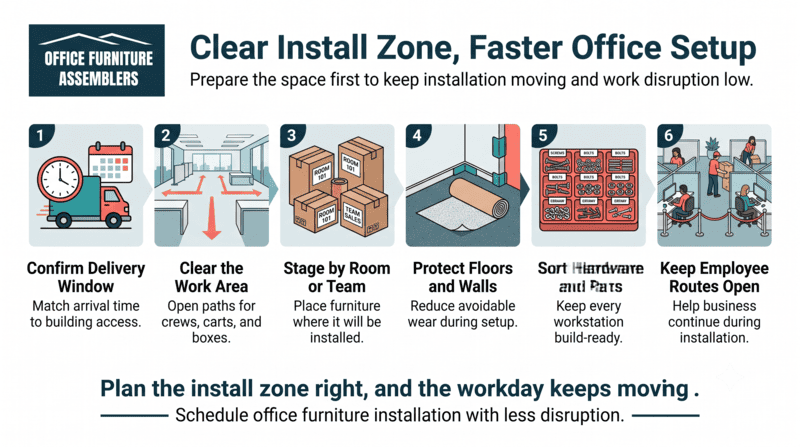
The fastest same-day office setup starts with a controlled install zone, not with opening boxes. When installers have a defined work area, a staging corner, protected access paths, and sorted hardware, they spend less time shifting obstacles and more time building usable workstations.
Same-day office furniture installation planning means confirming delivery timing, furniture count, installation order, access paths, employee schedules, old furniture movement, floor protection, technology needs, and workspace priorities before the installers arrive.
For busy offices, a clear install zone should include:
- A staging area near the delivery dock or entrance
- Open hallways and elevator access for larger pieces
- Floor and wall protection where panels, desks, and file cabinets will pass
- Box labels matched to rooms, departments, or seat numbers
- Hardware grouped by furniture type and workstation count
Office managers preparing office furniture assembly for active workplaces usually move faster when furniture sizes have already been compared with workspace desks chairs for office planning.
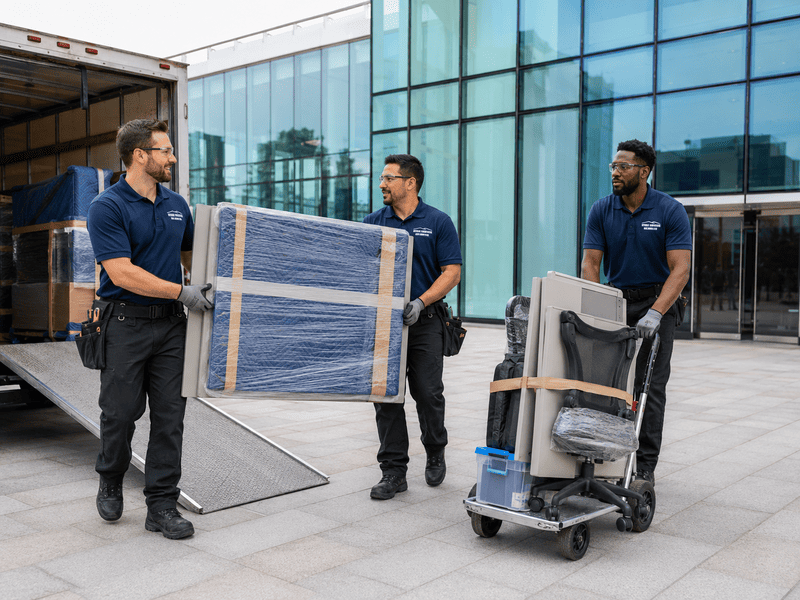
Furniture Delivery Timing Should Match the Workday
Delivery timing should fit the business schedule, not fight it. If trucks arrive during peak patient hours, client meetings, or staff shift changes, the install slows down and the office feels crowded. Good timing helps crews unload, stage, and begin assembly before disruption spreads.
Match access windows to real traffic
A medical office may need early access before patient check-in. A legal office may prefer late-morning delivery after court departures. Coworking spaces often need short elevator windows and quiet movement through shared corridors.
Use this simple timing framework:
- Confirm loading dock rules and freight elevator hours
- Reserve a delivery window that avoids peak employee traffic
- Separate receiving time from assembly start time when possible
- Identify who signs for delivery and who releases installers to each floor
This matters even more when workstation counts are high or layouts mirror workstation designs for modern offices.
Old Furniture Must Move Before New Pieces Take Over
Old furniture needs to be removed or relocated before new pieces start filling the floor. When outdated desks, chairs, and storage stay in place too long, installers lose path access, departments lose space, and same-day scheduling quickly becomes harder to manage.
A clean transition usually requires:
- Tagging what stays, what moves, and what leaves
- Clearing private offices before open areas get blocked
- Disassembling larger pieces before delivery arrives
- Protecting equipment and boxed technology during removal
- Keeping one temporary work zone active for staff
Operations teams often shorten delays by scheduling office furniture moving before installation first, especially when projects also need cubicle desk disassembly before office moves.
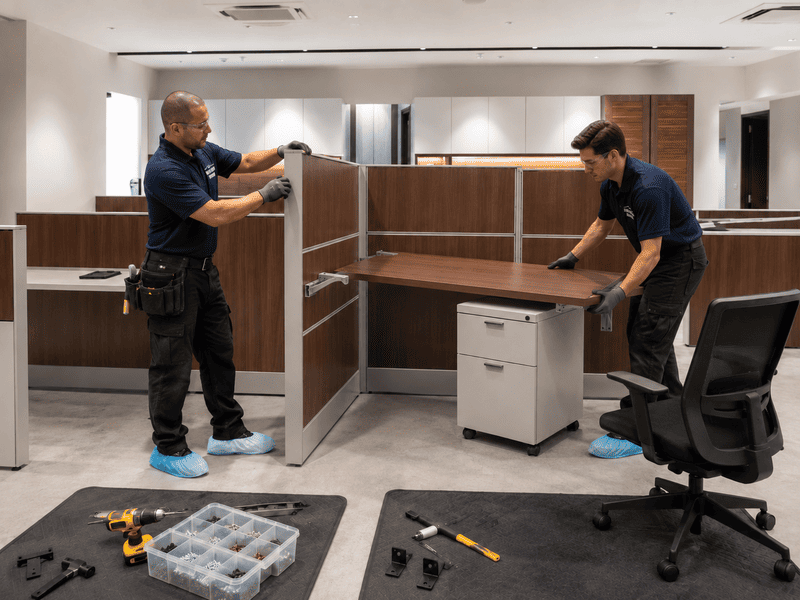
Chairs and Desks Should Be Ready Before Employees Return
Desks and office chairs should be the first completed pieces when employees are coming back the same day. If primary workstations are usable early, teams can answer calls, open files, hold meetings, and keep production moving while secondary furniture is finished nearby.
Prioritize the seats that produce work
Startups may need every benching desk live before noon. Corporate offices may focus on finance, reception, and leadership offices first. Medical and legal offices usually need front-desk seating, exam-room charting stations, or casework desks ready before support areas.
Helpful priorities include:
- Reception desks and guest-facing seating
- Employee desks with monitors and power access
- Ergonomic seating and task chairs
- Shared conference tables after core workstations
- File cabinets and accessories last
Businesses often pair office chair assembly for employee workstations with desk assembly for business workstations so employees can return to complete, usable setups.
Cubicles Need a Clean Sequence to Avoid Floor Confusion
Cubicle installation needs an exact order because panels, surfaces, storage, and seat assignments all depend on one another. If installers start in the wrong area or departments change on the fly, the floor can become confusing, especially in open offices and growing team environments.
For faster cubicle readiness, crews should follow this sequence:
- Mark the floor plan before any panel goes up
- Build perimeter runs first, then interior clusters
- Install power and cable paths before final surfaces
- Match seat labels to teams, not just panel numbers
- Finish manager approvals before employees settle in
That is why many companies use office cubicle installation for fast setup when handling dense floors or modular office furniture installation for businesses.
Cost Planning Keeps Urgent Installation From Feeling Chaotic
Urgent installation feels less stressful when the cost picture is clear before the crew arrives. Same-day office furniture installation cost can vary by furniture type, item count, access difficulty, assembly complexity, removal needs, and whether after-hours work or moving support is required.
| Cost factor | Why it matters |
|---|---|
| Item count | More pieces usually increase labor time |
| Furniture complexity | Cubicles and adjustable desks need more steps |
| Building access | Elevators, stairs, and long hallways affect pacing |
| Old furniture removal | Adds labor, staging, and truck coordination |
| Scheduling window | After-hours or urgent timing may change labor planning |
Office managers comparing office furniture installation cost planning with broader moving cost planning for office items usually budget more accurately. It also helps to understand furniture compliance guidance for businesses when product specifications, safety standards, or procurement rules affect the job.

The Right Installation Company Protects the Business Schedule
The right installation company helps protect the workday by planning around access, crew flow, furniture sequence, and business priorities. A poor fit can slow everything down, while an experienced team can help reduce downtime and keep the office usable during a fast rollout.
What business clients should confirm first
Ask whether the crew handles office chair assembly, cubicle sequencing, old furniture movement, floor protection, and workstation setup under one schedule. Also confirm communication, arrival windows, and who manages changes on install day.
Many teams use guidance to choose the right furniture installation company and compare it with ideas for a productive office setup with furniture assembly.
A Better Same-Day Plan Helps Work Continue Around the Setup
A better same-day plan does not promise a perfect silent install. Instead, it helps businesses avoid a full lost workday by routing employees around active zones, keeping key departments online, and finishing the most important workstations first.
Keep the office active while setup happens
Office managers can split installation by department, move meetings to conference areas away from the build zone, and route employees through alternate hallways. Coworking spaces may shift members by section. Corporate offices may use after-hours work for panel systems and daytime work for chairs, desks, and final placement.
This is where Office Furniture Assemblers becomes a practical choice for office furniture assembly, office chair assembly, cubicle installation, office furniture moving, cost guidance, and contact-ready scheduling.
Book Office Furniture Installation Without Losing the Workday
Fast installation works better when staging, access planning, old furniture movement, chair and desk setup, and cubicle sequencing are handled as one business continuity plan. That approach can help reduce disruption and keep employees productive while the office changes around them.
If your property team is also juggling unrelated site tasks, it helps to know where to find trampoline repair help or portable hoop installation separately.
Get the workspace ready faster
Contact Office Furniture Assemblers to schedule office furniture installation today for same-day office furniture installation, office furniture assembly, office chair assembly, cubicle installation, office furniture moving, cost planning guidance, and scheduling help.
FREQUENTLY ASKED QUESTIONS
Can office furniture be installed the same day?
Yes, some projects can be installed the same day when delivery, access, furniture count, and crew scheduling line up. Availability depends on project scope and installer timing.
How can businesses avoid downtime during installation?
They can reduce disruption by planning install zones, routing employees around active areas, prioritizing core workstations, and confirming access before delivery arrives.
What should be cleared before installers arrive?
Hallways, elevators, work areas, staging corners, and the final furniture footprint should be clear. Old furniture and loose cables should also be addressed early.
Should old furniture be moved before delivery?
In most cases, yes. Removing or relocating old pieces first gives installers safer access and helps new furniture go in without double handling.
Which furniture should be installed first?
Start with desks, office chairs, and any workstation employees need to resume work. Reception and client-facing areas are also smart early priorities.
Can cubicles be installed while employees work?
Sometimes, yes, but only when the floor is phased carefully and employee routes stay clear. Large panel systems usually need tighter sequencing than chairs or small desks.
Does urgent installation affect the final cost?
It can. Cost may change based on timing, crew size, building access, furniture type, removal needs, and after-hours scheduling.
When should businesses schedule office furniture installation?
As early as possible, ideally once delivery timing, floor access, and layout priorities are known. Earlier planning usually leads to a smoother same-day setup.