Avoid Costly Moving Delays by Letting Pros Handle Your Loading Dock and Elevator Clearances

Loading dock and elevator clearances can delay an office move when COI paperwork, truck access, freight elevator reservations, building rules, and staging plans are not confirmed before installation day. The right plan depends on building management rules, dock height, elevator size, access windows, furniture volume, office floor level, employee schedules, equipment handling, and whether the project is in Maryland, Delaware, Washington DC, Pennsylvania, or Northern Virginia.
- COI issues can block dock access before work begins
- Freight elevator windows must be planned tightly
- Truck clearance can affect commercial deliveries
- Poor coordination can create tenant penalties
- Professional logistics help protect office timelines
One Missed Dock Window Can Disrupt the Whole Office Move
Many office projects run into trouble before the first desk, panel, or chair reaches the floor. When COI paperwork is incomplete, the dock is crowded, or the freight elevator slot is too short, the schedule can slip fast and disrupt employee return plans.
That pressure grows on multi-floor relocations, tenant improvements, and phased office upgrades. A delayed truck can push back installers, IT teams, and building access approvals. Office Furniture Assemblers helps commercial clients manage dock logistics, elevator clearances, office furniture moving, and installation coordination with a business-first approach built for real workplaces.
Commercial Buildings Do Not Give Crews Unlimited Access
Commercial buildings usually allow narrow, controlled move windows, not open-ended access. That matters because corporate furniture projects involve landlord rules, reserved dock bays, freight elevator limits, and approved building routes that can affect every phase of installation and staging.
Loading dock and elevator clearance planning means confirming COI requirements, dock access rules, truck clearance, freight elevator size, reservation windows, building routes, staging areas, furniture volume, equipment protection, and installation sequence before an office move begins.
Common access rules often include:
- Reserved dock times with strict arrival windows
- Passenger elevator restrictions for furniture movement
- Protective padding or masonite requirements in common areas
- Approved paths for desks, cubicles, and file cabinets
- After-hours or weekend access for occupied buildings
That is why office furniture moving for businesses requires a different mindset than a residential move, especially in Washington DC towers and Pennsylvania office buildings. Projects that include office cubicle installation for small teams still need building-compliant access planning.
COI Paperwork Can Decide Whether the Job Starts
A missing or incorrect COI can stop a commercial move before unloading begins. Many property managers will not release loading dock access or freight elevator use until insurance documents match building requirements and are approved in advance.
Typical COI issues include:
- Wrong certificate holder information
- Missing additional insured language
- Expired policy dates
- Limits that do not meet landlord requirements
- Submission too close to move day
Office Furniture Assemblers helps clients prepare for these checkpoints early, which can help reduce avoidable access delays in Maryland office parks and Northern Virginia campuses. Sound paperwork also supports moving liability protection for business property conversations before crews arrive.
Freight Elevator Reservations Need a Precise Move Sequence
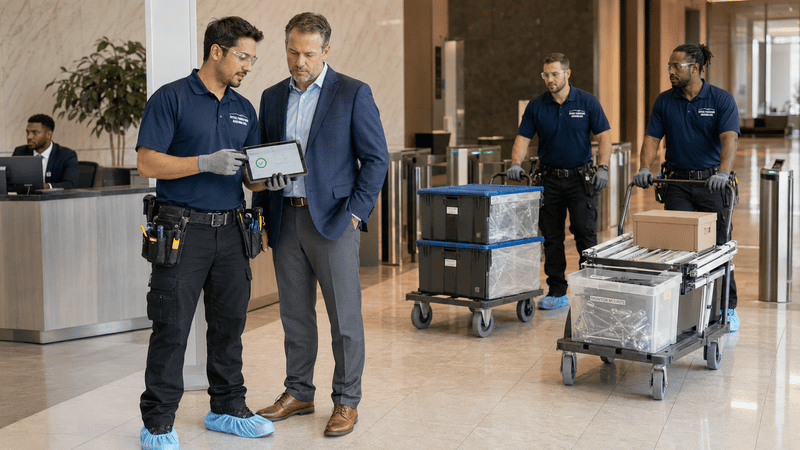
Freight elevator reservations are only useful when the move sequence is built around them. Crews need the right order for loading, staging, riding, unloading, and placement, or valuable elevator minutes can disappear before the main furniture volume reaches the floor.
A tighter sequence usually includes:
- Pre-sorted furniture by floor and department
- Hardware containers labeled by workstation zone
- Priority handling for reception and conference areas
- Separate routing for carts, chairs, and boxed components
- Fast staging near the freight elevator, not inside it
This becomes even more important for moving office furniture between floors, where repeated trips can slow the whole project. On larger reconfigurations, office furniture disassembly before relocation may also shorten elevator cycles and reduce congestion.
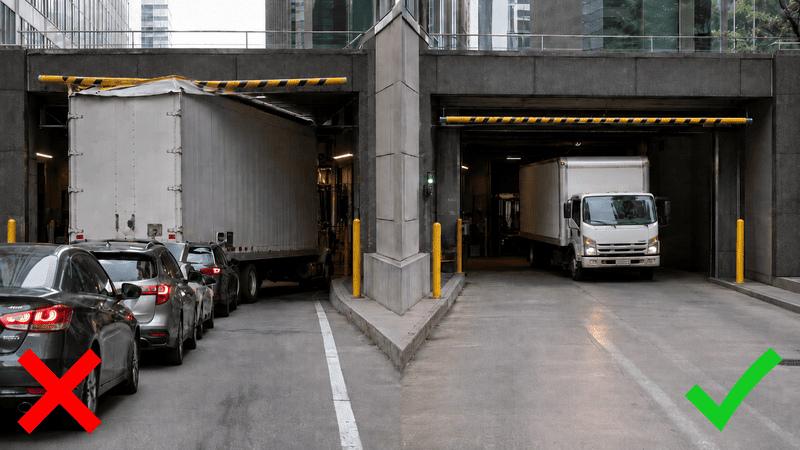
Loading Dock Clearances Can Stop the Wrong Truck
The wrong vehicle can stall a commercial delivery before the first pallet comes off. Low overheads, tight alleys, shallow dock aprons, and shared service lanes can all force a truck to wait, circle, or reschedule.
Dock-related risks often include:
- Low garage or dock entrance height
- Tight turning radius in urban alleys
- Limited space for liftgate deployment
- Shared bays with building vendors
- Street parking limits near the entrance
In dense Washington DC corridors and older Delaware business districts, the truck plan should match the building, not the other way around. Packaging volume matters too, especially when materials affect maneuvering and disposal, so teams should account for packaging material rules for transported goods during delivery planning.
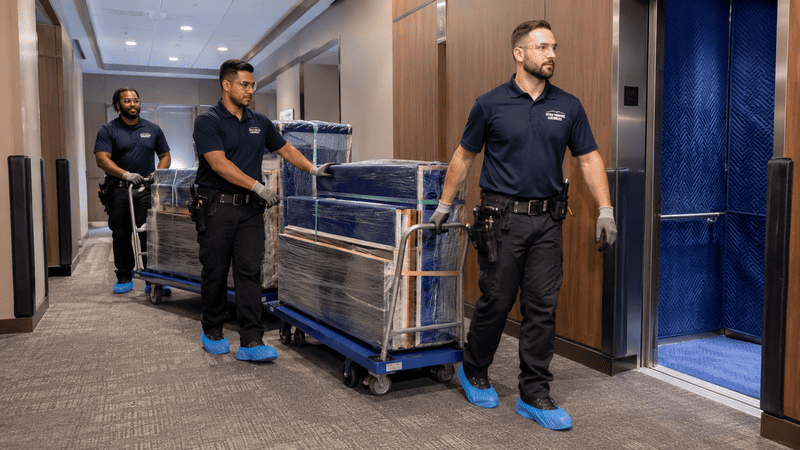
Office Equipment Needs Controlled Movement Through the Building
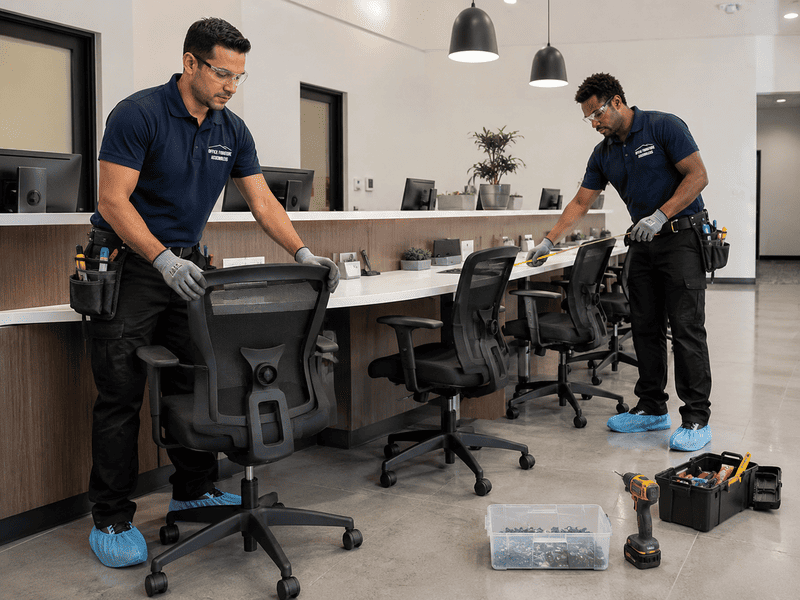
Office equipment should move through the building in a controlled, labeled sequence so parts, cables, and hardware stay with the correct departments. Without that structure, workstation setups slow down and return-to-work plans can drift.
Small parts create big delays
A missing monitor arm plate or mislabeled cable bin can hold up an entire bank of workstations. That is why moving office equipment without lost parts should be planned alongside furniture routes, not as an afterthought.
Practical controls often include:
- Asset labels by room, floor, or team
- Separate bins for cables, keys, and fasteners
- Protected carts for screens and electronics
- Staged placement of desks before equipment
- Special handling to move electronics and computer equipment safely
For oversized pieces, crews may also rely on furniture lifting tools for safer moves and, when needed, professional moving support for heavy items.
Cost Planning Should Include Access and Delay Risks
Office move pricing is not only about labor and trucks. Cost can also depend on dock rules, elevator windows, certificate processing, staging complexity, floor-to-floor travel, and the risk of delays that affect business operations.
Using office furniture installation cost planning early helps decision-makers budget more accurately for real building conditions.
| Access Factor | What It Can Affect | Why It Matters |
|---|---|---|
| COI approval timing | Start time | Work may be delayed if paperwork is not cleared |
| Freight elevator window | Labor efficiency | Short windows demand tighter sequencing |
| Dock clearance limits | Vehicle choice | Wrong truck size can trigger rescheduling |
| Multi-floor movement | Crew hours | More trips can increase handling time |
| Occupied office scheduling | Employee downtime | Poor timing can disrupt active teams |

Office Moves Need Local Building Logistics Experience
Office projects often involve different building standards, traffic constraints, and property management expectations from one market to the next. Local logistics awareness helps teams plan more realistically across Maryland, Delaware, Washington DC, Pennsylvania, and Northern Virginia.
Regional planning often matters when dealing with:
- Urban dock congestion in Washington DC
- Campus-style deliveries in Northern Virginia
- Multi-tenant office parks across Maryland
- Tight service access in older Pennsylvania properties
- Mixed-use business locations in Delaware
That same practical approach supports both relocation work and office furniture assembly for commercial spaces, especially when a project ends with a productive workspace setup with assembly help.
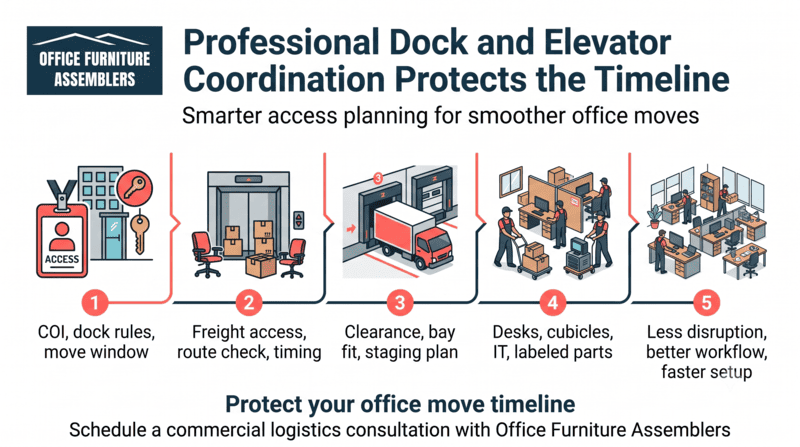
Professional Dock and Elevator Coordination Protects the Timeline
Professional coordination helps reduce avoidable access problems before move day. It supports better communication with property managers, clearer truck planning, tighter elevator sequencing, and more organized furniture and equipment flow once the crew is on site.
Why companies outsource this part of the move
Office Furniture Assemblers is built for commercial environments, not household moves. That matters when schedules involve cubicles, conference tables, IT equipment, phased department moves, and installation deadlines tied to employee occupancy.
Request a Commercial Office Logistics Quote Today
When your schedule depends on loading dock coordination, freight elevator planning, COI handling, controlled equipment movement, and commercial furniture installation support, early logistics planning can protect the project timeline and reduce avoidable disruption. If your facility scope also overlaps with specialized site needs, related planning can include equipment repair help and goal installation planning where appropriate.
Keep the move schedule working for your business
Companies in Maryland, Delaware, Washington DC, Pennsylvania, and Northern Virginia can schedule a commercial logistics consultation with Office Furniture Assemblers for a comprehensive quote covering loading dock coordination, elevator clearances, office furniture moving, office equipment movement, office furniture assembly, and installation planning.
FREQUENTLY ASKED QUESTIONS
Why do loading dock clearances matter for office moves?
They affect whether the truck can access the building safely and on time. Clearance problems can delay unloading and push back installation work.
Can missing COI paperwork delay an office installation?
Yes. Many commercial buildings may deny dock or freight elevator access until approved insurance documents are on file.
How early should freight elevator reservations be confirmed?
As early as the building allows. Early confirmation gives more time to match crew size, furniture volume, and installation sequence.
What happens if a delivery truck does not fit the loading dock?
The driver may have to wait, relocate, or reschedule. That can increase labor time and disrupt the reserved move window.
Can office furniture be moved between floors without disruption?
Yes, but it requires careful staging, routing, and elevator planning. Multi-floor projects work better when items are grouped by destination before movement starts.
Do commercial buildings charge fees for missed dock windows?
Some do. Depending on the lease and property rules, missed windows can lead to overtime charges, holding fees, or tenant violations.
Why do Mid-Atlantic office moves need local logistics planning?
Buildings vary widely by market. Urban DC properties, Maryland office parks, Northern Virginia campuses, Delaware business sites, and Pennsylvania offices often have different access patterns and management requirements.
When should a company schedule an on-site logistics consultation?
Before the move date is locked whenever possible. Early site review helps identify dock, elevator, staging, and routing issues before they affect the schedule.