Moving Office Furniture Between Floors Without Damaging Walls, Elevators, or Flooring
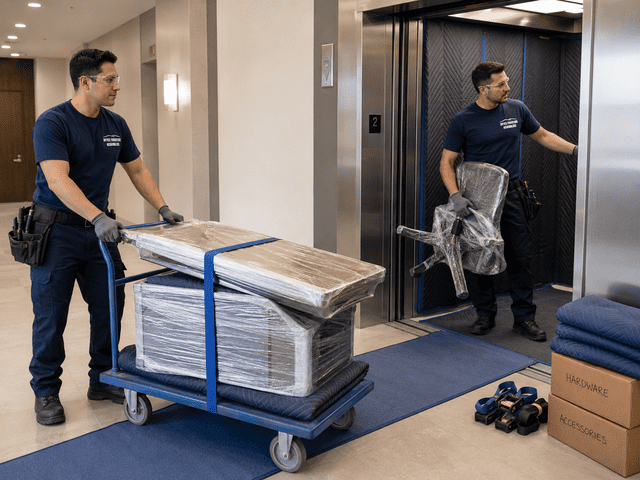
Moving office furniture between floors safely requires planning elevator access, mapping stair routes, laying floor protection, padding walls, disassembling large pieces, tracking hardware, and organizing careful reassembly before anything leaves its original spot. The right approach depends on furniture size, building rules, elevator dimensions, flooring type, stair layout, wall clearance, office equipment involved, team schedule, and whether the job includes desks, cubicles, conference tables, storage cabinets, or electronics.
- Measure elevators, stairwells, hallways, and doorways before moving day.
- Protect walls, corners, flooring, and elevator interiors with proper padding.
- Disassemble large desks, cubicles, and cabinets when clearance is tight.
- Track cables, screws, keys, and small hardware in labeled bags.
- Hire professional movers to reduce damage risk and business downtime.
Move Office Furniture Upstairs Without Leaving Damage Behind
Shifting furniture between floors sounds simple until the team faces narrow elevators, sharp stair turns, heavy executive desks, glass panels, and coworkers still answering calls nearby. Suddenly, a smooth relocation turns into scratched vinyl, dented drywall, gouged elevator panels, and a missing bag of cam locks. Poor planning creates real costs. Damaged flooring triggers landlord charges, broken furniture delays productivity, and lost hardware forces last-minute replacements.
Professional office furniture moving between floors solves these problems for businesses expanding upstairs, consolidating departments, or reorganizing an existing workspace without shutting operations down.
Between-Floor Moves Need a Building Access Plan First
Before anyone lifts a chair, map the entire move route. A solid access plan identifies elevator reservations, stair options, loading zones, doorway widths, and quiet hours, so movers avoid surprises that stall progress or damage the property.
Property managers usually require advance notice, insurance certificates, and off-hour scheduling. Reviewing moving liability protection for businesses early helps clarify what your team, building, and movers each cover if something gets damaged during the relocation.
Key planning steps include:
- Confirming elevator reservation times with building management.
- Identifying primary and backup stair routes for large items.
- Measuring every doorway, hallway turn, and threshold.
- Coordinating parking, loading dock access, and freight timing.
- Notifying tenants sharing hallways or elevators during the move window.
Elevators Should Be Measured Before Furniture Gets Moved
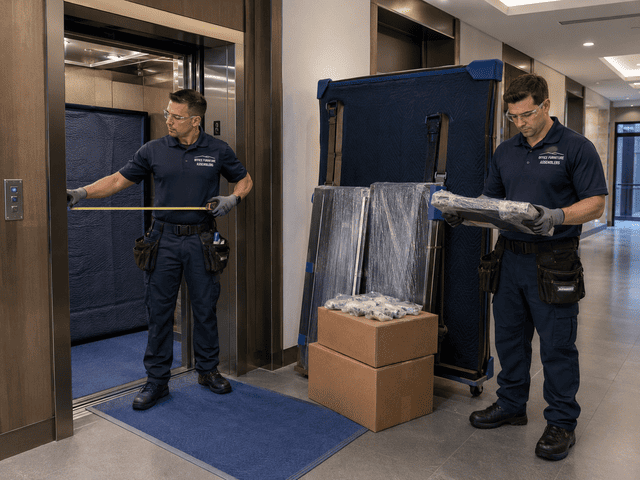
Every elevator has limits. Measuring the cab depth, width, height, and door opening before moving day prevents the classic mistake of hauling a conference table upstairs only to discover it will not fit inside the elevator car.
Freight elevators usually offer more room than passenger elevators, but coworking spaces and older office buildings may only have one option. Compare furniture dimensions against elevator specs carefully, and if a piece will not clear the opening, plan for office furniture disassembly before relocation to keep the move on schedule.
Elevator and Furniture Dimension Reference
| Item | Typical Size | Move Consideration |
|---|---|---|
| Passenger elevator cab | 5 ft x 7 ft | Fits most desks and chairs |
| Freight elevator cab | 6 ft x 9 ft | Handles cubicles and cabinets |
| Executive desk | 6 ft x 3 ft | May require disassembly |
| Conference table | 8 to 14 ft | Almost always disassembled |
| Storage cabinet | 5 ft tall | Empty and strap doors shut |
Walls, Corners, and Door Frames Need Real Protection
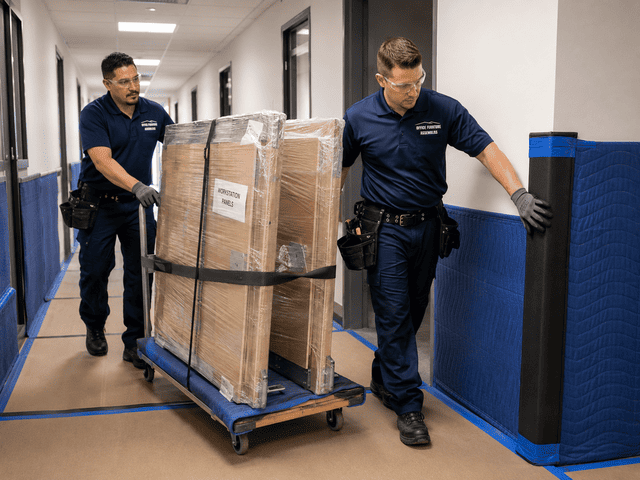
Walls take the most abuse during between-floor moves. Rolling cabinets past a corner or pivoting a desk through a doorway can chip paint, crack drywall, and dent metal frames within seconds if surfaces are unprotected.
Experienced office furniture movers wrap corners with foam bumpers, hang moving blankets on tight turns, and pad door jambs with rigid guards. Glass office walls in modern coworking spaces need extra care since even a light bump from a rolling chair base can crack tempered panels. For high-end suites, arranging white glove delivery for office furniture adds another layer of surface protection throughout the route.
Flooring Can Take Damage Faster Than Businesses Expect
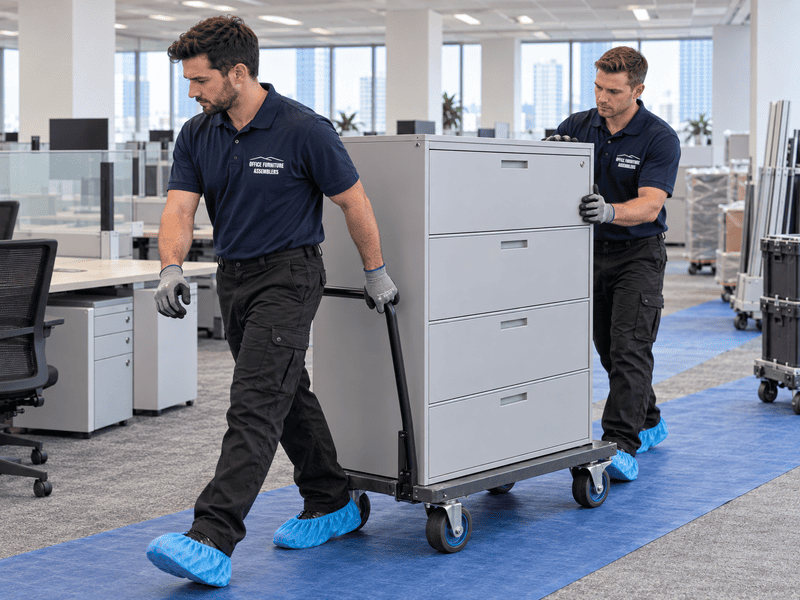
Flooring damage happens fast. Metal desk legs scratch wood, cubicle bases tear carpet fibers, and grit trapped under a dolly wheel can score vinyl in a single pass across a hallway.
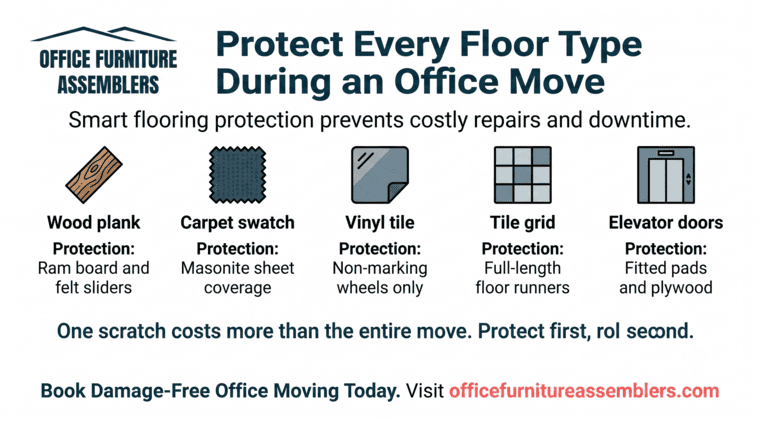
Different surfaces need different protection strategies:
- Hardwood floors benefit from ram board, felt sliders, and clean dollies.
- Carpet tiles need masonite sheets to spread heavy rolling loads.
- Vinyl and LVT surfaces require non-marking wheels and adhesive-safe films.
- Tile lobbies should be covered with runners to catch grit and debris.
- Elevator floors should always be protected with a fitted pad or plywood.
Because damaged flooring often costs more to repair than the move itself, protecting office floors during moving remains one of the most valuable steps any facilities team can take before relocation day.
Large Desks and Cabinets May Need Disassembly First
Between-floor office furniture moving planning means checking elevator dimensions, stair routes, furniture size, building rules, wall protection, floor protection, hardware, cables, and reassembly needs before any desks, cabinets, cubicles, or equipment leave their original spots.
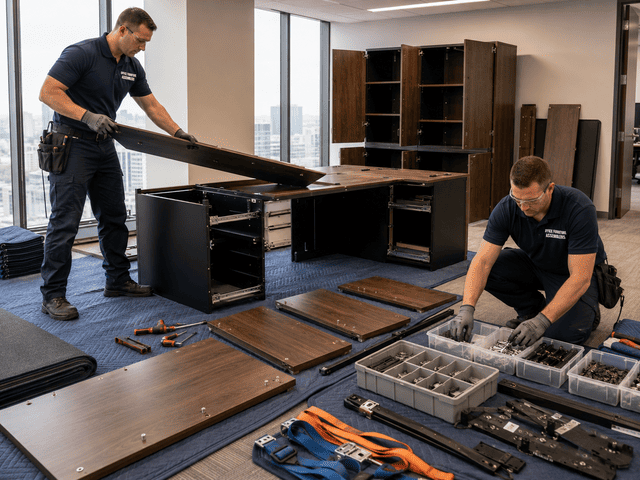
Bulky items rarely fit through tight stair turns fully assembled. L-shaped desks, modular cubicles, and heavy filing cabinets almost always move faster when broken down first. A careful team labels every panel, bags every screw, and photographs each connection point so office furniture assembly after relocation stays fast, accurate, and stress-free on the destination floor.
Office Equipment and Cables Should Travel With a System
Losing a single power cable can knock a workstation offline for a full day. Organized office equipment moving without lost parts matters as much as the furniture itself, especially when computers, monitors, printers, and phones all travel between floors at once.
Follow a labeling system so nothing gets lost:
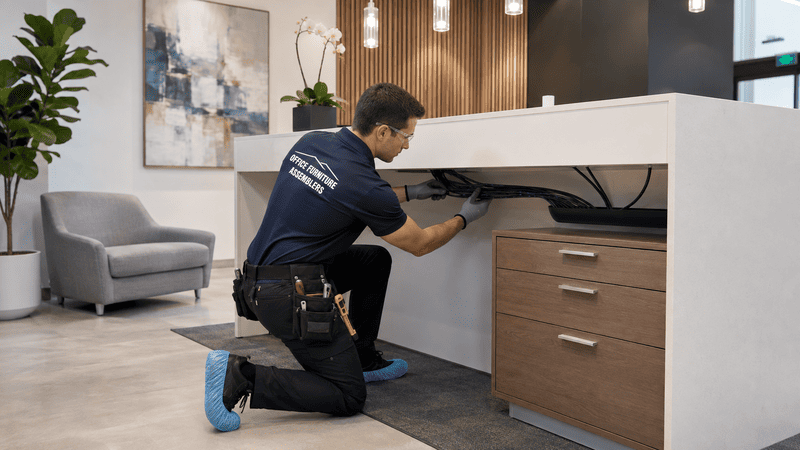
- Photograph cable setups behind each desk before disconnecting anything.
- Color code cables by workstation or department.
- Place screws, keys, and small parts in labeled zip bags.
- Pack monitors and CPUs in padded crates or original boxes.
- Assign one person to oversee equipment tracking end to end.
For sensitive electronics, following guidance on how to safely move electronics and computer equipment helps protect servers, docking stations, and monitors from drops or static damage. Reviewing packaging materials regulations for moving also helps facilities teams choose compliant supplies for shipping and storage.
Startups and Small Offices Need Less Downtime, Not More Chaos
Startups, medical offices, legal practices, and small businesses cannot afford long shutdowns. Every hour spent hauling furniture is an hour patients wait, deals stall, or clients get sent to voicemail, which is why efficient scheduling matters as much as careful handling of every piece.
Smart teams schedule between-floor moves during evenings or weekends, prep the new floor first, and rely on startup office furniture installation support to get workstations online quickly. Clear zones, staged deliveries, and phased reassembly keep the business functional even mid-move.

Professional Movers Help Protect the Building and Furniture
Experienced commercial movers bring more than muscle. They arrive with rigid corner guards, ram board, shrink wrap, dollies with non-marking wheels, cable organizers, and the skills to break down and rebuild cubicles quickly without losing parts.
Trained crews also understand building compliance, insurance certificates, and elevator etiquette in busy commercial towers. Whether the job calls for office moving relocation installation services across multiple floors or specialized office cubicle installation service support, hiring specialists reduces risk far more than a general crew ever could. Many facilities managers also request office furniture assembly service support for final touches once everything reaches the new floor.
Budget-conscious teams should also review office furniture installation cost planning before booking, since transparent pricing prevents surprise charges and keeps the project financially predictable from start to finish.
Schedule Between Floor Office Furniture Moving Support
Safer between-floor moves start with elevator protection, padded walls, covered flooring, tracked hardware, and organized reassembly, all without shutting the business down. Office Furniture Assemblers handles every step, from disassembly through final placement, so budgets and timelines stay predictable.
Beyond office work, our extended network can also help with unique jobs like trampoline repair help or professional hoop installation when facilities teams need broader support.
Ready to move safely between floors?
Contact Office Furniture Assemblers today to schedule office furniture moving support with trained crews who protect your building, your furniture, and your workday.
FREQUENTLY ASKED QUESTIONS
Can office desks be moved between floors without taking them apart?
Small desks often move whole, but L-shaped and executive desks usually need partial disassembly to clear elevators, stair turns, and doorways safely.
What should be checked before using an elevator for office furniture?
Verify cab dimensions, weight limits, reservation times, and pad requirements with the building manager before any furniture enters the elevator.
How do movers protect walls during an office furniture move?
Professional crews install corner guards, hang moving blankets on tight turns, and pad door frames with rigid protectors to prevent chips and dents.
Can office floors get damaged during internal relocation?
Yes. Metal legs scratch wood, dolly wheels tear carpet, and trapped grit scores vinyl unless ram board, masonite, or runners cover the route.
What happens to cables and hardware during the move?
Organized crews photograph setups, label cables by workstation, and bag screws so nothing gets lost between disassembly and reassembly.
Should cubicles be disassembled before moving floors?
Almost always. Cubicle panels, worksurfaces, and connectors move faster and safer when broken down, then rebuilt on the destination floor.
Can businesses stay open during a between-floor move?
Yes, with phased scheduling. Evening, weekend, and staged moves let most teams keep working while furniture shifts floor to floor.
When should a company schedule office furniture movers?
Book professional movers at least two to three weeks ahead, especially when elevator reservations, freight access, or weekend hours are required.