How to Move Desks, Chairs, and Cabinets Without Damaging Floors or Walls
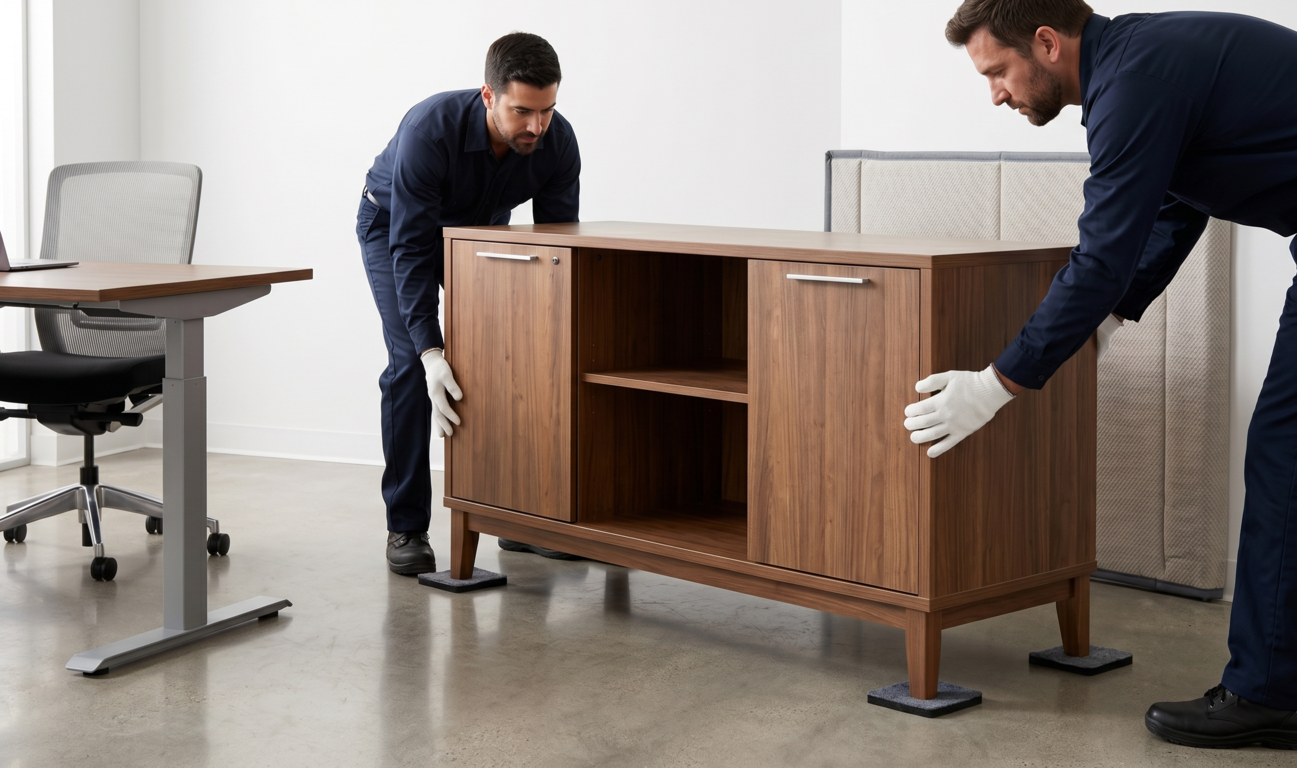
Moving office furniture safely takes more than strength. Desks, chairs, and cabinets can scratch flooring, dent walls, and slow a relocation when they are dragged, rushed, or moved without padding and the right tools. Proper protection methods improve safety, speed up the move, and help avoid repair costs.
- Surface protection reduces scuffs and wall marks
- Safe lifting lowers strain and injury risk
- Proper tools speed up relocation
- Careful handling prevents costly damage
Protecting Your Office During a Move
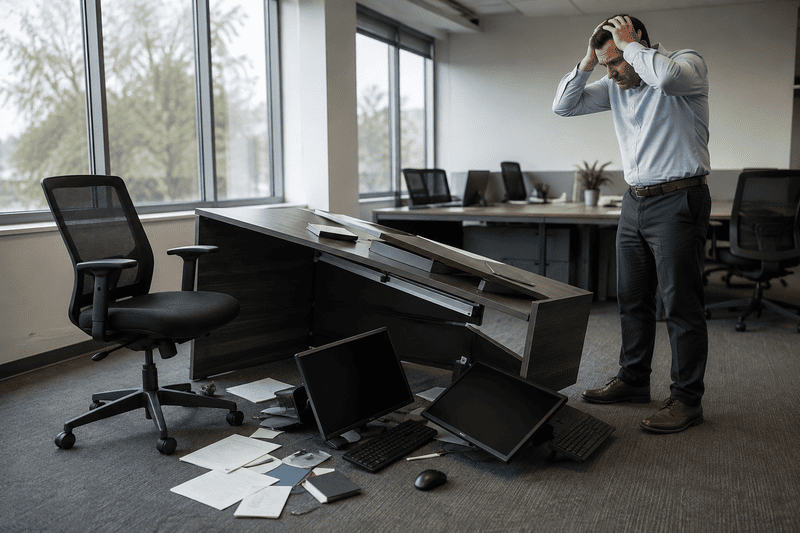
Scratched hardwood, chipped corners, and dented drywall are common problems during office relocations. However, the real cost goes beyond cosmetic damage because one mishandled cabinet or overloaded desk can delay setup, interrupt employees, and create extra repair expenses. In coworking spaces, medical offices, and corporate suites, even a short move can become disruptive when heavy furniture is dragged or forced through tight paths. The safest solution is a planned process that uses surface protection, proper lifting methods, purpose-built equipment, and experienced movers who can disassemble, transport, and reassemble furniture without damaging the workspace.
Why Moving Office Furniture Requires Precision and Care
Office furniture moves require precision because most desks, task chairs, and cabinets have weight, awkward balance points, and exposed edges that can damage finishes in seconds. Careful handling keeps floors intact, protects walls, and reduces the stress and downtime that often come with rushed office relocations.
A structured office furniture moving plan should map the path first, clear obstacles, and assign the right number of movers to each item. Therefore, teams avoid dragging furniture, twisting in doorways, or setting heavy pieces down on unprotected surfaces.
This matters even more with shared work environments. In a corporate building or coworking suite, one careless turn can block traffic, damage common areas, and create avoidable delays for everyone in the office.
How to Protect Floors and Walls During Office Relocations
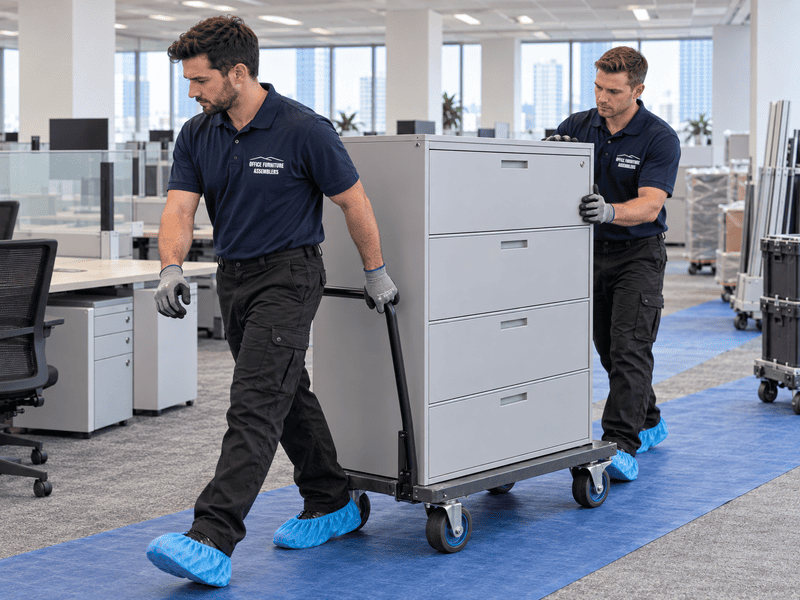
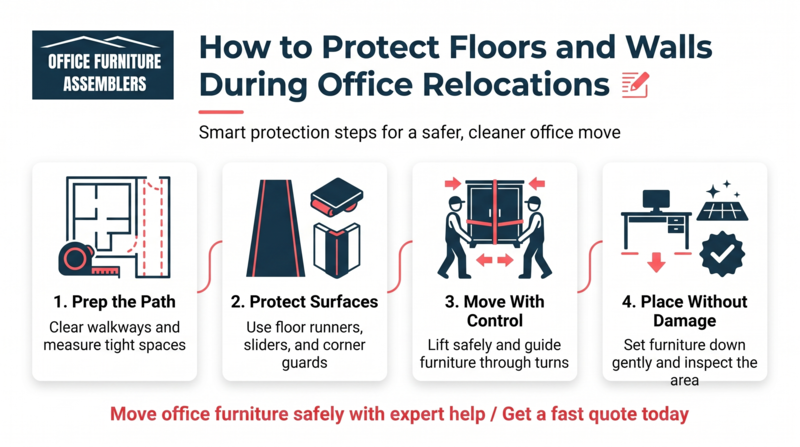
The best way to protect surfaces during an office move is to create a barrier between furniture and the building. Furniture sliders, moving blankets, floor runners, and corner guards help prevent gouges, paint scuffs, and impact damage while large items are being lifted, rolled, and positioned.
Use these practical protection methods during real office moves:
- Place felt sliders or hard-surface glides under desks and cabinets before repositioning
- Cover door frames and hallway corners with padding in narrow corporate corridors
- Lay ram board, neoprene mats, or temporary runners over hardwood, tile, or polished concrete
- Wrap cabinet edges and desk returns with moving blankets before loading onto dollies
In medical offices and executive suites, crews should also protect elevator walls and lobby turns. In addition, spotters should guide the lead mover so the item clears baseboards, glass sidelights, and painted corners without scraping.
What Moving Equipment Is Essential for Safe Office Moves
Safe office moves depend on equipment that controls weight, balance, and surface contact. Essential tools include dollies, furniture straps, moving pads, sliders, and corner protection because they reduce manual strain, stabilize bulky items, and prevent desks, chairs, and cabinets from striking floors or walls during transport.
| Equipment | Best Use | How It Prevents Damage |
|---|---|---|
| Furniture dolly | Cabinets, pedestals, boxed components | Keeps weight off finished floors |
| Hand truck | Tall storage units and stacked items | Improves control in hallways and elevators |
| Lift straps | Heavy desks and credenzas | Reduces dropping risk and awkward lifting |
| Moving pads | Desktops, cabinet corners, chair frames | Prevents scratches, dents, and rub marks |
| Sliders | Repositioning furniture in-place | Minimizes drag damage on hard floors |
Premium seating also needs care. Chairs with exposed arms, mesh backs, and rolling bases, including models similar to Steelcase office chairs, should be nested, wrapped, or wheeled only over clean, protected surfaces so casters do not grind grit into the floor.
How Do You Handle Large Desks and Cabinets Without Damage
Large desks and cabinets are safest to move when they are partially disassembled, padded at every contact point, and lifted with controlled body positioning. Removing tops, drawers, shelves, and loose hardware makes the load lighter, easier to balance, and far less likely to hit walls or chip corners.
For better control, follow these steps:
- Empty drawers and remove fragile accessories before any lift
- Detach hutches, modesty panels, keyboard trays, and glass components
- Bag and label hardware by furniture piece
- Use two-person or four-person lifts for oversized desks and credenzas
- Keep the load close to the body and pivot instead of twisting
Height-adjustable workstations need extra attention because motors, columns, and cable systems can be damaged if the desk is moved as one unit. That is why many teams separate tops and bases for furniture similar to workspace desks and chairs and for sit-stand setups supported by standing desk assembly services for workspaces.
What Are the Risks of Moving Furniture Without Proper Tools
Moving furniture without proper tools increases the chance of back strain, crushed fingers, wall damage, broken casters, and dropped components. It also slows the job because employees try to compensate with force instead of leverage, padding, and controlled movement.
Safe lifting is not only about how much something weighs. As explained in OSHA lifting guidance, risk rises when people twist, lift below knuckle height, reach too far from the body, or repeat the same lift too often.
There is also financial risk when protection is unclear. Before hiring movers, businesses should review written valuation and liability options described by the FMCSA, especially when expensive furniture, electronics, or custom cabinetry are part of the relocation.
How to Prevent Scratches, Dents, and Damage During a Move
Preventing scratches and dents comes down to wrapping surfaces, cushioning impact points, and matching the handling method to the furniture type. Desks, chairs, and cabinets all fail differently, so protection should be tailored rather than rushed.
A practical damage-prevention checklist includes:
- Wrap desktops and cabinet faces with pads before they enter hallways or elevators
- Tape blankets securely without applying adhesive directly to finished surfaces
- Remove or secure loose chair arms, headrests, and casters before stacking
- Protect metal filing cabinets from corner impacts with foam or cardboard guards
- Keep hardware, keys, and leveling feet in labeled bags to avoid reassembly damage
For example, a coworking space move may involve lightweight chairs but tight turns, while a legal office may involve dense lateral files that can dent walls if drawers shift open. Therefore, preparation should match the furniture profile and the building layout.
Why Professional Help Makes Office Moves Efficient and Damage-Free
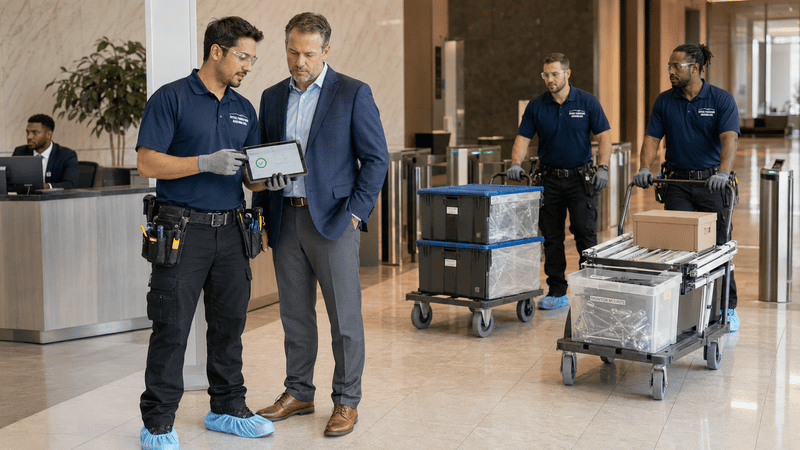
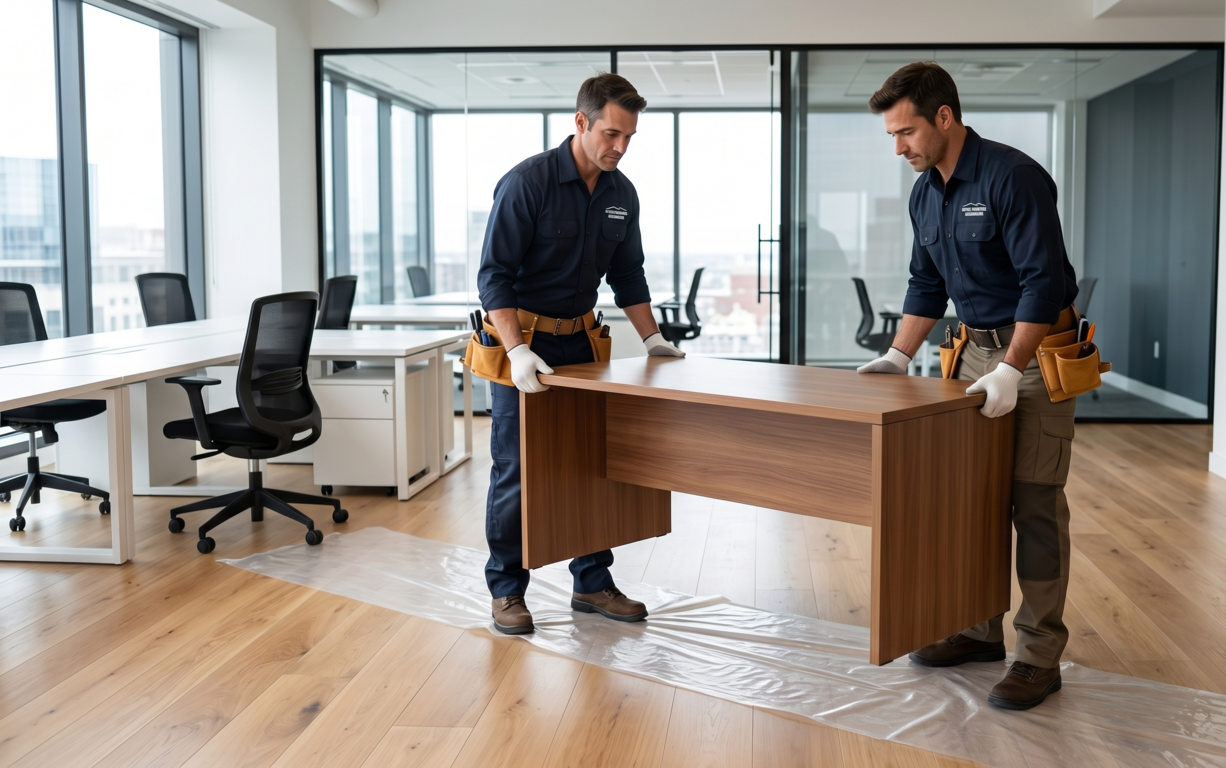
Professional movers make office relocations faster and safer because they combine planning, manpower, and equipment with proven handling methods. That reduces downtime, lowers the chance of property damage, and helps businesses reopen work areas quickly instead of spending days fixing mistakes.
Teams that coordinate office furniture setup without disrupting work can schedule after hours, work in phases, and restore departments in sequence. In addition, broader providers focused on office moving, relocation, and furniture installation and professional office furniture installation show how trained crews reduce rework and shorten project timelines.
Cost matters, but so does value. When managers compare repairs, downtime, and labor, professional service often makes more sense than a DIY attempt, especially when reviewing office furniture installation cost factors and choosing the best time to move in 2026 to avoid building congestion.
How to Safely Disassemble and Reassemble Office Furniture
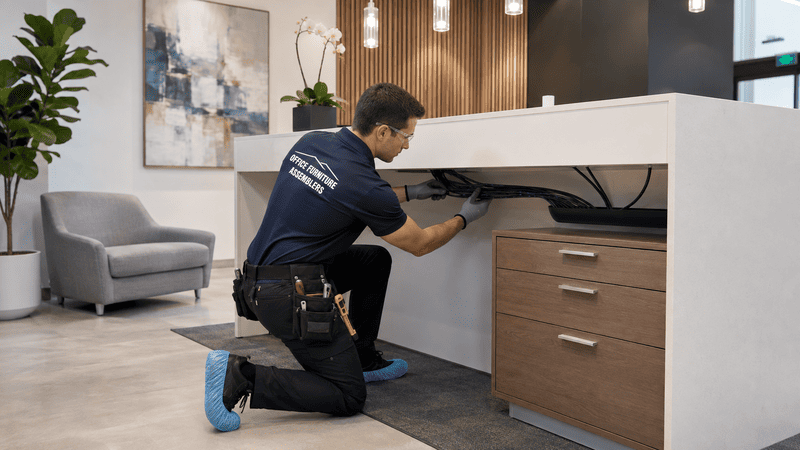
Disassembly and reassembly are necessary when furniture is too large, too heavy, or too awkward to move intact. Breaking down desks, workstations, and storage systems reduces stress on joints and hardware while helping crews clear tight spaces without damaging walls, floors, or the furniture itself.
Professionals usually follow a simple sequence:
- Photograph the furniture before dismantling
- Label panels, legs, brackets, and cable components
- Bag hardware separately for each item
- Pad all finished parts before transport
- Reassemble on a protected surface and level the piece before use
This process is especially useful for modular workstations, credenzas, and conference tables. A service focused on office furniture disassembly can keep parts organized so reassembly is faster and less error-prone at the new location.
What You Should Know About Moving Furniture in Tight Spaces
Moving furniture in tight spaces requires route planning, controlled turns, and sometimes partial disassembly before the item ever leaves the room. Narrow hallways, stair landings, and small elevators create pressure points where desks and cabinets are most likely to scrape walls or get stuck.
Measure doorways, corners, and elevator clearances in advance. Then assign one mover to guide, one to lift, and one to spot, especially in medical offices, older corporate buildings, and coworking spaces with shared corridors.
If an item still feels forced, stop and reset. However, never wedge a cabinet through a turn or drag a desk across a threshold, because that is usually when flooring, trim, and furniture edges get damaged.
Move Office Furniture Safely and Efficiently
If you want a smooth relocation without scratched floors, chipped walls, or lost setup time, contact Office Furniture Assemblers for professional help. From careful planning to fast reassembly, the right crew keeps your move efficient and damage-free. If you are dealing with a last-minute change or urgent workspace issue, quick-response support matters too, much like an emergency specialized service.
Move office furniture safely with expert help? Get a fast quote today!
FREQUENTLY ASKED QUESTIONS
How do you move office desks safely?
The safest way to move an office desk is to empty it, remove detachable parts, and pad all finished surfaces before lifting. If the desk is oversized or height-adjustable, partial disassembly usually makes the move safer and more efficient.
How do you protect walls during office moves?
Protect walls by padding corners, door frames, and narrow hallways before large furniture is moved through them. Spotters should guide each item so movers do not swing a desk edge or cabinet corner into painted surfaces.
What tools help move heavy office furniture?
Common tools include dollies, hand trucks, lifting straps, moving blankets, and furniture sliders. These tools reduce manual strain, improve control, and help prevent scrapes on floors and walls.
Should office furniture be disassembled before moving?
Yes, many desks, workstations, and cabinets should be disassembled if they are bulky, fragile, or difficult to maneuver. Disassembly lowers the risk of dropping the piece and helps crews move through elevators, stairwells, and tight corridors.
How do professionals prevent floor damage during relocations?
Professionals use runners, sliders, pads, and controlled lifting instead of dragging furniture across finished surfaces. They also clear debris first so small particles do not grind into hardwood, tile, or polished concrete.
Can office chairs damage floors during a move?
Yes, office chairs can scratch floors when dirty casters roll over grit or when chairs are stacked carelessly. Wrapping chair frames and cleaning the travel path help reduce floor damage during relocation.