Office Furniture Installation for Medical, Legal, and Corporate Offices
Office furniture installation is different for medical, legal, and corporate offices because each space has its own workflow, privacy, safety, and client-facing demands. Professional installation matters because the right setup supports staff efficiency, protects visitors, and helps the office look organized from day one.
When furniture is installed without a clear plan, the problems grow quickly. Exam rooms lose usable space, legal teams struggle with privacy and file access, and corporate staff work around cluttered cables, awkward traffic flow, and unfinished meeting areas. That affects productivity, appearance, and even safety. A professional team like Office Furniture Assemblers helps businesses create a workspace that fits how people actually work, while reducing disruption and keeping the project on schedule.
What Makes Office Furniture Installation Different by Industry
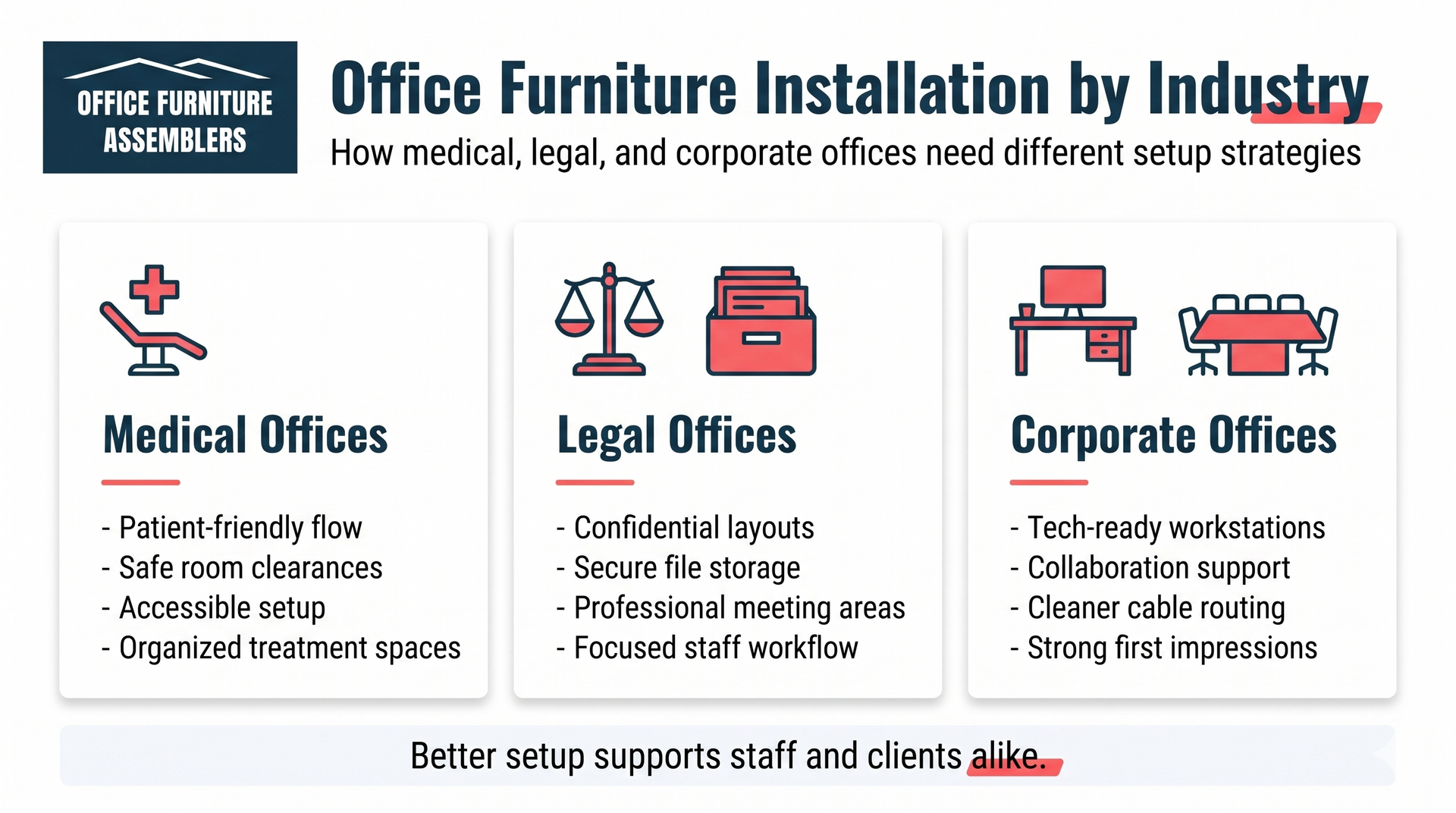
Office furniture installation differs by industry because the furniture has to support the way each office operates every day. Medical spaces need safety and clearance, legal offices need privacy and organization, and corporate environments need flexibility, technology support, and a polished appearance that works for both staff and visitors.
Professional office furniture installation means placing, assembling, leveling, securing, and arranging furniture so it supports workflow, safety, appearance, and long-term use.
Different priorities shape the layout
A medical waiting room, a law office conference suite, and a corporate open-plan floor should never be installed the same way. Each environment has different traffic patterns, equipment needs, storage demands, and client expectations. That is why many businesses rely on full-service office furniture assembly and installation instead of treating setup as a simple delivery task.
- Medical offices need clear walking paths, exam-room access, and patient-friendly spacing.
- Legal offices need discreet meeting zones, secure storage, and quiet work areas.
- Corporate offices need adaptable workstations, conference rooms, and shared collaboration space.
- Multi-room projects often require the same kind of coordination seen in broader commercial office furniture assembly.
When the installation matches the industry, the office feels easier to use from the first day.
How Should Medical Offices Plan Furniture Installation
Medical offices should plan furniture installation around patient flow, staff movement, privacy, accessibility, and safety. The layout has to support daily care, keep rooms easy to clean and navigate, and leave proper clearance around equipment, seating, storage, and treatment areas without making the space feel crowded.
Plan around care delivery
In healthcare settings, furniture affects more than appearance. It can influence patient comfort, clinician movement, and room turnover. That is why planning should reflect broader medical office design compliance requirements, especially when accessibility, privacy, and room clearances are involved.
Exam rooms, nurse stations, and waiting areas also need furniture placement that works alongside equipment. In many projects, that means coordinating with services related to medical equipment assembly and installation so tables, cabinets, carts, and chairs do not compete for the same footprint.
Safety starts with placement
Medical furniture should never block movement or emergency access. Placement choices matter for both patient care and building safety, including spacing that supports evacuation and safe circulation around treatment areas. That is one reason healthcare teams pay attention to fire safety compliance for medical furniture.
- Keep waiting room seating stable, easy to clean, and easy to enter and exit.
- Leave enough clearance around exam tables and treatment chairs.
- Place storage where staff can reach supplies quickly without crossing patient paths.
- Avoid crowding hallways, door swings, and high-traffic care zones.
A clean, well-planned medical office furniture installation helps patients feel at ease and helps staff move with confidence.
What Do Legal Offices Need From a Functional Layout
Legal offices need a functional layout that protects confidentiality, supports focused work, and creates a professional client experience. Furniture should help attorneys and staff move smoothly between private consultations, document handling, case preparation, and meetings, while keeping the office calm, organized, and credible.
Confidentiality shapes the floor plan
Law offices handle sensitive conversations every day. So, reception desks, waiting areas, attorney offices, and conference rooms should be positioned to reduce overheard discussions and unnecessary foot traffic. Even the angle of a desk or storage unit can affect privacy.
Private offices also need enough room for client seating without making the space feel cramped. In turn, paralegal and admin zones should stay close enough to support workflow, but not so exposed that confidential work becomes visible to visitors.
Storage and meeting flow matter
Legal teams still rely heavily on organized storage, even in digital-first firms. File cabinets, credenzas, and shelving should be accessible without crowding offices or blocking guest seating. Conference tables should allow for laptops, paperwork, and face-to-face conversation.
When furniture is installed with those details in mind, the office feels more trustworthy, more efficient, and easier for clients to navigate.
How Do Corporate Offices Balance Efficiency and Presentation
Corporate offices balance efficiency and presentation by choosing layouts that support focused work, collaboration, technology access, and a strong first impression at the same time. The best installation plan makes it easy for teams to move, meet, plug in, and welcome clients without clutter, wasted space, or awkward room flow.
Efficiency depends on infrastructure
Modern offices work better when furniture supports devices, cables, screens, and hybrid work habits from the start. That is why many teams now plan around technology-integrated office furniture setup, especially in shared workstations, conference rooms, and touchdown spaces.
If a reconfiguration includes active desks, monitors, printers, or connected meeting rooms, the project should also account for how to safely move electronics and computer equipment during the transition.
- Reception and lobby furniture should feel polished and welcoming.
- Workstations should support power access, monitor placement, and clean cable routing.
- Conference rooms should allow comfortable movement, visibility, and device use.
- Shared spaces should be flexible enough for team growth and shifting schedules.
A strong corporate office furniture installation makes the space look impressive without sacrificing day-to-day performance.
Which Furniture Types Support Daily Workflow Best
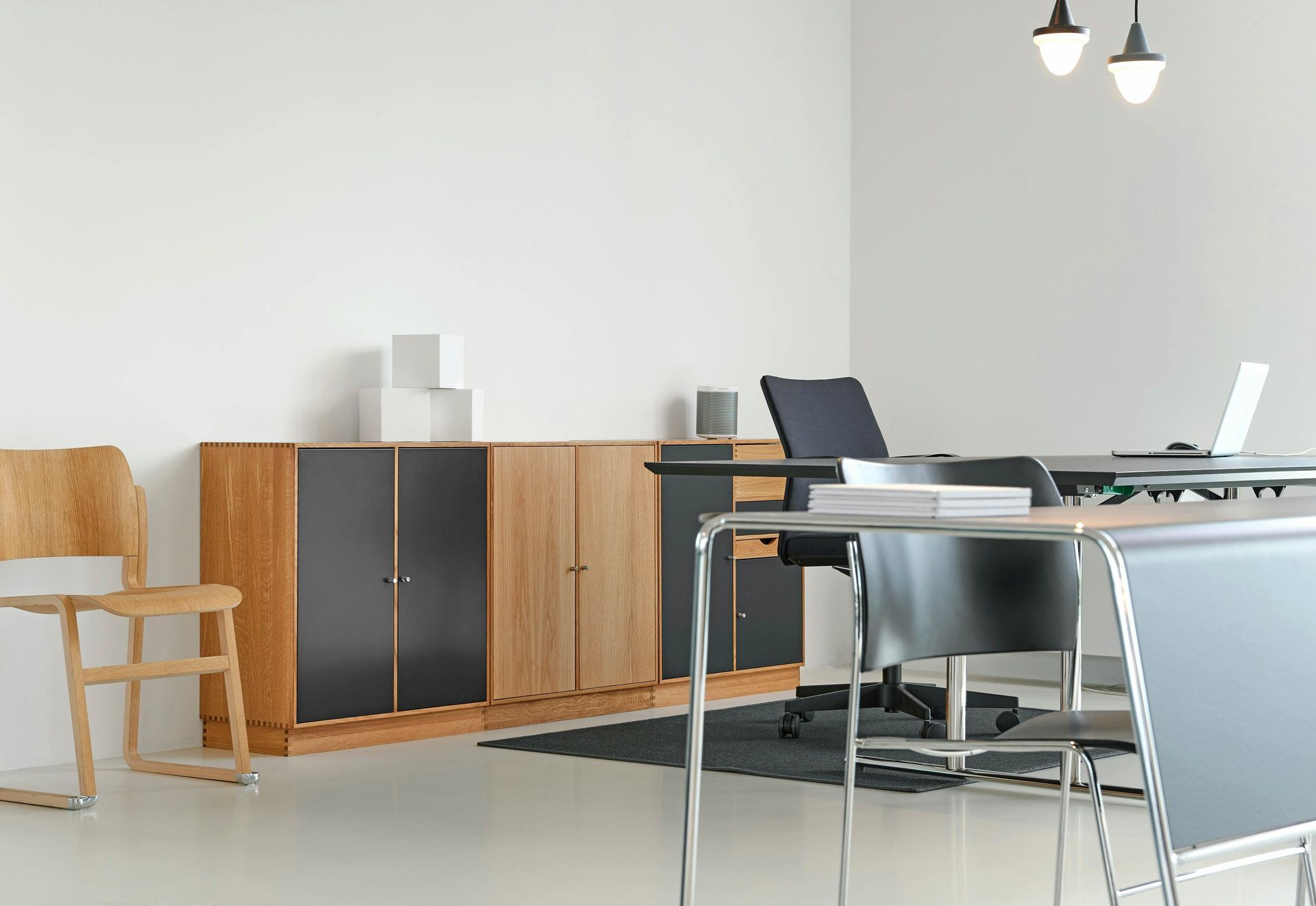
The furniture types that support daily workflow best are the ones matched to the tasks people repeat most often. Desks, seating, storage, conference furniture, reception pieces, and modular workstations should all be selected and installed based on traffic flow, comfort, access, and the kind of work the office handles.
Match the furniture to the work
Not every office needs the same mix, but several categories matter across industries:
- Reception desks and guest seating shape the first impression in client-facing offices.
- Ergonomic desks and task chairs support longer work sessions for admin and professional staff.
- File cabinets, shelving, and credenzas keep supplies and records close without adding clutter.
- Conference tables support meetings, document review, and collaborative planning.
- Modular workstations help corporate teams scale and reconfigure more easily.
- Medical stools, side chairs, and storage cabinets help care teams work quickly and safely.
Beyond appearance, office furniture should also align with broader commercial furniture compliance standards so businesses think about safety, durability, and long-term use, not just style.
Can Poor Installation Disrupt Staff and Client Experience
Poor office furniture installation can disrupt both staff and client experience almost immediately. Uneven desks, blocked walkways, unstable seating, bad spacing, and unfinished rooms make work slower, create frustration, and send the message that the office is disorganized, even when the business itself is highly professional.
What staff notices first
Staff usually feel poor installation through daily friction. They walk farther to reach supplies, fight with drawers that cannot open fully, squeeze past chairs, or lose time adjusting unstable desks and conference tables. Small inefficiencies add up fast.
In medical and legal environments, poor placement can also create bigger problems. Privacy suffers, patient or client movement becomes awkward, and admin teams spend extra time solving layout issues that should have been addressed during setup.
What clients notice immediately
Clients and patients notice clutter, crowding, and unfinished details right away. A crooked reception desk, visible cable bundles, or cramped waiting area can weaken confidence before the first conversation even begins.
That is why client-ready office furniture installation matters. It protects the experience people have with your business as much as it supports the team behind it.
Industry Specific Furniture Installation Mistakes to Avoid
Industry-specific furniture installation mistakes usually happen when offices use a generic layout for a specialized environment. The most common problems include poor spacing, weak planning, ignored compliance needs, and installing furniture before the room, technology, or workflow details are actually ready.
Mistakes that cause the most trouble
- Crowding medical rooms so staff, patients, and equipment compete for the same space.
- Setting up legal offices without enough privacy for consultations or secure file access.
- Installing corporate workstations before power, data, and cable paths are finalized.
- Skipping office furniture disassembly during renovations or phased reconfigurations, which often damages reusable assets.
- Treating reception areas as decoration only instead of part of the daily workflow.
Why these mistakes are costly
These errors waste time twice. First, they slow the initial install. Then, they force managers to adjust, move, or replace furniture after staff have already started using the space.
A smarter installation plan prevents rework, protects furniture, and helps each office function the way it should.
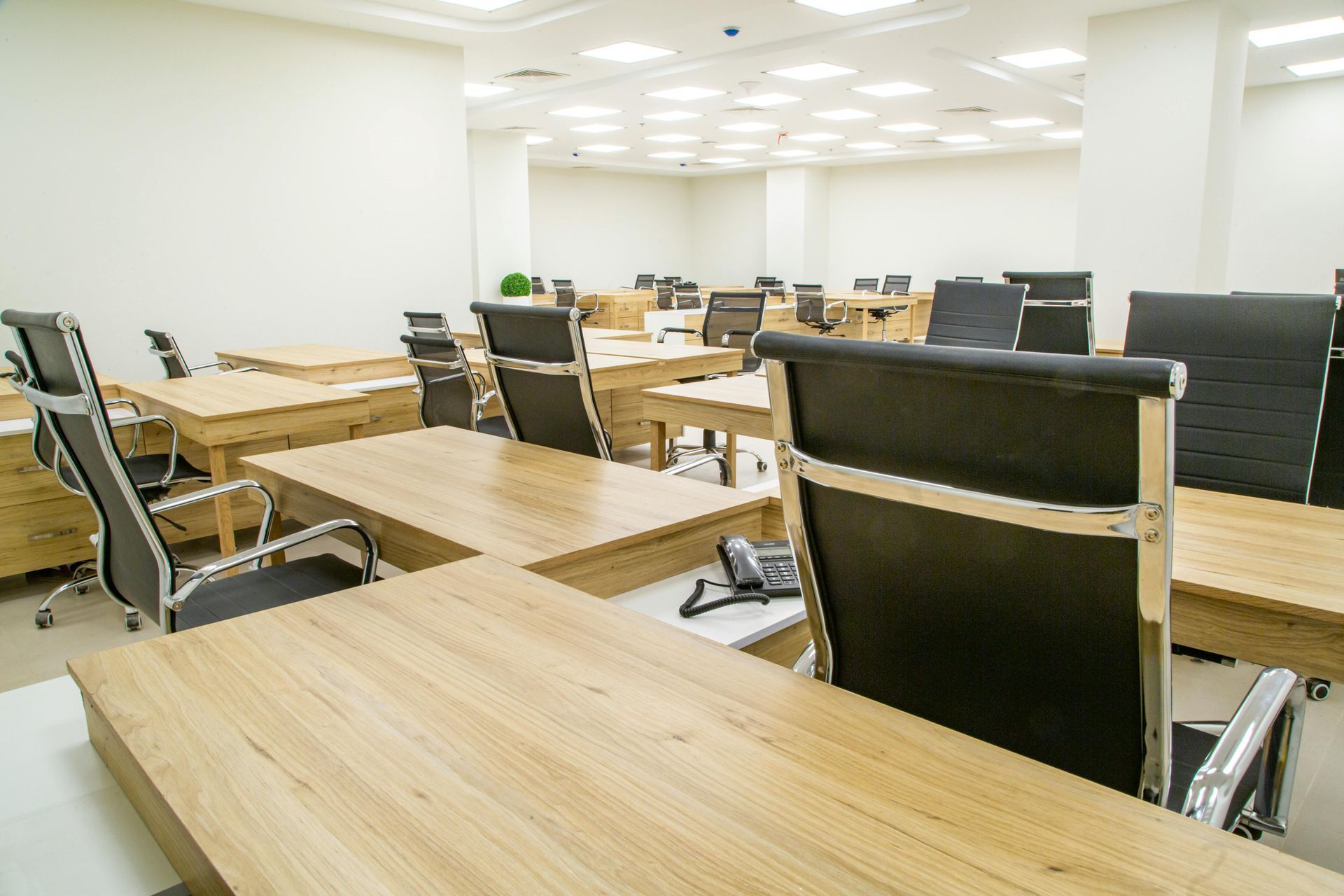
How Professional Installation Keeps Office Projects on Track
Professional installation keeps office projects on track by turning a furniture delivery into a coordinated project plan. Instead of guessing through assembly, placement, and sequencing, businesses get a team that manages room flow, phased scheduling, safety checks, and final setup so staff can stay focused on their own work.
What a smoother project looks like
Experienced installers survey the space, confirm layout needs, assemble efficiently, level and secure furniture, and flag issues before they delay occupancy. That matters even more for medical suites, law offices, and corporate floors that cannot afford downtime.
Businesses planning relocations or reconfigurations can also learn from guides on what to expect when moving offices and how to prepare, then request a detailed installation quote before the project begins.
- Pre-install planning reduces surprises on delivery day.
- After-hours and phased scheduling reduce disruption for staff and visitors.
- Proper assembly protects furniture warranties and long-term performance.
- Final punch-list review helps the office open fully ready for use.
Office Furniture Assemblers adds value here by offering experienced, insured support, plus flexible scheduling for busy commercial environments.
Create a Better Workspace for Staff and Clients Alike
The smartest time to hire professional office furniture installation is before layout problems, delays, and poor first impressions cost your team time. Office Furniture Assemblers helps medical offices, legal offices, corporate suites, and shared workspaces create cleaner, safer, more efficient environments that support both staff performance and client confidence.
Whether you are renovating a practice in Bethesda, reconfiguring a law office in Alexandria, relocating a corporate suite in Baltimore, or updating shared work areas in Rockville, Arlington, Wilmington, Harrisburg, or across Maryland, Washington DC, Delaware, Pennsylvania, and Northern Virginia, the goal is the same: install furniture once, install it well, and keep the project moving.
For office renovations, relocations, and reconfigurations that need professional coordination, contact Office Furniture Assemblers to plan a setup that fits your workflow and presentation goals. If your broader property update also involves other specialized service coordination, support such as specialized repair work may be useful alongside larger facility improvement projects.
Key Takeaways
- Medical, legal, and corporate offices need different installation strategies because each one relies on different standards for privacy, safety, traffic flow, storage, and presentation.
- The best workflow usually comes from matching the right furniture types to the work itself, including reception areas, workstations, storage, conference rooms, and specialized medical pieces.
- Poor installation can slow staff down, create safety issues, weaken confidentiality, and leave clients or patients with the wrong first impression.
- For busy, client-facing, or time-sensitive projects, Office Furniture Assemblers is often the safer and smarter choice for professional office furniture installation across MD, DC, DE, PA, and Northern VA.
FREQUENTLY ASKED QUESTIONS
Do medical offices need special furniture installation planning?
Yes, medical offices usually need more detailed planning than standard office spaces. Patient access, staff movement, exam-room clearance, sanitation, and safety all affect how furniture should be placed and secured.
How should legal offices arrange desks, files, and meeting areas?
Legal offices should arrange furniture to protect privacy and keep file access efficient. Private consultations, secure storage, and clear separation between public and staff-only zones usually lead to a more functional layout.
What furniture works best for client-facing office spaces?
Reception desks, guest seating, conference tables, and organized storage usually have the biggest impact. The best choices are comfortable, durable, and installed in a way that supports both appearance and easy movement.
Should office furniture installation happen after hours?
Often, yes, especially in medical, legal, and busy corporate settings. After-hours or phased installation can reduce disruption, protect client experience, and help staff keep working while the project moves forward.
How long does office furniture installation usually take?
It depends on the number of rooms, furniture types, and whether old pieces must be removed first. A small setup may take part of a day, while a multi-room office or phased installation can take several days.
Should old office furniture be removed before new furniture arrives?
Usually, yes, unless the project is being completed in phases. Removing or disassembling old furniture first creates a safer work area and helps the new layout come together faster and more accurately.
When is professional office furniture installation better than DIY?
Professional installation is the better choice when the office is client-facing, time-sensitive, multi-room, or difficult to shut down. It also makes sense when furniture is heavy, modular, technology-connected, or needs to support specialized workflow.