Conference Room Furniture Installation for Modern Office Spaces
Conference room furniture installation works best when the room is designed around real meeting behavior, not just a floor plan. The most successful spaces balance table size, chair spacing, cable access, presentation sightlines, and safe movement so the room stays comfortable and professional every day.
- Match the table and seating count to both room size and daily meeting style
- Plan power, screen placement, and cable routes before the table is assembled
- Keep clear paths to doors, whiteboards, displays, and presentation areas
- Level and align furniture carefully so the room feels polished and stable
- Use professional installation to reduce wobble, clutter, damage, and rework
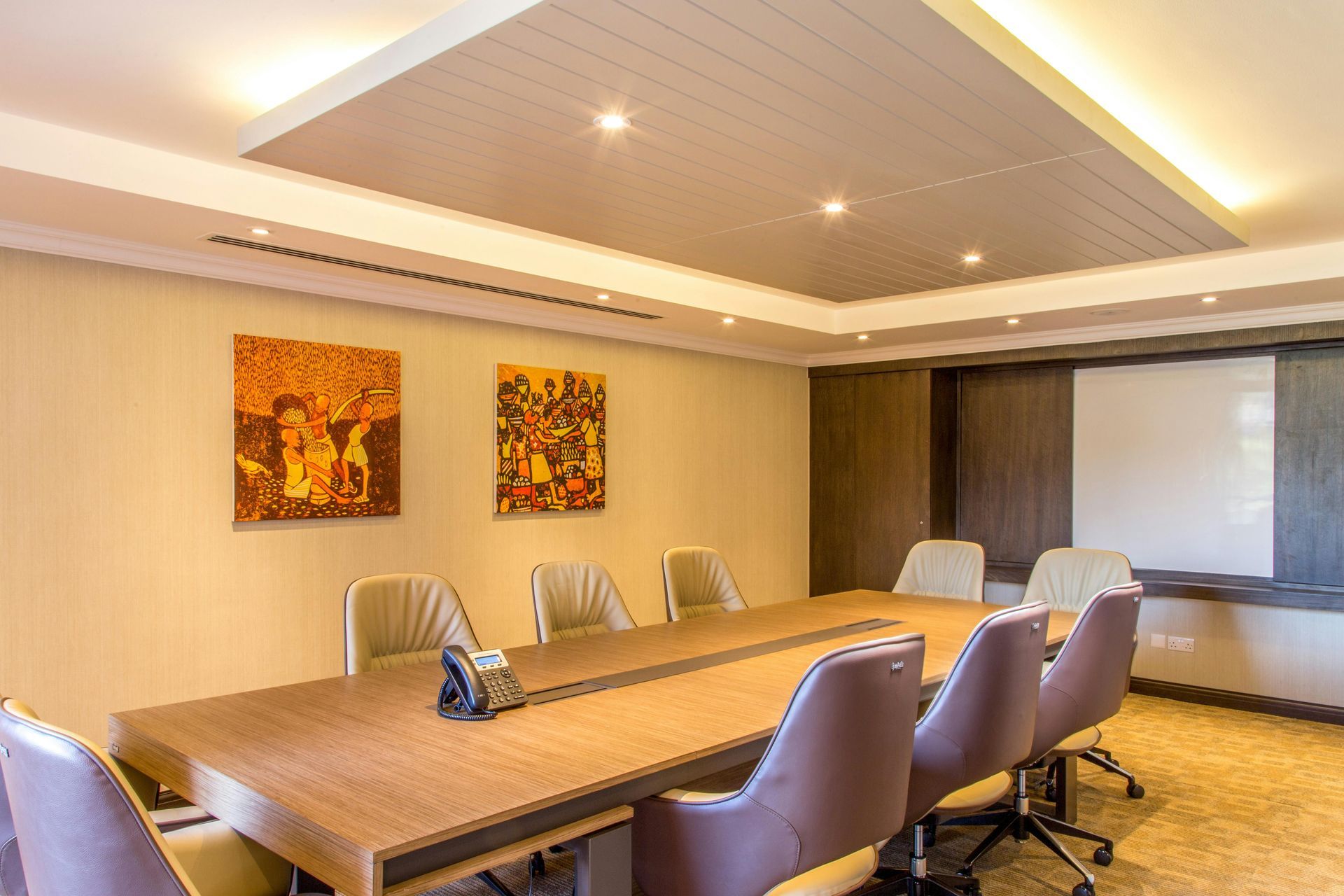
Conference rooms often look impressive on paper, yet disappoint once teams start using them. A table may be too large for the room, chairs may crowd the walls, and power access may end up in the wrong place. Then small frustrations build quickly. Cables sprawl across walking paths, presentations feel awkward, and the room stops supporting clear communication. That problem gets even worse in busy offices where meetings happen back to back and every square foot matters.
Proper conference room furniture installation solves those issues before they become daily obstacles. When layout, placement, assembly, and finishing details are handled correctly, meetings run better, clients see a more organized office, and the room becomes a useful part of the workplace instead of a constant workaround.
What Makes Conference Room Furniture Installation Different
Conference room furniture installation is different because the room must support communication, presentation, movement, and technology at the same time. Unlike a private office, a meeting space has to work for multiple users every day while still looking polished for internal meetings, client visits, and leadership discussions.
More than basic assembly
Conference room furniture installation is the process of assembling, positioning, leveling, and aligning meeting room pieces so the room functions safely and efficiently. That includes the conference table, seating, power access, cable paths, presentation sightlines, and clearance around the room.
A desk can be adjusted later without much disruption. A boardroom or shared meeting area is less forgiving. If the table lands too close to a wall or the cable cutouts miss the floor box, the whole room feels off.
A highly visible room
Conference rooms also carry more visual pressure than many other office spaces. In legal offices, medical offices, startups, and corporate workplaces, the meeting room often shapes first impressions. Clean installation supports credibility, while uneven surfaces, crowded seating, and visible wiring suggest the opposite.
How Should Conference Rooms Be Planned for Daily Use
Conference rooms should be planned around the meetings that happen most often, the people who use the room, and the tools they need within reach. A room that supports daily use well will feel comfortable in short check-ins, client meetings, team presentations, and longer decision-making sessions.
Start with real meeting patterns
Before choosing furniture, answer a few practical questions:
- How many people usually meet in the room, not just the maximum
- Will the space host video calls, presentations, interviews, or board meetings
- Do users need laptops open at every seat
- Will clients, patients, or outside counsel use the room regularly
- Does the room need to flex between formal and collaborative use
Those answers drive the best office conference room layout. A medical office may need quicker turnover and easy cleaning. A legal office may prioritize privacy, posture, and document space. A startup may need a more flexible footprint for hybrid meetings. Businesses that want a room aligned with those different needs often benefit from installation support for medical, legal, and corporate offices.
Plan around behavior, not guesswork
The strongest conference room planning starts with how people actually work. If the room is used daily, every placement decision should make meetings smoother rather than simply filling the room with furniture.
Which Furniture Pieces Matter Most in a Modern Meeting Space
The most important furniture pieces in a modern meeting space are the conference table, conference chairs, storage or support pieces, and any modular elements that help the room adapt. Each piece should support visibility, power access, comfort, and a layout that stays functional under regular use.
The centerpiece sets the room
The table is the anchor of the space, so conference table installation affects everything around it. Size, shape, base design, and cable access all matter. Teams often compare finishes and proportions seen in modern conference tables from Herman Miller when defining the look they want, but the final choice still has to match the room’s dimensions and traffic flow.
For rooms with large tops, integrated ports, or multi-piece construction, many businesses also look at what conference table installation specialists prioritize, such as leveling, alignment, and clean cable routing.
Seating affects every meeting
Conference chair placement should support posture, elbow room, and smooth movement in and out of the room. Many offices evaluate mobility, support, and meeting comfort against standards seen in conference chairs from Steelcase.
Modern spaces also benefit from flexibility. If the room may expand, shrink, or serve multiple functions, modular office furniture installers can help set up layouts that adapt without forcing a full redesign later.
Can Poor Installation Affect Comfort and Presentation
Poor installation can affect both comfort and presentation almost immediately. A room may still look new, but if the table is off-center, the chairs sit too tightly, or the screen sightlines are awkward, users will feel the problem in every meeting and visitors will notice it as well.
Comfort shows up quickly
Long meetings reveal installation issues fast. When people have to twist to face a screen, squeeze behind chairs, or avoid table legs while plugging in, focus drops. Even a small leveling problem can make a conference table feel unstable and distracting.
Presentation is part of function
Presentation is not only about style. It is about whether the room looks organized, intentional, and ready for business. Many offices want the clean, executive presence associated with Florence Knoll conference tables, yet that effect depends just as much on installation quality as on the furniture itself.
A polished room supports authority. A cluttered or awkward room works against it.
How Do Power Access and Cable Management Shape the Layout
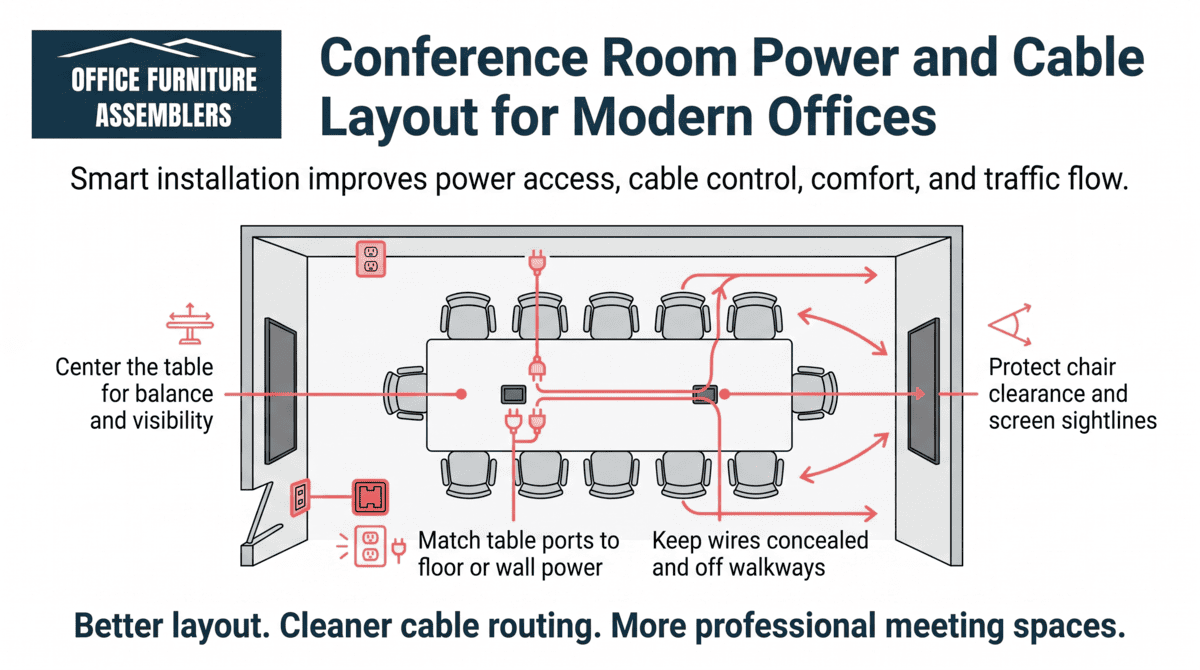
Power access and cable management shape the layout by determining where people can sit, how devices connect, and how clean the room feels during daily use. In many modern conference room setups, cable routing is not a finishing detail. It is one of the first layout decisions that should be planned.
Plan technology before placement
A well-installed room should account for laptops, monitors, speakerphones, charging, and presentation equipment before the table is assembled. Otherwise, the room may look finished but still fail in practice.
Key cable and power planning points include:
- Matching table grommets or cutouts to floor boxes or wall outlets
- Keeping cables out of walking paths and away from chair casters
- Positioning screens where everyone can see clearly
- Leaving room for adapters, charging bricks, and presentation devices
- Using under-table cable trays or concealed channels where possible
Good conference room cable management improves safety, reduces clutter, and helps the room feel more professional. It also makes the space easier to clean and easier to troubleshoot when equipment changes.
What Room Size and Traffic Flow Issues Should Be Considered
Room size and traffic flow should be considered before any furniture is installed because the right table can still fail in the wrong footprint. A successful meeting room leaves enough space for chairs to move, people to enter and exit easily, and presenters to reach screens, whiteboards, and storage without disruption.
Protect clearances and movement
As a practical rule, offices should leave enough space around the conference table for chairs to slide back and for people to walk behind them comfortably. That usually means planning for both seated clearance and active circulation, not just measuring the room wall to wall.
Traffic flow matters even more in shared meeting spaces, boardrooms, and client-facing offices where several people may enter at once. During relocations, teams should also coordinate layout planning with furniture movement, budgets, and sequencing. Reviewing local factors such as moving budgets in Baltimore can help set realistic expectations, while strong office move preparation helps installation happen in the right order.
Common Conference Room Setup Mistakes to Avoid
The most common conference room setup mistakes are choosing furniture by appearance alone, overfilling the room, ignoring cable paths, and treating installation like a basic delivery task. These mistakes reduce comfort, make meetings harder to run, and create a room that looks finished but works poorly.
Common mistakes include:
- Selecting a table that leaves too little space around the perimeter
- Placing chairs without checking pull-back clearance
- Ignoring floor boxes, outlets, and display wall alignment
- Centering the room visually but not functionally
- Reusing old furniture without planning for safe removal or fit
Reconfigurations also need care. If an office is moving, downsizing, or repurposing an existing boardroom, professional office furniture disassembly can protect valuable pieces and make the next setup more accurate.
Mistakes are expensive because they usually lead to rework. It is easier to get the room right the first time than to fix it after people start using it.
Why Professional Installation Supports a Better Meeting Environment
Professional installation supports a better meeting environment because it improves layout accuracy, comfort, durability, safety, and finish quality all at once. The room not only looks better on day one, but also performs better through everyday meetings, client visits, and long-term wear.
A professional team can:
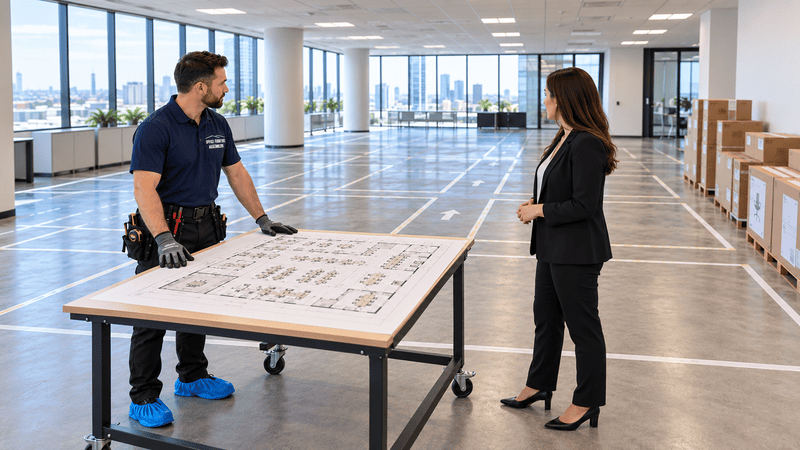
- Read the room against the floor plan before placement is finalized
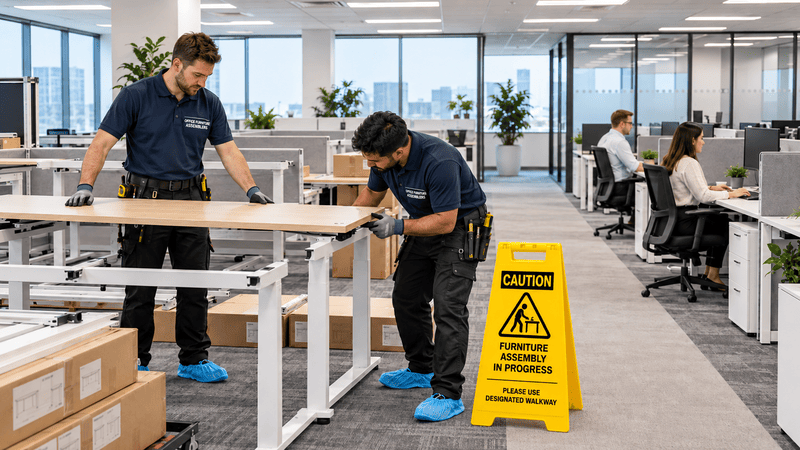
- Level, align, and secure furniture correctly
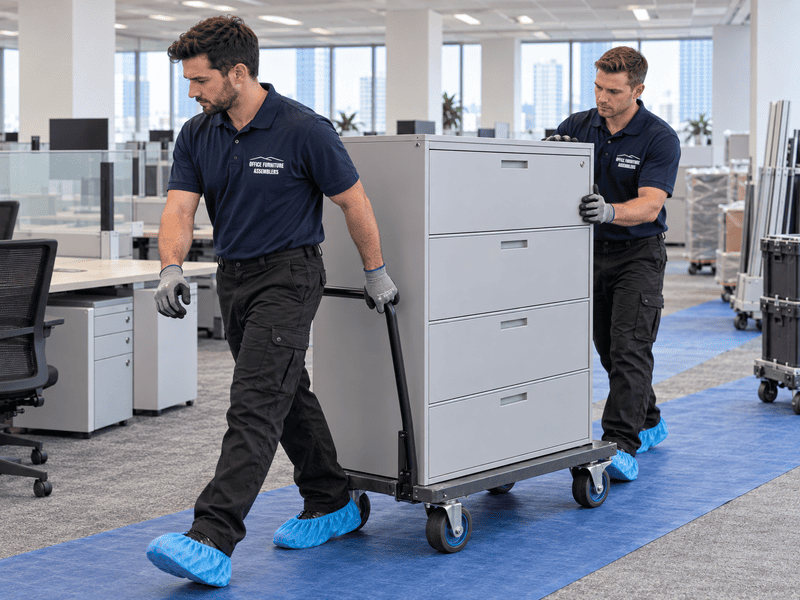
- Protect surfaces, walls, and flooring during setup
- Coordinate cable routing and presentation positioning
- Reduce disruption by working efficiently and on schedule
That matters in conference rooms, but it also matters across the full workplace. Companies planning broader projects often rely on professional office furniture assembly services to keep installations consistent across meeting rooms, workstations, and support areas. For organizations managing multiple room types or larger projects, related commercial furniture services also show how much coordination business environments usually require.
For offices in Maryland, Washington DC, Delaware, Pennsylvania, and Northern Virginia, Office Furniture Assemblers is the company to hire when the goal is a meeting space that works in real life, not just in a showroom.
Create a Conference Room That Works as Well as It Looks
A well-installed conference room helps teams meet with less friction, present more confidently, and use office space more effectively every day. When table placement, chair spacing, cable routing, and finish details are handled professionally, the room feels better to use and leaves a stronger impression on clients and staff alike.
Plan for long-term daily use
Office Furniture Assemblers helps businesses create conference rooms, boardrooms, meeting areas, shared workspaces, client-facing offices, and professional office environments that are comfortable, organized, and built for daily performance. Whether you are setting up a new room across Maryland, Washington DC, Delaware, Pennsylvania, and Northern Virginia, the goal is the same: safer installation, cleaner power access, smoother meetings, and a more polished result.
If your office is ready for a smarter modern conference room setup, schedule service with Office Furniture Assemblers. And if your project includes broader facility needs beyond furniture, some businesses also coordinate outside specialty support such as specialized repair support for other equipment and service demands.
FREQUENTLY ASKED QUESTIONS
How much space should be left around a conference table?
Most conference rooms need enough space for chairs to pull back and for people to walk behind them comfortably. In practice, that usually means planning generous clearance on all sides instead of fitting the largest possible table into the room.
What furniture is needed in a modern conference room?
A modern conference room usually needs a properly sized table, supportive chairs, and furniture that helps with storage, presentations, or hybrid meeting tools. The exact mix depends on whether the room is used for quick team huddles, formal board meetings, or client-facing presentations.
Should cable management be planned before installation?
Yes, cable management should be planned before installation because power location affects where the table, chairs, and screens should go. Waiting until after assembly often leads to visible cords, blocked outlets, and awkward device use.
How do conference chairs affect long meetings?
Conference chairs affect long meetings by shaping posture, comfort, and how easily people stay focused. If chairs are too tight, too low, or poorly spaced, fatigue shows up faster and the room feels less professional.
Does modular furniture work in conference rooms?
Yes, modular furniture can work very well in conference rooms when the space needs flexibility. It is especially useful for growing teams, shared offices, and rooms that may shift between formal meetings and collaborative sessions.
How can offices avoid a crowded conference room layout?
Offices can avoid a crowded layout by choosing furniture based on realistic daily occupancy, not just maximum seating. It also helps to plan around chair movement, door swings, screen visibility, and walking paths before anything is installed.
When is professional conference room installation better than DIY?
Professional installation is better than DIY when the room includes large tables, integrated power, valuable finishes, tight timelines, or client-facing visibility. It also makes sense when offices want cleaner alignment, safer assembly, and fewer costly corrections later.
How does conference room setup affect client impressions?
Conference room setup affects client impressions because the room often signals how organized and prepared a business is. A clean, comfortable, well-planned room supports confidence, while clutter, crowding, and poor presentation can undermine it.