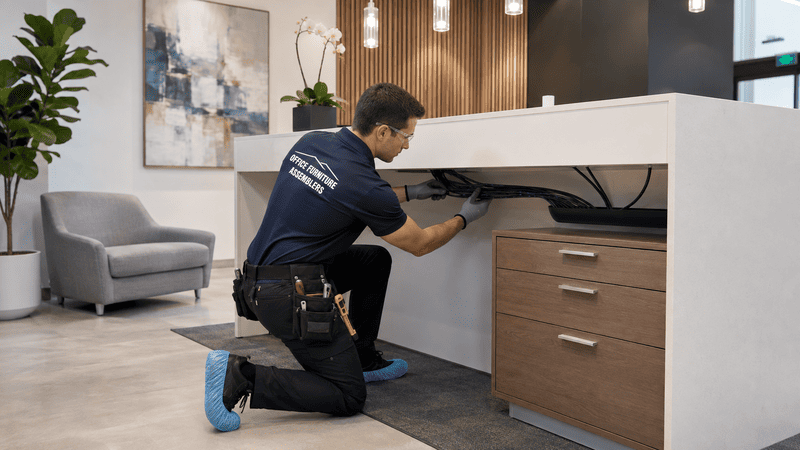
Modern Office Design Trends and Furniture Installation Strategies for 2026

Office Furniture Installation Trends and Planning Tips for 2026
Many businesses are entering 2026 with office layouts that no longer support how their teams actually work. Outdated workstations, inefficient floor plans, and complex installation demands can slow growth, create clutter, and make even simple office updates feel harder than they should be.
The problem often gets worse before it gets better. Poorly planned setups can reduce productivity, create employee discomfort, interrupt daily workflow, and increase project costs when furniture has to be moved, adjusted, or reinstalled. Even a well-designed office can underperform if the installation process is rushed or uncoordinated.
That is why professional office furniture installation matters more than ever. Office Furniture Assemblers helps businesses create modern, functional workplaces with organized project execution, modular workspace setup, and efficient installation support across Maryland, Washington DC, Delaware, Pennsylvania, and Northern Virginia. If your company is planning a refresh, expansion, or relocation, this is a smart time to request a quote and schedule expert help.
How Office Design Trends Are Reshaping Workplace Productivity in 2026
Office design trends in 2026 are reshaping productivity by making workspace performance a planning priority, not an afterthought. Businesses now expect office layouts to support focus, collaboration, movement, comfort, and technology together, which means furniture decisions directly affect how efficiently people work every day.
As companies rethink how teams use the office, layout strategy has become more practical and more data-driven. Employers want spaces that reduce friction, improve communication, and adapt to changing headcounts without major reconstruction.
- Space optimization: improves workflow between teams
- Collaboration zones: support faster problem-solving
- Quiet areas: reduce distractions for focused work
- Ergonomic seating: increases comfort during long workdays
- Flexible layouts: make future updates easier and less expensive
The Shift Toward Flexible Workspaces and Modular Furniture Systems
Flexible workspaces are becoming the standard because businesses need offices that can change as teams grow, merge, or shift to hybrid schedules. Modular furniture systems make that possible by allowing companies to reconfigure layouts quickly while protecting their long-term furniture investment.
This shift is one reason many businesses now rely on modular office furniture assembly with professional installers when planning modern offices. Modular systems work best when every panel, bracket, and workstation component is aligned correctly from the start.
The design logic is also becoming more human-centered. Many companies are borrowing ideas from efficient home office furniture setup, especially when creating touchdown spaces, executive offices, and flexible work zones that need both comfort and function.
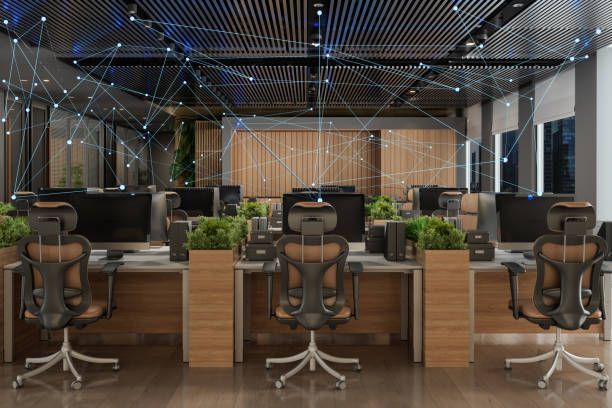
Smart Office Furniture Integration and Technology-Ready Installations
Technology-ready office furniture installation means furniture, power access, device placement, and cable routing are planned together before employees move into the space. In 2026, a modern office must support screens, charging, conferencing tools, and sit-stand functionality without creating visual clutter or safety issues.
That is why smart installation now includes more than desk assembly. Teams also need clean wire management, proper monitor positioning, accessible power points, and conference tables that support daily collaboration without improvised fixes.
During relocations and phased setups, following best practices for safely moving electronics and computer equipment can reduce avoidable damage, shorten setup delays, and protect sensitive workplace technology.
Ergonomic Design Standards Driving Modern Office Layouts
Ergonomic design standards are driving modern office layouts because businesses want offices that improve comfort, reduce strain, and support employee wellness over time. A well-planned workspace should fit the person using it, not force people to adjust to poorly assembled or poorly placed furniture.
This is especially important for task seating and adjustable workstations. Companies that invest in premium seating often choose professional office chair assembly for Herman Miller and Steelcase to ensure the ergonomic features work as intended from day one.
Ergonomic planning also includes glare reduction, surface selection, and workspace adjustability. The IRS workplace standards highlight the value of ergonomic flexibility, efficient use of space, and work surfaces that reduce eye fatigue in screen-heavy environments.
Open Concept vs Zoned Workspaces: Finding the Right Balance
The right office layout in 2026 is rarely fully open or fully enclosed. Most businesses perform better with a balanced plan that combines collaborative areas, focused workstations, circulation paths, and private spaces within one organized layout.
Open concepts can improve visibility and communication, yet they may also increase noise and distraction. Zoned workspaces solve that problem by giving teams the right setting for the right type of work, which improves both concentration and collaboration.
Accessibility should also shape the final plan. Practical ADA office furniture installation guidance shows why route width, furniture placement, and workstation access should be considered during installation instead of corrected later.
Sustainable Office Furniture and Eco-Conscious Installation Practices
Sustainable office furniture installation is the practice of planning, assembling, and positioning workplace furniture in ways that reduce waste, protect product life, and support healthier indoor environments. In 2026, sustainability depends on smart execution as much as responsible purchasing.
Businesses can support eco-conscious goals by reusing viable furniture, choosing modular systems, reducing material damage during installation, and minimizing unnecessary rework. Sustainable planning also helps companies avoid replacing usable items simply because the setup process was disorganized.
For compliance-minded buyers, the U.S. furniture requirements guide is a useful reference for safety, emissions, and furniture performance standards that can inform better purchasing and installation decisions.
High-Density Office Layouts Without Sacrificing Comfort
High-density office layouts can still feel comfortable when spacing, circulation, privacy, and ergonomics are handled with precision. The goal is not to fit the most desks possible into one area. The goal is to support more people without making the office feel cramped, noisy, or inefficient.
To achieve that balance, businesses need thoughtful desk alignment, smart storage placement, and panel systems that define work zones without cutting off movement. Clear traffic paths and intentional furniture spacing matter even more as occupancy increases.
For growing teams, professional office cubicle installation can help create denser layouts that remain organized, accessible, and easy to reconfigure when departments change.
Furniture Installation Strategies for Large-Scale Office Projects
Large-scale office furniture installation works best when the project is phased, carefully sequenced, and aligned with building access, delivery windows, and occupancy goals. The larger the project, the more important it becomes to treat installation as a managed operation instead of a simple assembly task.
Budget planning should account for furniture system complexity, disassembly needs, building restrictions, and after-hours scheduling. Companies comparing labor variables and site conditions can review this guide to office furniture installation costs in Washington DC, Maryland, and Northern VA when setting expectations.
Logistics matter just as much as labor. Lessons from moving and hauling service planning reinforce the value of reliable equipment, organized transport, and clear scheduling during multi-room and multi-phase office projects.
Common Office Furniture Installation Challenges and How to Avoid Them
The most common office furniture installation challenges include missing parts, poor sequencing, access delays, damaged finishes, and layout errors that lead to costly rework. These issues are usually preventable when businesses verify inventory early, protect work areas, and use trained installers who understand commercial projects.
Some projects also run into damaged components or adjustment issues that require experienced troubleshooting. That is where the value of specialized technicians becomes clear, much like in specialized repair services where the right expertise saves time and prevents unsafe shortcuts.
Another common risk is unnecessary disruption to employees. Businesses can reduce that risk by following proven methods for office furniture setup without disrupting work, including phased installation, after-hours scheduling, and continuous cleanup during the job.
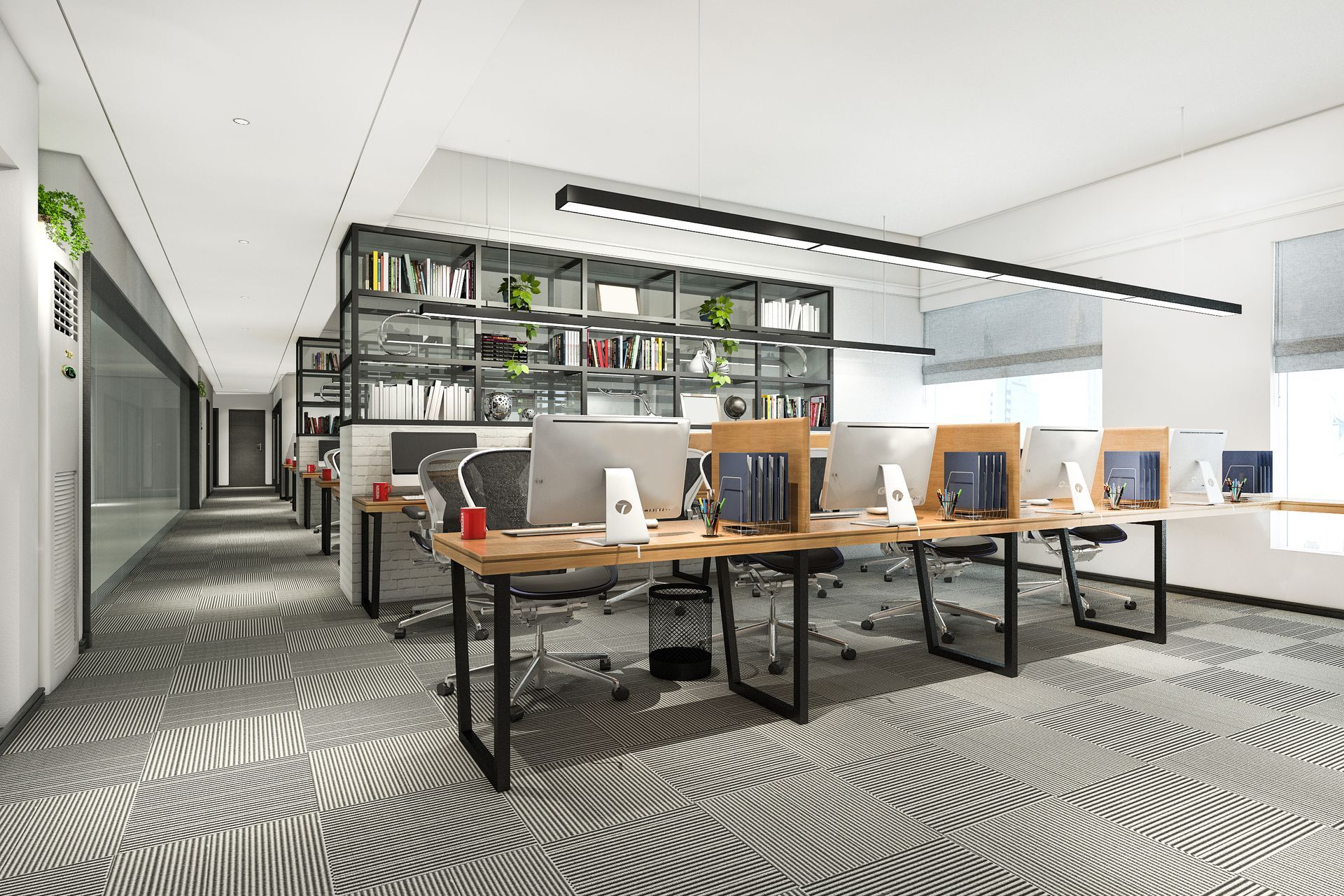
Why Professional Office Furniture Installation Matters More in 2026
Office furniture installation is the professional process of assembling, placing, adjusting, leveling, and finalizing workplace furniture so the office is safe, functional, and ready for daily use. In 2026, that process matters more because offices are more modular, more technology-driven, and more expensive to interrupt.
Professional installers reduce errors, protect product warranties, improve layout accuracy, and complete work faster than untrained internal teams. As a result, businesses can protect productivity and avoid the hidden cost of delays, damage, and repeated setup work.
A broader view of office furniture assembly services also supports the same conclusion: experienced crews bring layout discipline, safe handling, cable organization, and the project structure needed for commercial results.
Planning Your Office Setup: From Design Concept to Final Installation
A successful office setup starts with a clear plan that connects design intent to installation reality. Businesses should define team needs, approve a final floor plan, confirm inventory, organize delivery timing, and coordinate each stage of the setup before furniture reaches the floor.
That process often includes relocation support as well as assembly. When a company is moving, downsizing, or reconfiguring existing furniture, office furniture moving services can help protect equipment, label components properly, and reduce downtime between spaces.
Preparation also improves speed and accuracy. This article on making a new office setup easier with professional assembly service reinforces a simple point: strong planning makes the final installation smoother, cleaner, and more cost-effective.
Choosing the Right Office Furniture Assembly Team for Your Project
The right office furniture assembly team should understand commercial timelines, building requirements, furniture brands, phased installation, and workplace ergonomics. Businesses need a partner that can communicate clearly, solve problems quickly, and keep the project moving without creating extra work for internal staff.
That is why many companies start with specialized office furniture assembly services rather than assigning complex setup work to employees or general labor crews. Commercial office installation requires more precision than most businesses expect.
Local knowledge matters too. Just as this guide about finding professional local installers near you points out in another service category, regional coverage improves responsiveness, travel efficiency, and scheduling reliability for projects in Baltimore, Rockville, Bethesda, Arlington, Alexandria, Wilmington, and Harrisburg.
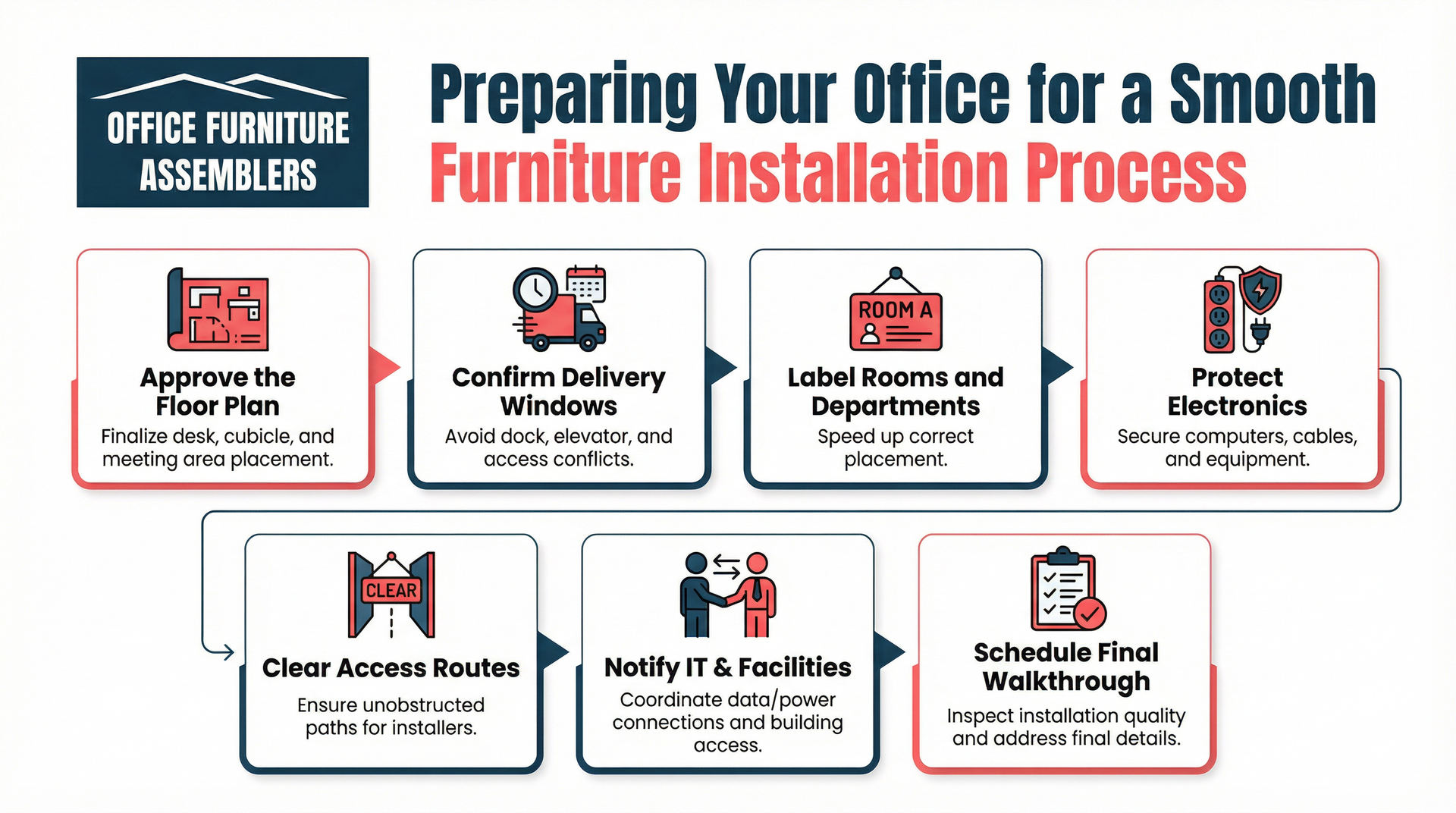
Preparing Your Office for a Smooth Furniture Installation Process
The best way to prepare your office is to confirm the layout, clear access routes, protect equipment, communicate the schedule, and remove obstacles before the crew arrives. A smooth installation depends as much on preparation as it does on assembly skill.
- Final floor plan approved: prevents rework and misplacement
- Delivery window confirmed: avoids elevator and dock conflicts
- Departments labeled clearly: speeds up furniture placement
- Electronics protected: reduces damage during staging and assembly
- Old furniture removed: creates safer work zones
- Staff notified in advance: limits confusion and workflow interruption
- Building access arranged: keeps the project on schedule
Businesses should also make sure everyone involved knows who is approving placement decisions on installation day. Clear accountability helps the crew work faster and reduces avoidable delays when adjustments are needed.
Ready to Schedule Professional Office Furniture Installation?
Office Furniture Assemblers helps businesses complete office furniture installation projects efficiently across Maryland, Washington DC, Delaware, Pennsylvania, and Northern Virginia. Whether you are upgrading a workspace in Bethesda, reconfiguring offices in Arlington, expanding in Baltimore, or preparing for a move in Wilmington or Harrisburg, professional installation helps keep your project organized and your team productive.
If you want a cleaner process, better results, and less disruption, contact Office Furniture Assemblers to discuss your project and timeline.
To get started quickly, request your office furniture installation quote online and schedule service with a team that specializes in commercial office setup.
FREQUENTLY ASKED QUESTIONS
How long does office furniture installation usually take?
Most office furniture installation projects take anywhere from a few hours to several days, depending on the number of workstations, building access, and layout complexity. Smaller offices move faster, while phased corporate projects usually require a more detailed schedule.
Should businesses hire professionals for modular office furniture assembly?
Yes, professional installers are the better choice for modular systems. These setups require precise alignment, stable connections, and efficient sequencing to avoid rework and protect the long-term value of the furniture.
What is included in office furniture assembly services?
Office furniture assembly services typically include unpacking, assembly, leveling, placement, adjustment, and cleanup. Many providers also help with reconfiguration, disassembly, and coordinated relocation support when needed.
Can office furniture installation happen after business hours?
Yes, many commercial installations are scheduled during evenings or weekends. After-hours service helps businesses reduce disruption and keep employees focused during normal operating hours.
How can companies reduce disruption during office setup?
Companies can reduce disruption by finalizing floor plans early, protecting electronics, staging work by department, and keeping communication clear with employees and building management. Professional installers also help by moving faster and maintaining a cleaner jobsite.
What should businesses ask before hiring office furniture installers?
Businesses should ask about commercial experience, insurance, service area coverage, scheduling availability, and familiarity with the furniture brand or system being installed. It also helps to ask how the team handles missing parts, layout changes, and access restrictions.
Is professional office furniture installation worth the cost for growing businesses?
Yes, it is usually worth the cost because it reduces errors, shortens downtime, protects furniture, and helps teams use the space sooner. Over the full project, professional installation often saves more than it costs.