How to Efficiently Set Up or Reconfigure Your Office Furniture Without Disrupting Workflow
Setting up new office furniture or reorganizing your workspace should boost productivity, not bring it to a standstill. Yet countless businesses and home office owners attempt DIY furniture assembly only to face hours of frustration, damaged components, and disrupted routines. Whether you're configuring cubicles for a growing team in Maryland, setting up a home office in DC, or reconfiguring workstations across Northern Virginia, the right approach to office furniture assembly protects your investment and maintains your daily workflow. This guide reveals how Office Furniture Assemblers team delivers efficiency, safety, and peace of mind for both residential and commercial spaces.
Why Office Furniture Assembly Is More Challenging Than You Think
That flat-pack desk or modular cubicle system may look straightforward in the catalog, but reality often tells a different story. Office furniture arrives with dozens of nearly identical screws, cryptic assembly diagrams, and components that require precise alignment.
Common DIY challenges include:
- Misaligned components: Small errors in early steps create compounding problems that leave panels crooked and drawers stuck.
- Damaged finishes: Incorrect tools or rushed assembly scratches laminate surfaces and strips screw heads, voiding warranties.
- Missing hardware: Discovering you lack essential brackets halfway through assembly means frustrating delays waiting for replacements.
- Unstable structures: Improperly tightened connections create wobbly desks and filing cabinets that pose safety risks.
- Time miscalculation: What manufacturers estimate as a two-hour project often consumes an entire weekend for first-time assemblers.
Professional office furniture assembly services eliminate these headaches by bringing specialized tools, manufacturer-specific knowledge, and efficient systems to every project. Licensed installers recognize quality issues immediately and correct problems before they compromise your furniture's integrity.
How Professional Installation Protects Your Daily Routine
Whether you run a busy law office or work from home managing client calls, you cannot afford extended downtime during furniture installation. Professional assemblers minimize disruption through strategic planning and efficient execution.
For commercial spaces:
- After-hours scheduling: Installers work evenings and weekends in Maryland, DC, and Northern Virginia offices, completing projects while your team is away.
- Phased installations: Configure one department at a time so most employees continue working in unaffected areas.
- Rapid completion: Experienced crews complete installations 3-4 times faster than untrained staff attempting DIY assembly.
For home offices:
- Contained work areas: Professionals confine assembly mess to specific rooms, keeping the rest of your home functional.
- Same-day completion: Most home office setups finish in 2-4 hours, restoring your workspace by afternoon.
- Quiet operation: Installers use appropriate tools that minimize noise disruption to household activities.
Workflow protection essentials:
- Equipment safeguarding: Computers, monitors, and sensitive electronics get covered and protected before any furniture work begins.
- Clean progression: Professional crews clean as they work, removing packaging and debris continuously rather than leaving chaos until the end.
- Functional transitions: For reconfigurations, installers often set up temporary work areas so you never lose access to essential files or equipment.
This systematic approach applies equally to office furniture moving projects requiring careful disassembly, transport, and reinstallation across locations.
Ready to maintain productivity during your installation? Contact our licensed team for flexible scheduling options and same-week availability tailored to your residential or commercial needs.
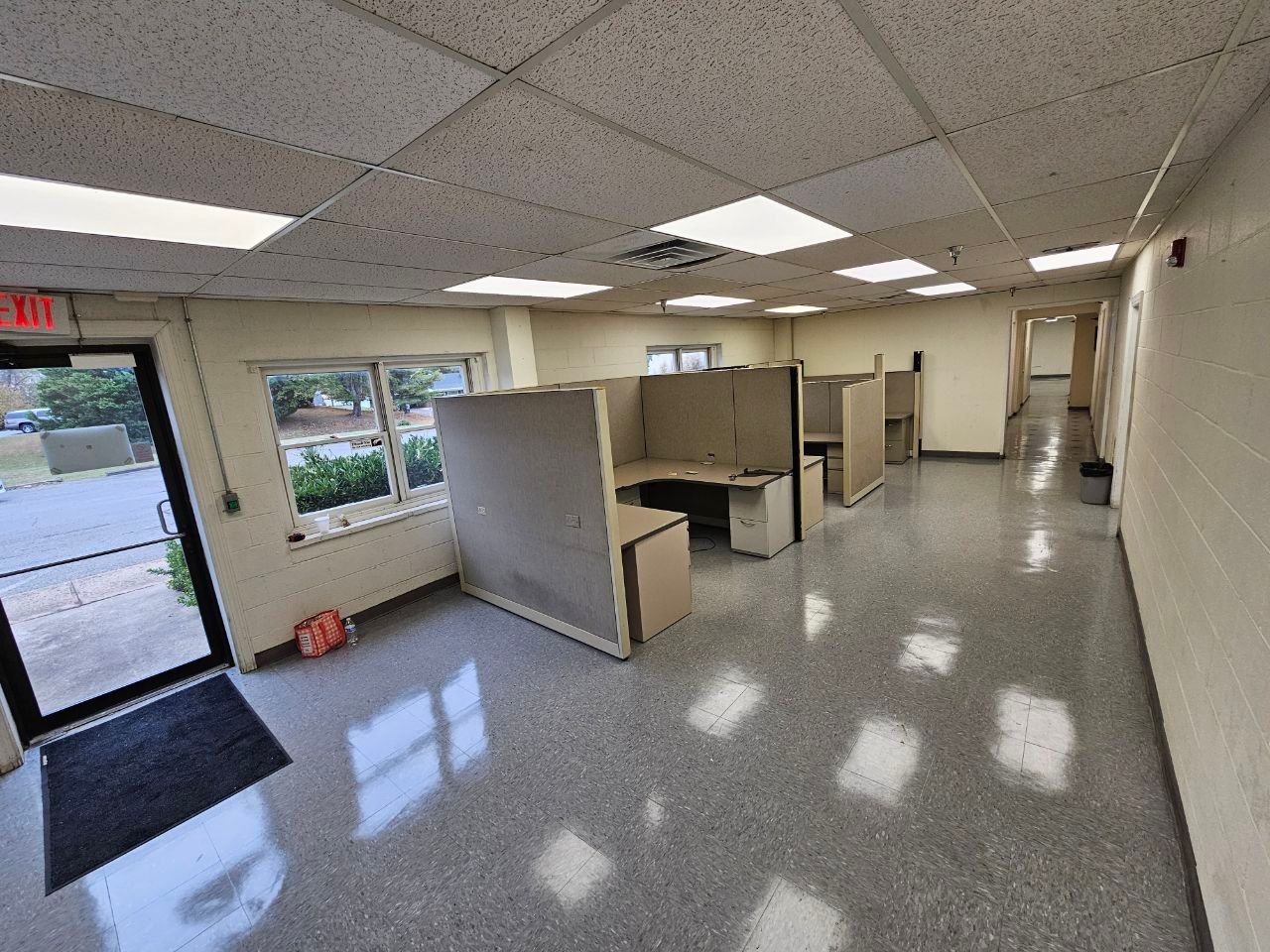
The Benefits of Professional Office Cubicle Installation
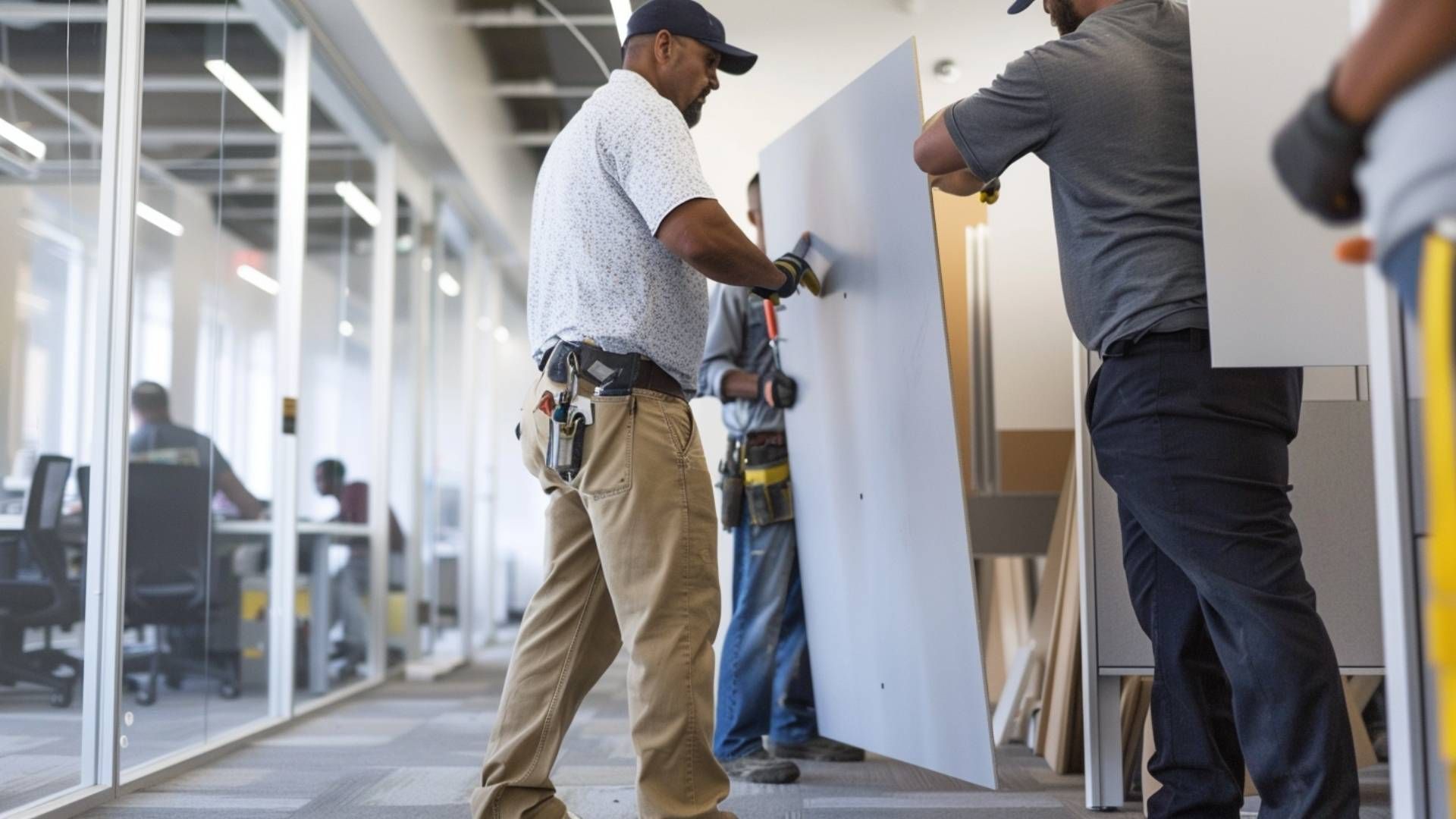
Cubicle systems represent one of the most complex furniture assembly challenges. These modular configurations require precise measurements, electrical coordination, and structural understanding that goes far beyond basic desk assembly.
Professional cubicle installation advantages:
- Accurate space planning: Installers measure your floor plan precisely, ensuring panels fit without blocking pathways, windows, or emergency exits.
- Electrical integration: Safely route power and data cables through panel raceways according to local building codes and safety standards.
- Panel stability: Proper connection techniques create secure structures that won't shift or separate over time.
- Ergonomic configuration: Position work surfaces, monitor arms, and storage at optimal heights for comfort and productivity.
- Future adaptability: Install components in ways that allow easy reconfiguration as your space needs evolve.
Office cubicle installation requires familiarity with systems from manufacturers like Herman Miller, Steelcase, Haworth, and Knoll. Each brand has unique connection methods and hardware that generic assembly experience cannot address.
According to professional assembly experts, properly installed cubicle systems last 40-60% longer than DIY installations and generate significantly fewer warranty claims for structural issues.
What to Expect During Professional Furniture Setup
Understanding the installation process helps both home and business clients prepare for a smooth, efficient experience.
Pre-installation preparation:
- Site evaluation: Installers assess your space, measuring doorways, elevators, and staircases to plan furniture delivery routes.
- Inventory verification: Crews check all boxes against packing lists, documenting any shipping damage before starting assembly.
- Timeline communication: You receive clear schedules showing when each area will be under construction and when completion is expected.
- Space clearing: Remove personal items, electronics, and decor from work areas to give installers unobstructed access.
During installation:
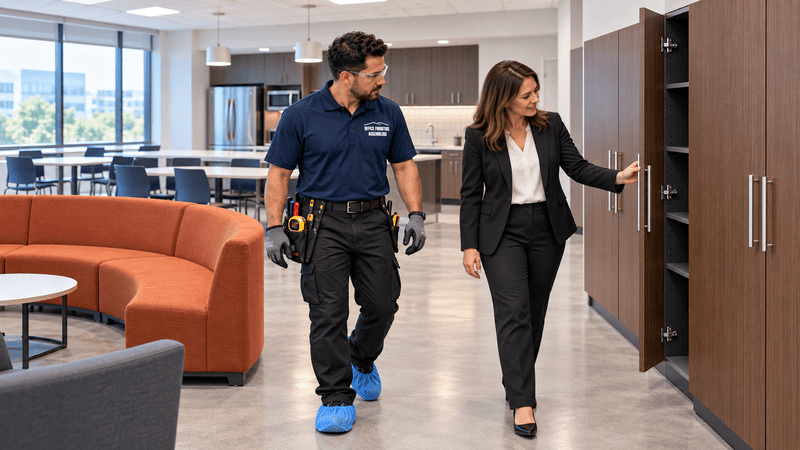
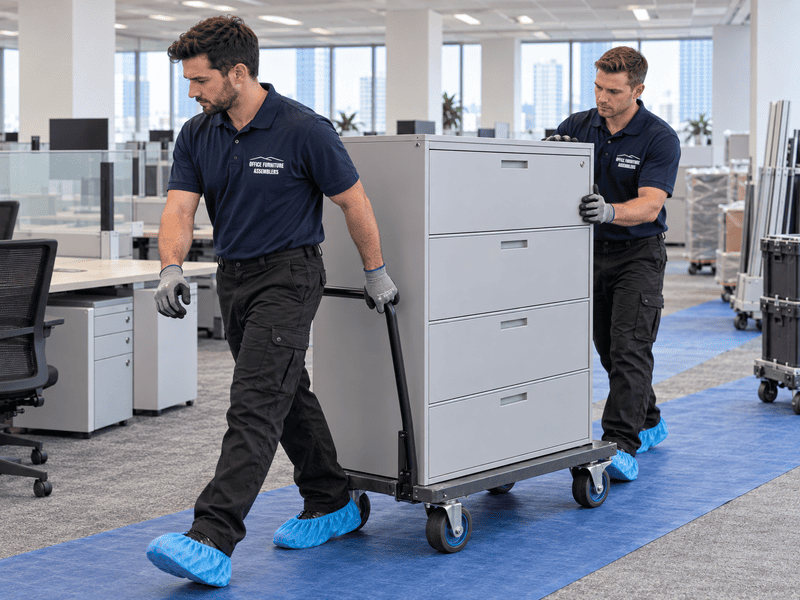
- Surface protection: Floor runners, corner guards, and furniture pads prevent damage to existing flooring, walls, and doorways.
- Systematic assembly: Teams complete one workspace or room fully before moving to the next, maintaining organization throughout.
- Quality verification: Installers test every drawer slide, door hinge, and connection point to ensure proper function before declaring completion.
- Real-time adjustments: Professionals adapt to unexpected conditions like uneven floors or mismatched components without delays.
Post-installation service:
- Thorough cleaning: All packaging materials get removed, surfaces wiped clean, and floors vacuumed before the final walkthrough.
- Functionality review: Installers demonstrate features like adjustable-height desks, locking mechanisms, and cable management systems.
- Adjustment window: Quality services return within two weeks to make minor modifications as you discover your ideal workspace configuration.
- Documentation: You receive assembly records useful for warranty claims, insurance purposes, or future modifications.
This comprehensive approach extends to specialized projects like conference table assembly requiring precise leveling and integrated technology installation.
Planning Office Reconfigurations That Maintain Productivity
Reorganizing existing furniture presents unique challenges since you need continued access to your workspace during the transition. Strategic planning prevents chaos and maintains workflow continuity.
Reconfiguration strategies for businesses:
- Department-by-department approach: Reconfigure one team's area per day, allowing other departments to operate normally in unaffected zones.
- Temporary workspace setup: Designate conference rooms or break areas as interim workstations for displaced employees.
- Communication planning: Provide detailed schedules showing exactly when each person's workspace will be unavailable and where they should work temporarily.
- Technology coordination: Arrange IT support to quickly reconnect computers, phones, and network equipment in new configurations.
Reconfiguration strategies for home offices:
- Room rotation: If reconfiguring involves multiple rooms, complete one entirely before starting the next to maintain a functional workspace.
- Essential equipment priority: Set up your computer, phone, and critical files first so you can handle urgent work during the reconfiguration process.
- Off-hours scheduling: Plan intensive furniture moving for evenings or weekends when work demands are lighter.
Assessment and optimization:
- Furniture condition review: Professionals evaluate what existing pieces can be reused versus what needs replacement due to wear or damage.
- Space efficiency analysis: Installers identify layout improvements that maximize square footage while maintaining comfortable circulation.
- Ergonomic enhancement: Reconfiguration provides opportunities to improve lighting, reduce glare, and optimize equipment positioning for better comfort.
Before beginning any reconfiguration, consider professional furniture disassembly services to safely take apart modular systems without damaging components you plan to reuse or relocate.
Protecting Your Furniture Investment Through Professional Assembly
Whether you spent $500 on a home office desk or $50,000 outfitting a commercial space, furniture represents a significant investment. Professional assembly protects that investment from the moment boxes arrive.
Financial protection benefits:
- Warranty preservation: Many furniture manufacturers require professional installation to maintain warranty coverage, particularly on commercial-grade systems.
- Damage prevention: Experienced assemblers handle materials correctly, avoiding scratches, dents, and stress cracks that occur during improper installation.
- Structural longevity: Correctly torqued fasteners and properly aligned components mean furniture functions optimally for years without developing problems.
- Liability coverage: Licensed and insured professionals assume responsibility for installation errors, protecting you from financial risk.
Long-term value considerations:
- Resale value retention: Well-maintained, professionally installed furniture commands higher resale prices when you eventually upgrade.
- Reduced repair costs: Proper initial assembly minimizes future expenses for fixing wobbly structures, stuck drawers, or misaligned doors.
- Productivity impact: Quality installations create comfortable, functional workspaces that support focus and efficiency rather than causing frustration.
- Professional appearance: For businesses, expertly assembled furniture creates positive impressions on clients and supports your professional brand.
For those investing in quality pieces from retailers like IKEA home office systems, Amazon office furniture, or Wayfair workspace solutions, professional assembly ensures you realize the full value and longevity these products offer.
Special Considerations for Technology and Equipment
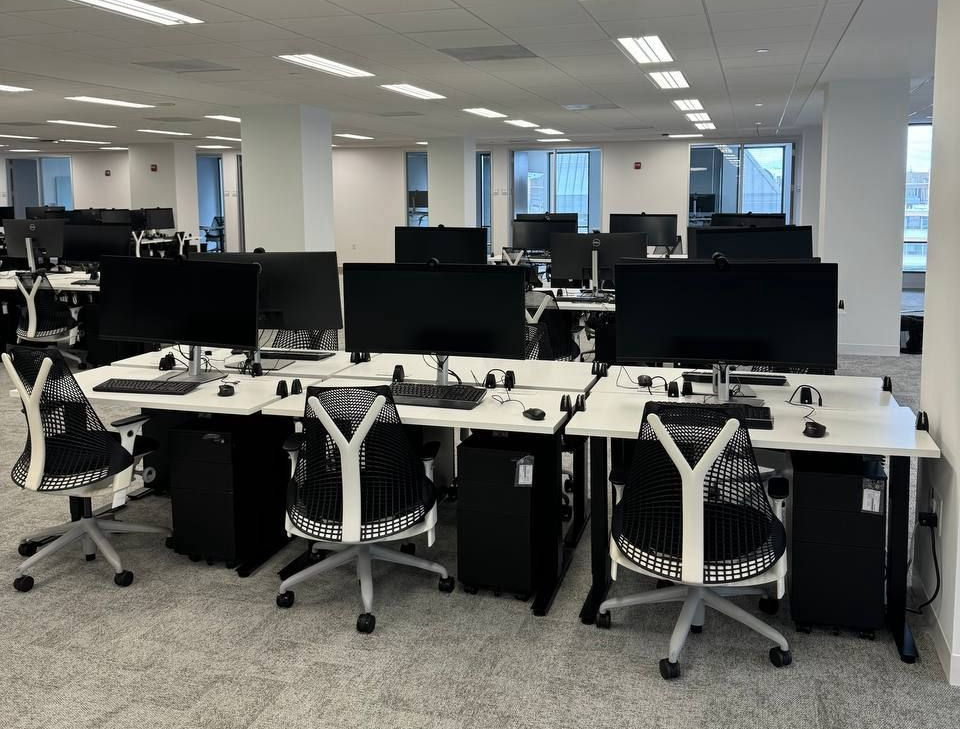
Modern workspaces contain expensive computers, monitors, printers, and telecommunications equipment requiring careful handling during furniture installation.
Technology protection protocols:
- Electronics relocation: Specialized methods for safely moving computers and sensitive equipment prevent data loss and hardware damage.
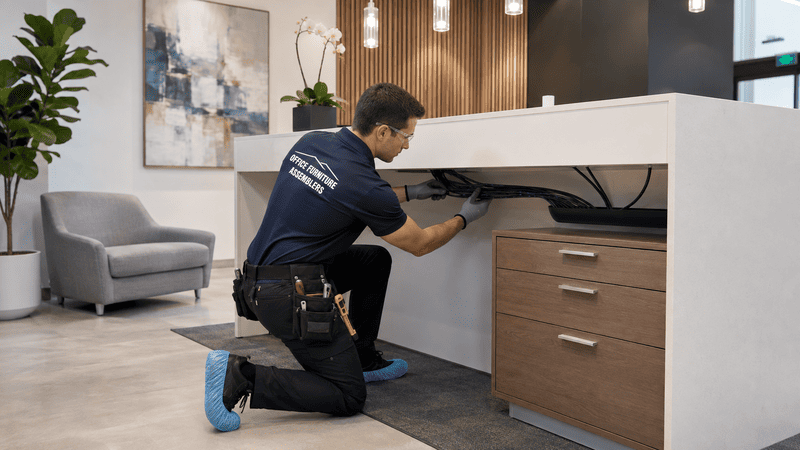
- Cable management: Professional installers route power and network cables through furniture channels, creating clean aesthetics and eliminating trip hazards.
- Surge protection: Proper setup includes organizing power distribution to avoid overloaded circuits and ensure adequate surge suppression.
- Equipment testing: After installation, verify all technology functions correctly in its new configuration before declaring the project complete.
Specialized installation services:
- Storage solutions: Commercial storage cabinet installation for organizing documents, supplies, and equipment securely.
- Wellness integration: Home gym and fitness equipment setup for offices incorporating employee or personal wellness spaces.
- Responsible disposal: Coordination with recycling and disposal services for environmentally sound removal of old furniture and packaging materials.
These comprehensive services ensure your entire workspace ecosystem functions cohesively, not just individual furniture pieces in isolation.
Planning a technology-intensive installation? Schedule a consultation to discuss equipment protection strategies and integrated cable management solutions for your specific setup.
Choosing the Right Installation Partner in the DMV Area
Not all assembly services deliver equal quality, reliability, or customer care. Selecting experienced, licensed professionals determines whether your installation becomes seamless or stressful.
Essential qualification factors:
- Licensing and insurance: Verify current general liability coverage and workers' compensation to protect yourself from installation accidents or property damage.
- Regional expertise: Choose providers familiar with Maryland, DC, and Northern Virginia building codes, access challenges, and service area logistics.
- Portfolio verification: Review completed projects through their installation gallery to assess quality standards and experience with projects similar to yours.
- Availability and responsiveness: Look for services offering same-week scheduling for time-sensitive residential and commercial projects.
Service scope evaluation:
- Comprehensive capabilities: Select providers handling assembly, moving, reconfiguration, and disassembly to avoid coordinating multiple contractors.
- Flexible scheduling: After-hours and weekend options accommodate both business operations and personal schedules.
- Follow-up support: Quality services include post-installation adjustments and troubleshooting rather than disappearing after initial setup.
- Clear communication: Professional services provide detailed estimates, timeline updates, and responsive answers to questions throughout the process.
For comprehensive guidance on professional installation standards, review this office furniture installation resource to understand industry best practices and quality benchmarks.
Create a Functional Workspace Without the Stress
Your office furniture should support productivity and comfort from day one, not create frustration and workflow disruption. Professional installation eliminates guesswork, prevents costly mistakes, and delivers workspace solutions that look polished and function flawlessly for years to come.
Whether you're setting up your first home office, outfitting a growing business, or reconfiguring an established workspace for better efficiency, licensed assemblers bring expertise and efficiency that transforms furniture installation from a dreaded chore into a seamless experience. Clients across Maryland, DC, Northern Virginia, Delaware, and Pennsylvania trust professional installers for everything from single-desk home offices to complex multi-floor commercial installations.
Don't let furniture assembly disrupt your productivity or risk damaging your investment. Contact our licensed team today for fast scheduling, transparent pricing, and installations that prioritize both quality and your schedule. Most projects qualify for same-week availability, and our insured professionals guarantee clean, efficient setups that meet manufacturer specifications and exceed your expectations.
Your workspace should work as efficiently as you do. Make it happen with professional office furniture assembly services designed for homeowners and businesses that value quality, speed, and peace of mind.
FREQUENTLY ASKED QUESTIONS
How long does typical office furniture assembly take?
Home office setups with 1-3 workstations typically require 2-4 hours with a professional installer, while commercial spaces with 10-15 workstations need 6-8 hours with a two-person crew. Complex cubicle systems with electrical integration take longer than simple desks and storage units, with exact timing depending on furniture complexity and space configuration.
Can you install furniture outside normal business hours?
Yes, professional installers regularly accommodate evening and weekend scheduling for both commercial clients who cannot disrupt business operations and residential clients with demanding work schedules. After-hours service may include a modest surcharge but delivers significant value by eliminating workflow interruption and schedule conflicts.
What happens if furniture arrives damaged or with missing parts?
Experienced installers identify shipping damage and missing components during initial inventory checks before starting assembly work. They document problems with detailed photos, contact manufacturers or retailers on your behalf to arrange replacements, and often complete most of the installation while waiting for missing parts to arrive.
Do professional services handle old furniture removal and disposal?
Many installation companies coordinate removal and environmentally responsible disposal of old furniture as part of their comprehensive service offering. This eliminates the need to arrange separate hauling services and ensures materials get recycled properly rather than ending up in landfills unnecessarily.
Is professional assembly worth the cost compared to DIY installation?
Professional assembly typically costs 15-25% of the furniture purchase price but prevents damage that could exceed that cost, saves 10-20 hours of labor from attempting DIY installation, and delivers superior results with proper warranties. Most clients find the investment pays for itself through time savings, stress reduction, and damage prevention alone.