Storage Cabinet Placement Tips for Cleaner and More Organized Offices

Proper storage cabinet placement keeps offices cleaner, safer, and easier to use. Cabinets should support daily workflow, not block walkways, desks, doors, or shared work areas.
- Place cabinets near the teams that use them most
- Keep walkways and doors clear
- Use wall space before crowding floor space
- Match cabinet size to storage needs
- Plan access before installation
Cluttered offices slow people down fast. When storage cabinets sit in the wrong place, walkways get blocked, files become harder to reach, and everyday tasks take longer than they should. Over time, that creates messy workstations, frustrated employees, and a layout that feels smaller than it really is. The smarter move is to plan cabinet placement around workflow, access, safety, and storage habits before anything gets installed. With the right layout and professional setup, storage cabinets can support a cleaner office, better movement, and a more productive workday.
Why Storage Cabinet Placement Affects Office Productivity
Storage cabinet placement affects productivity because employees need quick, safe, and logical access to the items they use every day. When cabinets are too far away, overloaded, or placed in traffic paths, small delays pile up across the office.
Good placement starts with workflow. In a corporate office, filing cabinets should sit near administrative teams that handle paperwork. In a medical office, supply cabinets should stay close to exam rooms or reception areas without blocking patient movement. In a school office, shared storage should be easy for staff to access without crowding student-facing areas.
Poor cabinet placement causes:
- Extra walking for basic supplies
- Blocked paths around desks and printers
- Slower document retrieval
- Messy overflow on counters and workstations
- Safety issues in tight office areas
For larger office layouts, professional office furniture assembly and setup helps make sure cabinets support the full workspace instead of becoming another obstacle.
Which Areas Work Best for Office Storage Cabinets
The best areas for office storage cabinets are locations close to daily tasks, away from main traffic paths, and aligned with how each department uses supplies, files, or equipment. The goal is simple: easy access without clutter.
Reception areas often need low-profile cabinets behind the front desk for forms, supplies, and visitor materials. Corporate offices may need taller cabinets along side walls or behind workstations. Coworking spaces usually benefit from shared storage zones near printers, mail areas, or supply stations.
Common cabinet placement zones include:
- Along unused wall sections
- Near printers and copy machines
- Behind reception or admin desks
- Inside supply rooms
- Beside shared work tables
- Near department workstations
Cabinet size also matters. When choosing depth, width, and height, office teams can compare common office storage cabinet dimensions before finalizing placement. A cabinet that fits on paper can still feel wrong if doors, drawers, or nearby chairs do not have enough room to function.
How Cabinet Placement Improves Workplace Organization
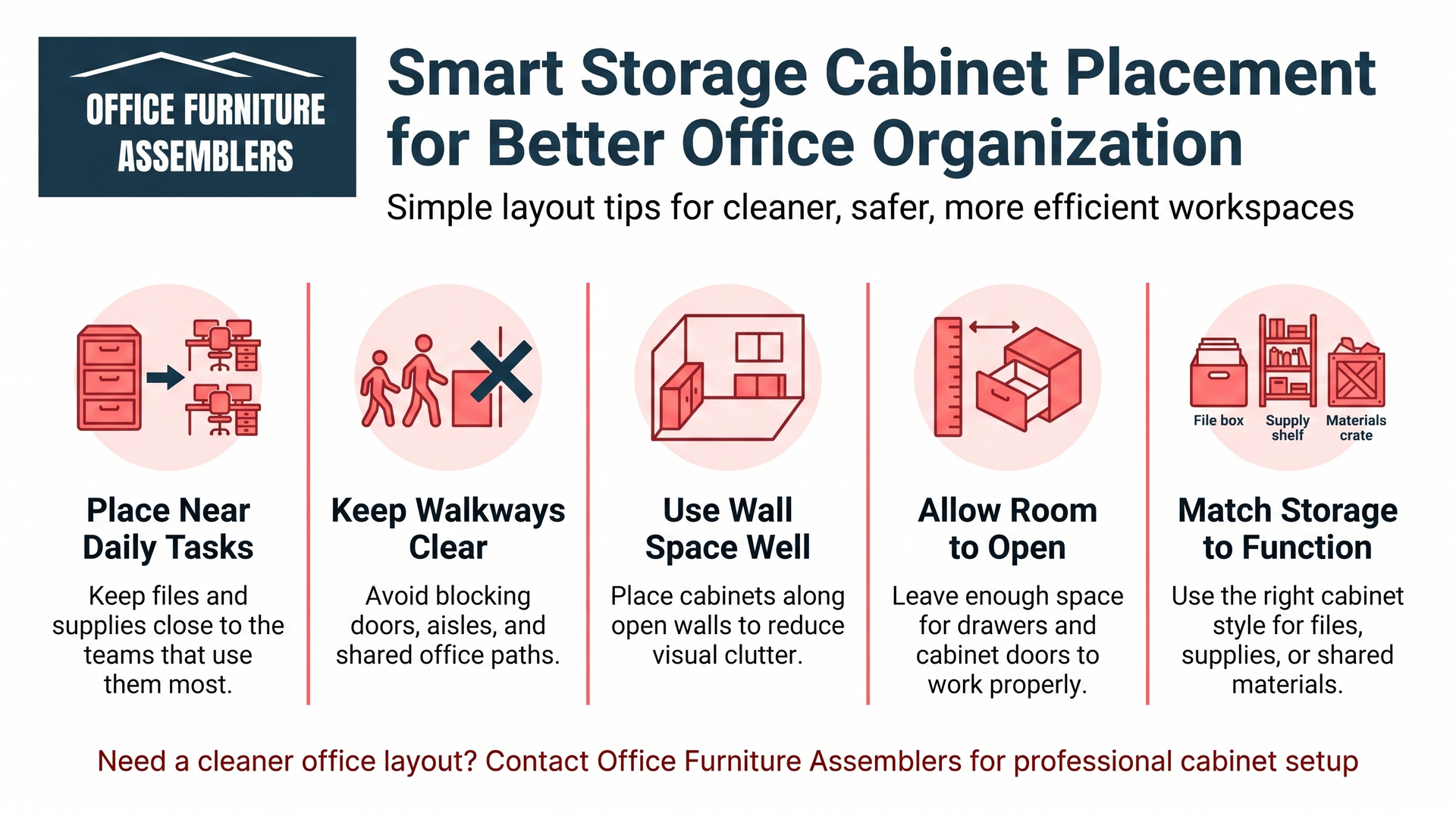
Smart cabinet placement improves workplace organization by giving every item a clear home near the people who use it. This reduces clutter, limits lost supplies, and keeps desks, counters, and shared surfaces cleaner throughout the day.
Placement should match storage behavior. If employees constantly leave paper near the printer, that area likely needs a document cabinet. If cleaning supplies end up in random closets, a clearly assigned storage zone can fix the mess.
| Office Area | Best Cabinet Placement | What to Store |
|---|---|---|
| Reception | Behind or beside the front desk | Forms, visitor items, office supplies |
| Admin Area | Near desks or file stations | Records, folders, printer paper |
| Medical Office | Near staff-only work zones | Supplies, forms, small equipment |
| Coworking Space | Near shared utility areas | Mail, cables, cleaning items |
| School Office | Along staff-access walls | Student files, supplies, forms |
For offices trying to get more usable room from the space they already have, storage space setup planning can help align cabinets, shelving, and supplies around real workflow instead of guesswork.
What Clearance and Spacing Should Offices Maintain
Offices should maintain enough clearance for doors, drawers, walkways, chairs, and people moving through the space. A storage cabinet should never make an office feel cramped, unsafe, or difficult to navigate.
Cabinet spacing depends on the cabinet type. Drawer cabinets need front clearance. Swing-door cabinets need enough room for doors to open fully. Tall cabinets need stable placement against walls, especially in busy workspaces.
Plan for drawer movement
A filing cabinet that opens into a walkway can quickly become a trip hazard. If staff need frequent file access, place drawers where someone can stand comfortably without blocking others.
Protect walking paths
Cabinets should not narrow main office routes or pinch points near doorways. Inclusive layouts should also consider the ADA design standards when planning accessible routes and clearances.
Leave space around equipment
Printers, copiers, desks, and cabinets often compete for the same wall area. Keep enough room for employees to load paper, open drawers, and step around equipment safely.
Why Accessibility Matters in Office Storage Layouts
Accessibility matters because office storage should be usable by the people who need it most. Cabinets placed too high, too low, too far away, or behind obstacles make simple tasks harder than necessary.
In administrative workspaces, frequently used files should be waist to shoulder height when possible. In medical offices, supplies should stay in staff-accessible areas while keeping patient paths open. In schools, secure cabinets may need to separate sensitive records from general supplies.
Good accessibility means:
- Daily-use items are easy to reach
- Heavy items are stored lower
- Confidential files stay secure
- Shared supplies are clearly placed
- Doors and drawers open without obstruction
Traditional document storage still matters in many offices. When teams rely on records, HR files, invoices, or client folders, dedicated filing cabinet assembly and placement can make document access cleaner and more reliable.
How Storage Cabinet Placement Supports Cleaner Office Design
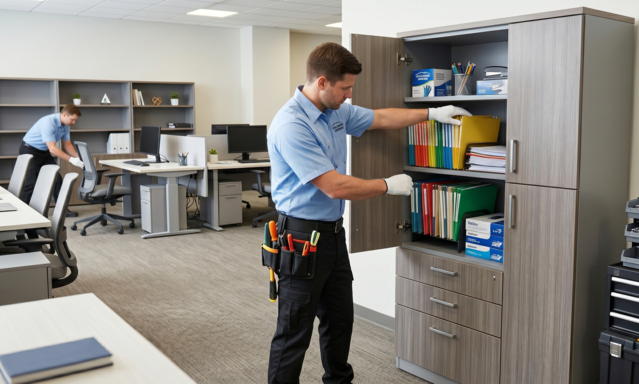
Storage cabinet placement supports cleaner office design by removing visual clutter and creating a more intentional workspace. Cabinets work best when they blend into the layout rather than looking like random furniture pushed against the nearest wall.
Modern offices often combine closed cabinets, open shelving, mobile storage, and built-in-style systems. For layout inspiration, contemporary office design and furniture installation strategies show how storage can support cleaner lines, better movement, and more flexible work areas.
Different cabinet styles serve different needs. Closed cabinets hide supplies, lateral files support paperwork, and modular units can adapt as teams grow. Reviewing examples of office storage solutions can help businesses understand how cabinet style affects both appearance and function.
For stockrooms, back offices, and utility areas, cabinets often work best alongside shelving installation for offices and supply rooms. That mix keeps bulky items off the floor while preserving quick access.
What Common Cabinet Placement Mistakes Reduce Efficiency
Common cabinet placement mistakes include blocking walkways, placing storage too far from users, ignoring drawer clearance, overcrowding shared areas, and choosing cabinets that do not match the office’s real storage needs.
Blocking movement
Cabinets near doors, hallway corners, or narrow desk aisles create daily friction. Even a few inches can matter in a busy reception area or shared office.
Storing items too far away
If printer paper sits across the office from the printer, people waste time every day. Storage should live near the task it supports.
Ignoring cabinet function
A cabinet may fit against a wall, but that does not mean it works there. Drawers, locks, handles, and doors all need operating space.
Keeping outdated built-ins
Some offices try to work around old wall units or awkward fixed storage. In those cases, wall unit dismantling can help clear the space before upgrading to a more efficient cabinet layout.
How Different Office Types Require Different Storage Layouts
Different office types require different storage layouts because each workplace has its own traffic patterns, privacy needs, equipment, and daily routines. A cabinet plan that works in a private office may fail in a busy shared workspace.
Corporate offices often need department-based storage. Coworking spaces need shared access without clutter. Medical offices need secure, clean, staff-only storage. Schools need durable cabinets for forms, supplies, and records. Reception areas need storage that stays hidden but close.
Larger facilities may also need heavy-duty options. Schools, clinics, warehouses, and maintenance areas often require
commercial storage cabinet solutions that can handle bulk supplies or equipment.
For businesses upgrading more than cabinets, broader office furniture assembly services can help coordinate desks, workstations, conference tables, and storage into one cleaner layout.
When Professional Office Furniture Installation Helps
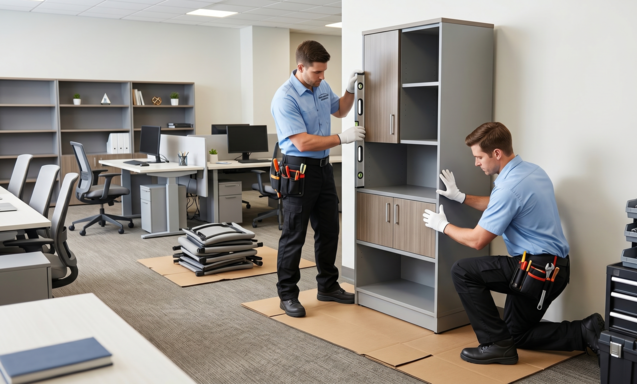
Professional office furniture installation helps when cabinets are heavy, complex, part of a larger layout, or placed in areas where safety and access matter. It also helps when offices need cleaner alignment, secure assembly, and less disruption during setup.
A professional installer can identify spacing issues before cabinets are anchored, loaded, or positioned permanently. That matters in offices with narrow walkways, shared work zones, reception areas, or confidential document storage.
Professional help is especially useful when:
- Multiple cabinets need alignment
- Storage must fit around desks or cubicles
- Tall cabinets need stable placement
- Drawer clearance is tight
- Existing furniture must be rearranged
- The office cannot afford long downtime
Office Furniture Assemblers can handle cabinet setup as part of a broader workspace improvement, making the office cleaner, safer, and easier to use from day one.
Get Professional Storage Cabinet Setup for Your Office
A cleaner office starts with storage that actually fits the space. Office Furniture Assemblers can help plan, assemble, and position cabinets for better organization, accessibility, safety, and daily workflow. Businesses can also explore other facility upgrades, including commercial setup services and workplace improvement ideas like facility basketball hoop additions. For cabinet placement and office storage setup, contact Office Furniture Assemblers today.
FREQUENTLY ASKED QUESTIONS
Where should office storage cabinets be placed?
Office storage cabinets should be placed near the people and tasks they support. The best spots are along clear wall areas, near printers, behind reception desks, inside supply rooms, or close to administrative workstations.
How much clearance do office storage cabinets need?
Office storage cabinets need enough clearance for doors, drawers, walking paths, and safe access. In general, allow enough front space for a person to open the cabinet fully and stand without blocking traffic.
What are the best office storage layout ideas?
The best office storage layouts group supplies by use, keep daily items within easy reach, and move less-used items to lower-traffic areas. Closed cabinets, shelving, and filing storage can work together to keep the office cleaner.
How does cabinet placement affect productivity?
Cabinet placement affects productivity by reducing wasted movement and making supplies easier to find. When storage is close to daily work areas, employees spend less time searching and more time getting work done.
How can an office organize storage more efficiently?
An office can organize storage efficiently by assigning cabinets by department, labeling contents, and keeping high-use items in the easiest locations. Heavy or rarely used items should be stored lower or away from busy work zones.
Can storage cabinets block office walkways?
Yes, storage cabinets can block walkways if they are placed near doors, aisles, corners, or narrow spaces. Cabinets should never interfere with movement, emergency access, or the natural flow of employees and visitors.
When should an office hire professional cabinet installers?
An office should hire professional cabinet installers when cabinets are heavy, tall, complex, or part of a larger workspace layout. Professional installation helps improve safety, alignment, access, and overall office function.