Reception Area Setup Ideas That Make Offices Look More Professional
A well-planned reception area makes an office look credible before anyone speaks. It improves first impressions, keeps visitors comfortable, and helps staff manage check-ins without confusion.
- Make the reception desk easy to see and easy to reach
- Choose seating based on traffic, wait time, and space
- Use layered lighting so the room feels bright, not harsh
- Keep pathways clear for comfort, flow, and accessibility
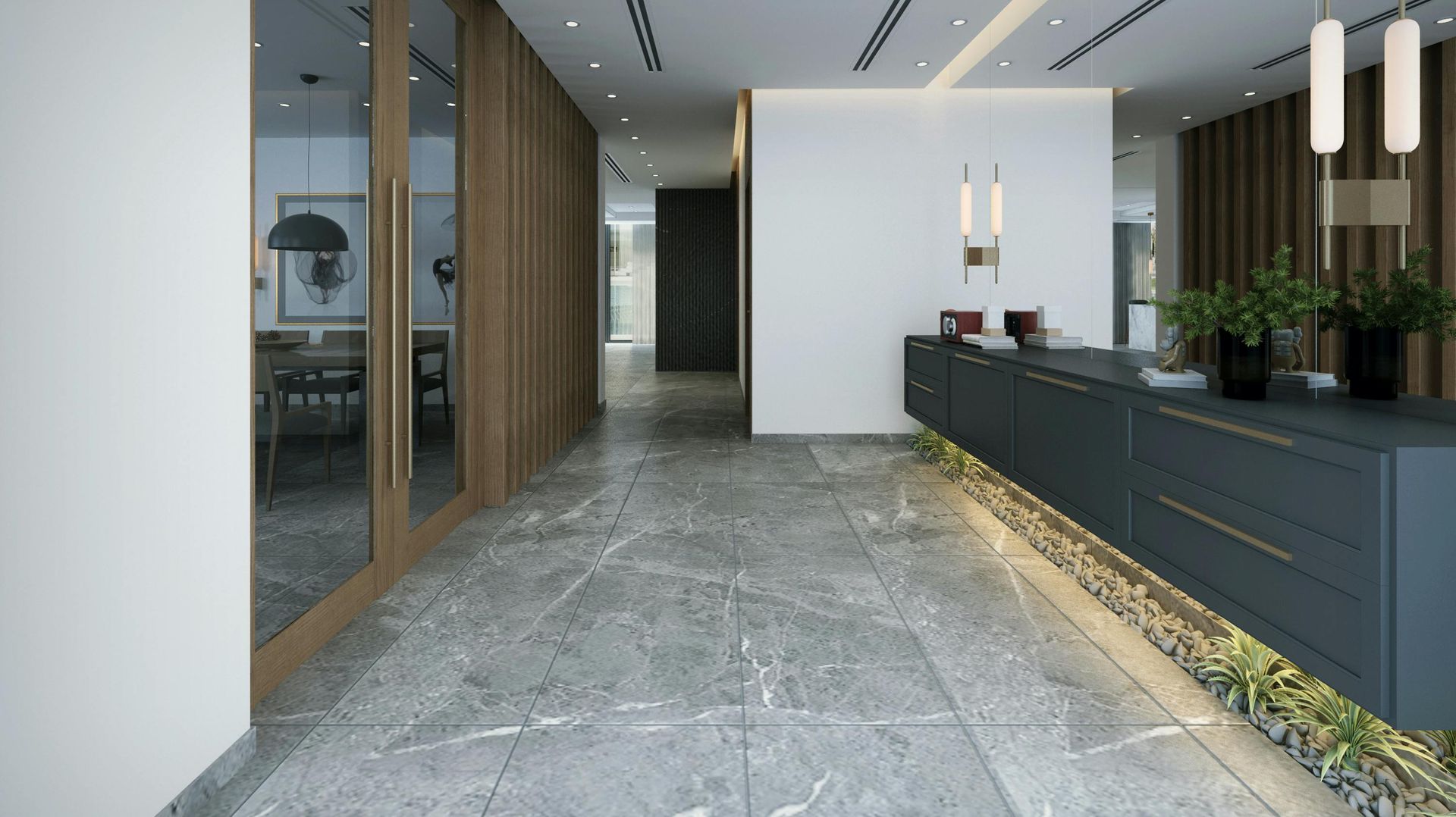
Reception areas are often treated like simple waiting spaces, so they get furnished last and planned loosely. That usually shows. A desk that feels oversized, chairs pushed too close together, poor lighting, and awkward visitor flow can make an otherwise capable business look disorganized within seconds. In clinics, law offices, and corporate suites, that first impression carries weight because people are already judging professionalism before the meeting begins.
The good news is that the right setup fixes more than appearance. A thoughtful reception area helps guests know where to go, makes waiting more comfortable, supports smoother front-desk work, and gives the whole office a more polished, confident presence.
Why Reception Area Design Shapes First Impressions
Reception area design shapes first impressions because it tells visitors whether an office is organized, attentive, and ready for business. When the desk is easy to find, seating feels intentional, and movement is clear, people relax faster and trust the space more from the moment they walk in.
First impressions are built from visual signals, not slogans. A law client notices whether the room feels calm and private. A patient notices whether check-in looks orderly. A corporate guest notices whether the front office feels consistent with the rest of the workplace. That is why reception planning matters just as much as the furniture itself, especially in spaces with different workflow demands such as installation needs in medical, legal, and corporate offices.
Visitors usually read these cues within seconds:
- Whether the front desk is obvious or awkward to locate
- Whether staff and guests compete for the same walking space
- Whether furniture looks aligned, level, and intentional
- Whether the room feels calm, cluttered, bright, or neglected
Which Reception Layout Fits Your Office Best
The best reception layout depends on traffic volume, privacy needs, available square footage, and how long people typically wait. Small offices usually need a compact, efficient plan, while higher-traffic businesses need clearer zoning between check-in, waiting, staff movement, and exit paths.
Reception area setup is the planning of the front desk, seating, lighting, pathways, and visitor touchpoints so people can enter, check in, wait, and move through the office without confusion.
| Reception Layout Type | Best For | Main Advantage | Potential Limitation |
|---|---|---|---|
| Open layout | Creative firms, modern corporate suites | Feels spacious and welcoming | Can reduce privacy and increase noise |
| Compact reception area | Small offices, private practices, satellite locations | Uses limited square footage efficiently | Can feel crowded if seating is oversized |
| High-traffic front desk | Clinics, government-facing offices, busy service firms | Handles check-in volume and movement better | Needs tighter planning to avoid bottlenecks |
| Lounge-style waiting area | Client-facing offices, longer wait environments | Feels comfortable and less transactional | Can look too casual if the desk is understated |
| Multi-purpose reception zone | Growing teams, hybrid offices, shared suites | Supports check-in, waiting, and brief meetings | Requires stronger furniture coordination |
Match the layout to how the office actually works, not just what looks good in photos. A visual planning pass through a reception inspiration gallery can help teams picture zoning ideas, while browsing different reception desk styles and suites helps narrow down desk size, shape, and storage needs before installation starts.
How Should Reception Furniture Be Arranged
Reception furniture should be arranged so the desk is the visual anchor, visitor seating stays clear of circulation paths, and staff can work without interruption. Good arrangement makes check-in obvious, keeps walkways open, and prevents the front office from feeling cramped or improvised.
Start with sightlines. Guests should be able to identify the desk within a step or two of entering. After that, place seating so people can wait comfortably without blocking the entrance, the desk approach, or nearby hallways.
A practical arrangement usually includes:
- A desk positioned to face the entry, not hidden off-angle
- Seating grouped by wait style, short wait or longer stay
- At least one easy path for visitors and another for staff
- Space for bags, mobility devices, and personal comfort
Execution matters here. Well-handled reception furniture setup services help ensure counters are level, seating is aligned, and fixtures are placed safely. Accessibility also needs attention, so it helps to review practical guidance on ADA compliance for office reception areas alongside the official 2010 ADA Standards for Accessible Design.
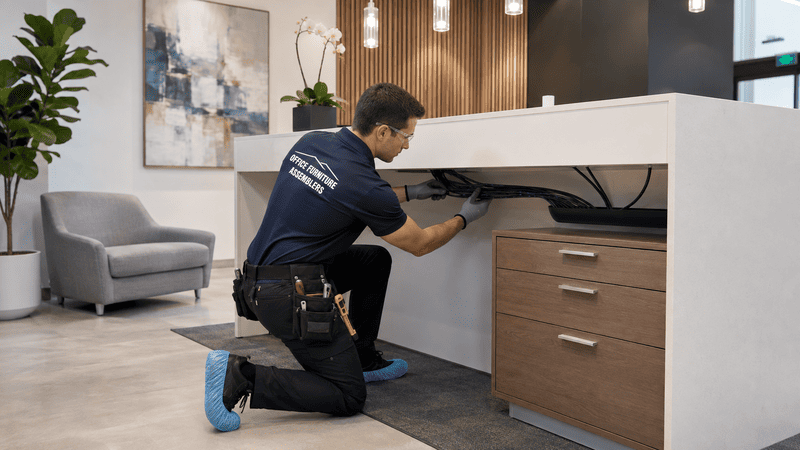
If the desk includes monitors, phones, routers, or visitor check-in hardware, plan cable routing before furniture is locked in place. Teams that need to rework front-desk equipment should also think through how to move electronics and computer equipment safely so the space stays clean and functional after installation.
What Makes a Reception Area Look More Professional
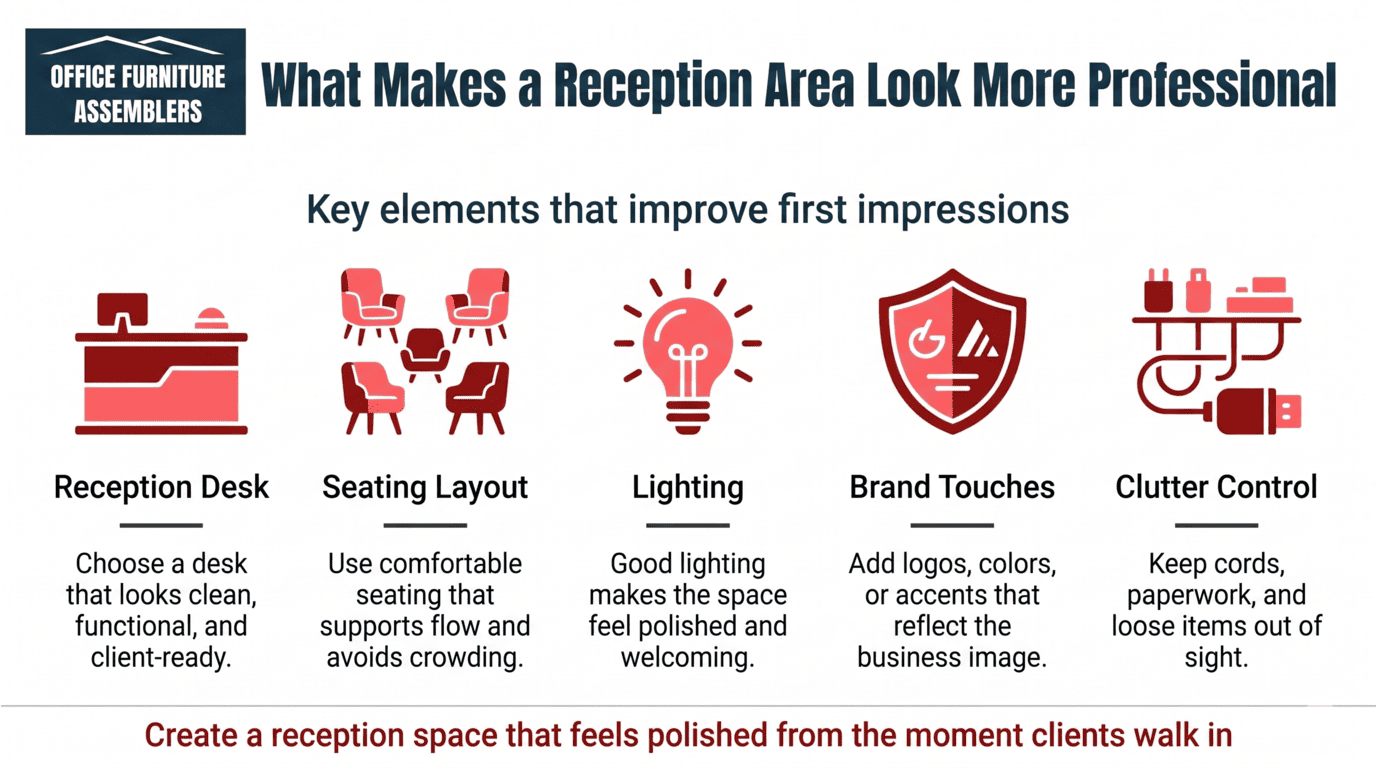
A reception area looks more professional when every visible element feels coordinated, scaled correctly, and intentionally placed. Professionalism comes from consistency, not excess. Clean lines, balanced spacing, durable finishes, and tidy technology usually do more for credibility than decorative extras.
Professional spaces tend to share a few habits. The desk fits the room. The seating matches the tone of the business. Finishes look commercial, not temporary. Storage and wires stay out of sight.
Strong visual signals include:
- A reception desk that suits the room, not overwhelms it
- Matching or complementary materials across desk and seating
- Hidden clutter, controlled cords, and organized surfaces
- Clear connection between the front office and nearby rooms
That last point matters more than many teams expect. If the waiting area looks polished but the adjacent meeting room feels mismatched, the experience breaks. Businesses that want the whole front end to feel cohesive often coordinate reception improvements with conference room furniture installation so client-facing spaces support the same professional standard.
Can Lighting Change the Feel of Reception Spaces
Lighting can completely change how a reception space feels because it affects mood, visibility, comfort, and perceived cleanliness. Even strong furniture choices can fall flat if the room feels dim, harsh, or unevenly lit when people enter and wait.
Natural light helps, but it rarely solves everything. Most reception spaces work best with layered lighting. That means overhead light for general brightness, task light where staff work, and softer accent light to reduce a flat, institutional feel.
Good reception lighting should do three things well. First, it should make faces easy to see at check-in. Second, it should reduce glare on counters and screens. Third, it should keep the waiting area bright enough to feel fresh without making guests feel exposed.
For clinics and law offices especially, lighting also affects privacy and calm. A room that is too stark feels stressful. A room that is too dim can feel neglected.
Reception Setup Mistakes That Undermine Credibility
Reception setup mistakes undermine credibility when they make the office feel confusing, crowded, unfinished, or poorly maintained. Most front-office problems are not dramatic. They are small layout and installation errors that quietly suggest the business is less organized than it really is.
The most common issues are practical, not stylistic:
- An oversized desk that swallows the room
- Too many chairs packed into too little space
- Visible cables, wobbling furniture, or misaligned pieces
- Old furniture left in place because replacement planning stalled
- No real budget for labor, rework, or access challenges
Many teams underestimate the full scope of setup, especially when comparing furniture price to actual installation work. Reviewing factors behind office furniture installation cost in Washington DC, Maryland, and Northern Virginia can help businesses budget more realistically.
When a front area is being refreshed, reconfigured, or downsized, old pieces often need to come out first. Professional office furniture disassembly prevents damaged panels, lost hardware, and last-minute delays that can leave the reception area half-finished.
How Seating Choices Affect Comfort and Flow
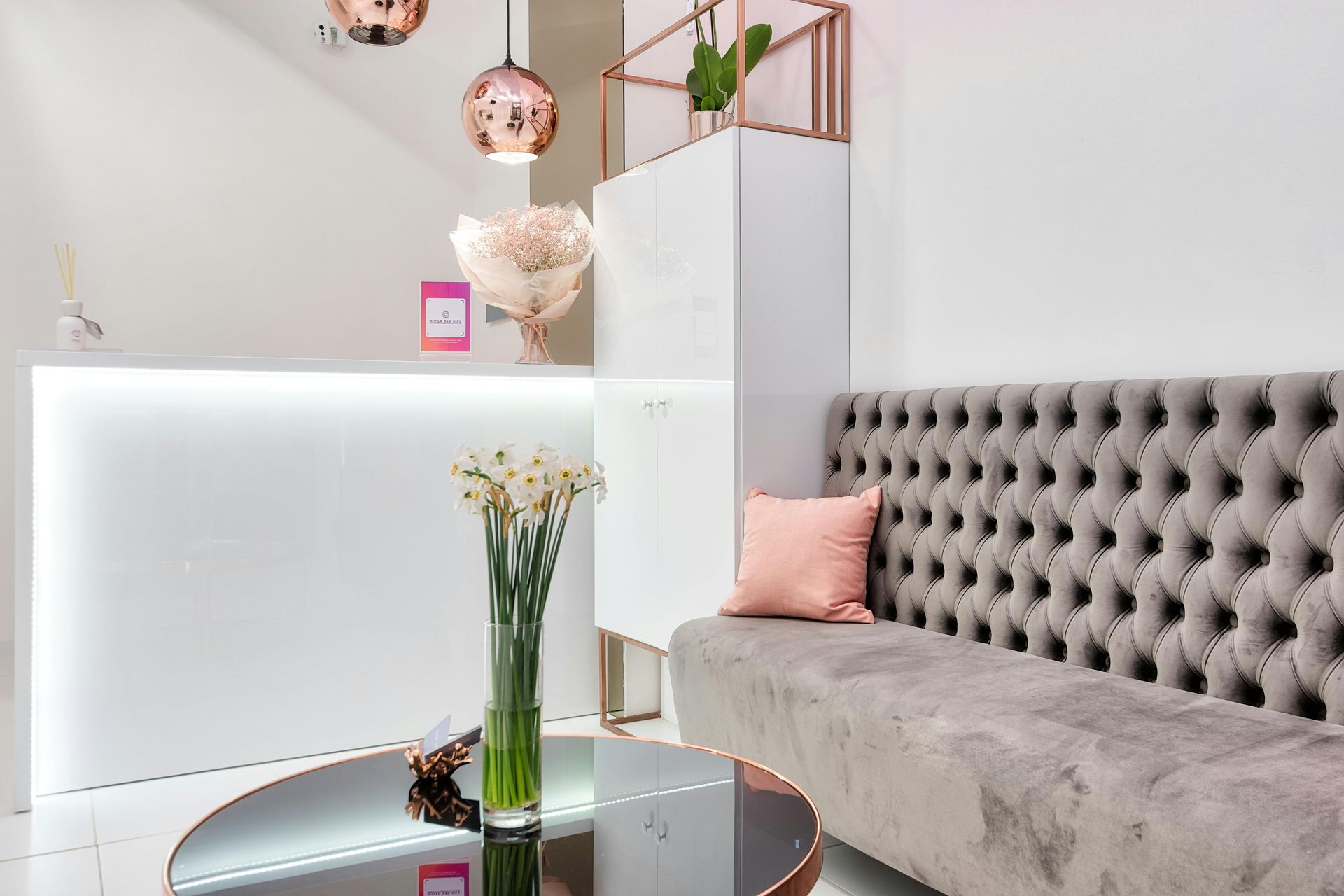
Seating choices affect comfort and flow because they shape how visitors wait, where they place personal items, and how easily people move around the room. The right seating mix feels generous without crowding the space and supports both short visits and longer waits.
A small office does not always need more seats. It needs the right seats. Guest chairs with slim profiles may work best for short appointments. Softer lounge seating can make sense in clinics, larger lobbies, or visitor-facing offices where people wait longer.
Use seating to support movement, not block it:
- Leave enough space between seats for easy entry and exit
- Avoid deep lounge pieces in narrow waiting areas
- Include at least one seat that feels easier to access for older visitors
- Place side tables only where they do not narrow walkways
Businesses looking at softer waiting zones often borrow ideas from lobby and lounge furniture assembly, especially when they want a more comfortable front-of-house feel. For larger reconfigurations, it also helps to think in terms of broader commercial furniture services so reception seating works as part of the overall office, not as a disconnected island.
What Details Make Waiting Areas Feel More Polished
Waiting areas feel more polished when the small details support comfort, cleanliness, and order. Visitors notice finishing touches because they reveal whether the office is actively managed. The best details are useful, subtle, and easy to maintain every day.
Start with the basics. Keep surfaces clear, signage readable, and personal-item drop zones simple. Add one or two purposeful touches, such as a side table, controlled artwork, or current reading material, rather than filling every corner.
Look closely at what guests actually experience. Is there a place to set a bag? Does the check-in process feel obvious? Does the room still look sharp at 3 p.m.?
These details matter even more during office transitions. If your company is relocating or resetting its front office, a solid office moving and preparation checklist can help prevent rushed decisions that leave the waiting area looking temporary after move-in day.
Turn Your Reception Area Into a Stronger Business Asset
A better reception setup does more than improve appearance. It helps visitors feel welcome, gives staff a cleaner workflow, and makes clinics, law firms, corporate offices, waiting rooms, reception desks, and seating areas function more smoothly every day.
If your front office in Maryland, Washington DC, Delaware, Pennsylvania, or Northern Virginia needs a more polished layout, Office Furniture Assemblers is the team to hire for professional reception furniture setup and installation. Our team help visitor-facing business spaces look sharper and work better. To start planning your space, contact Office Furniture Assemblers. If your project also involves nearby amenity or specialty setup needs, some businesses pair reception work with other commercial setup support.
FREQUENTLY ASKED QUESTIONS
What furniture should every reception area have?
Every reception area should have a clearly visible desk, appropriate guest seating, and at least one surface for forms, bags, or personal items. Many offices also benefit from discreet storage so supplies and paperwork do not stay in view.
How do you make a reception area look more professional?
Make the desk the focal point, keep furniture scaled to the room, and remove visible clutter. Consistent finishes, better lighting, and clean cable management usually improve the space faster than decorative add-ons.
What is the best reception layout for a small office?
The best small-office layout is usually a compact front desk with a short, open path to check-in and a limited number of well-spaced seats. That approach keeps the room functional without making it feel overfilled.
Does lighting affect waiting room comfort?
Yes, lighting has a direct effect on comfort because it shapes mood, visibility, and how clean the space feels. Bright but balanced lighting helps guests relax and makes front-desk work easier.
How much seating should a reception area include?
The right amount of seating depends on visitor volume, wait times, and the size of the room. It is usually better to provide fewer well-placed seats than to crowd the space with more chairs than the layout can handle.
When should reception furniture be replaced or reconfigured?
Replace or reconfigure reception furniture when the layout blocks movement, the desk no longer fits current workflows, or the finishes make the office look dated. It is also smart to revisit the setup during an office move, renovation, or brand refresh.
Is professional reception furniture installation worth it?
Yes, professional installation is worth it when presentation, safety, and daily function matter. Proper assembly, leveling, spacing, and placement help the front office look finished and prevent problems that make businesses look less prepared.