Filing Cabinet Safety Guide for Preventing Tipping and Drawer Jams
Proper filing cabinet setup prevents tipping accidents, eases drawer movement, and keeps weight evenly distributed across every compartment. Stable placement, accurate drawer alignment, careful loading, floor leveling, and professional installation work together to reduce workplace injuries and long-term storage damage. When cabinets are installed correctly from the start, offices avoid costly repairs, jammed files, and sudden safety incidents that disrupt daily work.
- Stable filing cabinet placement reduces sudden movement and shifting
- Smoother drawer function for daily file access
- Better weight balance across upper and lower compartments
- Reduced tipping risks during heavy use
- Improved workplace safety compliance for staff and visitors
Filing Cabinet Safety for Safer Office Storage
Filing cabinets often look like simple metal boxes, so many offices skip the setup details. Unfortunately, careless placement creates tipping hazards, jammed drawers, overloaded compartments, and steady wear on hinges and rails. Corporate offices, medical clinics, legal firms, coworking hubs, government departments, and home office setups all face these risks once daily traffic increases. Thankfully, structured filing cabinet installation and trained office furniture assembly resolve these problems early.
Proper anchoring, careful leveling, and balanced loading turn ordinary storage into reliable, long-lasting workplace equipment that supports both safety and organization.
Why Filing Cabinet Safety Matters in Modern Offices
Filing cabinet safety matters because cabinets hold heavy paper loads, sensitive records, and frequently accessed files. A poorly installed unit can tip, pinch fingers, or collapse a drawer mid-use. Safe setup protects staff, preserves documents, and keeps workflow moving without interruption.
Modern offices store thousands of pages across legal, medical, HR, and administrative departments. When a four-drawer lateral unit is loaded incorrectly, it can shift forward several inches under normal use. In busy reception areas or shared records rooms, that small movement becomes a real injury risk. Reliable filing cabinet setup addresses these concerns at the source, well before any accident occurs.
How Improper Setup Leads to Tipping Hazards
Improper setup creates tipping hazards when cabinets sit on uneven floors, hold top-heavy loads, or lack proper anchoring. Without counterweight or wall support, opening a single full drawer can pull the entire unit forward, especially in narrow aisles or high-traffic corridors.
Common tipping triggers include:
- Multiple drawers opened at once
- Heavy files stored only in the top drawer
- Missing anti-tip interlock mechanisms
- Cabinets placed on carpet without leveling feet
- No wall or floor anchoring in earthquake-prone regions
- Damaged casters on mobile pedestals
Even sturdy vertical filing options can tip when loaded unevenly, which is why anchoring matters even more for taller units.
What Causes Filing Cabinet Drawer Jams
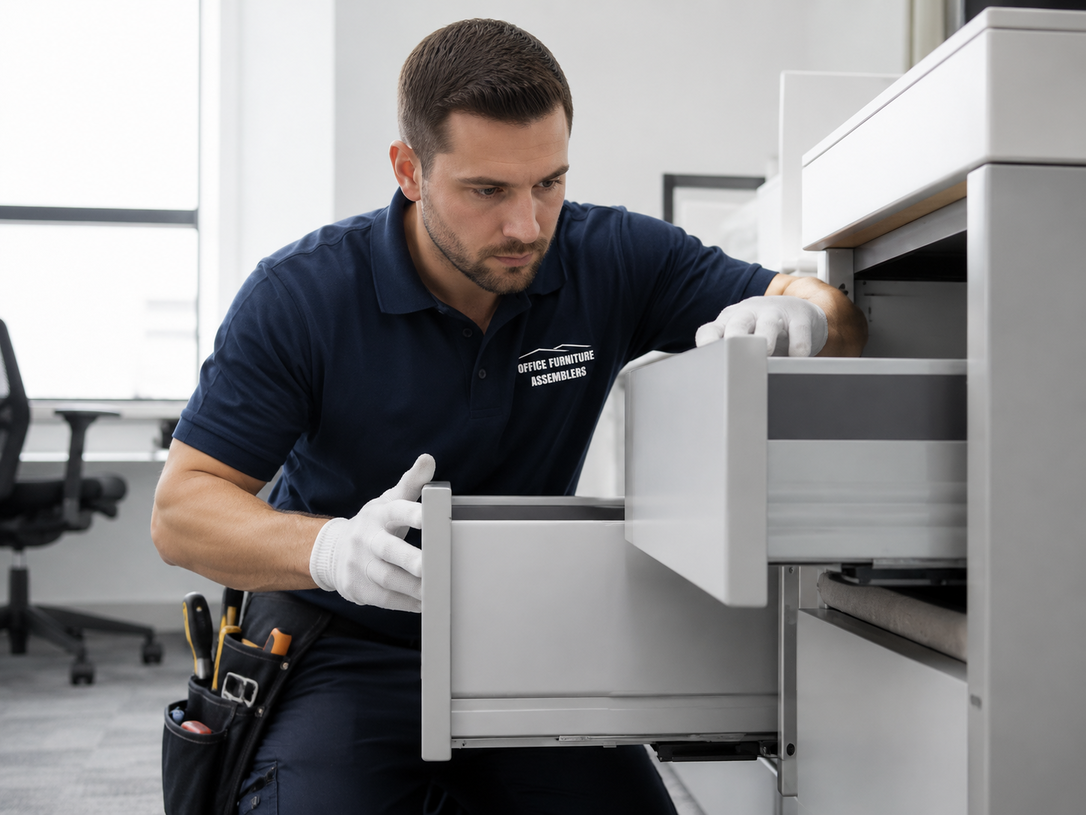
Drawer jams happen when rails fall out of alignment, files overflow above the rail track, or debris collects inside the glide channels. Once the slide mechanism is stressed, drawers stick, scrape, or refuse to close completely, slowing down everyday tasks.
Frequent jam causes include:
- Overstuffed folders blocking the upper rail
- Bent suspension rods on lateral drawers
- Misaligned ball-bearing slides
- Dust buildup inside the glide track
- Warped frames from uneven floors
- Hanging file bars installed backward
A medical office storing patient charts, for example, may notice drawers binding within months if files are packed beyond capacity. Reviewing different file cabinet styles helps offices match drawer depth to actual file volume.
Why Weight Distribution Impacts Stability
Weight distribution determines whether a cabinet stays grounded or rocks forward during use. Heavier files belong in the bottom drawers to lower the center of gravity, while lighter materials sit higher up. This single rule prevents most everyday tipping incidents.
| Drawer Position | Recommended Load | Typical Contents |
|---|---|---|
| Bottom drawer | Heaviest (40 to 50 lbs) | Archived records, bound binders |
| Second drawer | Medium-heavy (30 to 40 lbs) | Active case files, project folders |
| Third drawer | Medium (20 to 30 lbs) | Daily reference documents |
| Top drawer | Lightest (10 to 20 lbs) | Stationery, light folders, supplies |
Legal firms managing case binders especially benefit from this distribution. Pairing balanced loading with smart storage cabinet placement keeps walkways clear and reduces strain on cabinet frames.
How Floor Leveling Affects Filing Cabinet Performance
Floor leveling directly affects drawer glide, frame alignment, and tipping resistance. A cabinet sitting on a tilted floor will twist slightly over time, causing drawers to drag and locks to misalign. Even a quarter-inch slope changes how smoothly a drawer opens.
Key leveling factors:
- Adjustable feet on each corner
- Shims under uneven flooring transitions
- Solid placement away from floor vents
- Avoidance of soft carpet padding under heavy units
- Periodic re-leveling after building settling
- Proper checks after office relocations
Coworking spaces that rearrange furniture often need re-leveling every few months. Trusted office assembly support handles these adjustments without disrupting tenants.
What Features Improve Filing Cabinet Safety and Durability
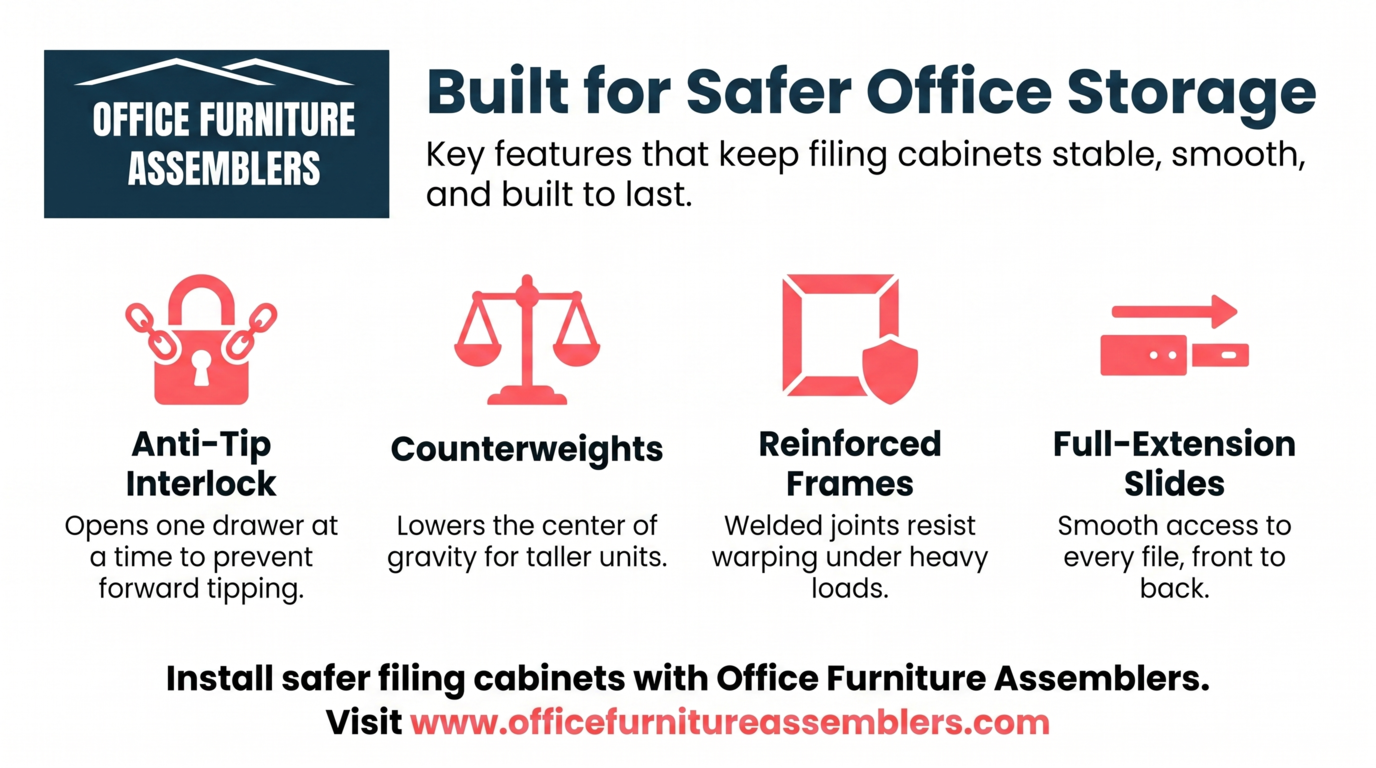
Safer filing cabinets include anti-tip interlocks, full-extension slides, counterweights, and reinforced frames. These features keep drawers stable, distribute weight evenly, and extend the cabinet's working life across heavy daily use.
Anti-Tip Interlock Systems
Interlocks allow only one drawer to open at a time, which prevents the cabinet from leaning forward when multiple drawers are pulled out together. This is essential in government offices and records rooms.
Counterweights and Ballast Plates
Built-in counterweights lower the center of gravity, especially useful for tall vertical units that hold lighter content but stand high above eye level.
Reinforced Frames and Welded Joints
Welded steel frames resist warping and absorb the daily strain of heavy file loads. Browsing filing storage cabinets shows how construction quality varies by model and intended use.
How Workplace Standards Influence Furniture Safety Compliance
Workplace standards shape how cabinets must be installed, anchored, and maintained in commercial settings. OSHA guidance, ADA pathway rules, and local fire codes all influence how filing units sit within an office floor plan. Compliance protects both staff and the business.
Filing cabinet safety means installing, leveling, loading, and maintaining storage units so drawers operate smoothly, weight remains balanced, and the cabinet stays stable during normal daily use.
Compliance considerations include:
- Minimum aisle clearance for drawer extension
- Anchoring requirements in seismic zones
- Fire-rated cabinets for sensitive records
- ADA-accessible drawer heights
- Slip-resistant base pads on hard flooring
Government offices and medical clinics often need formal documentation of these installations. Engaging commercial storage cabinets specialists keeps offices aligned with current standards.
Why Professional Installation Prevents Long Term Issues
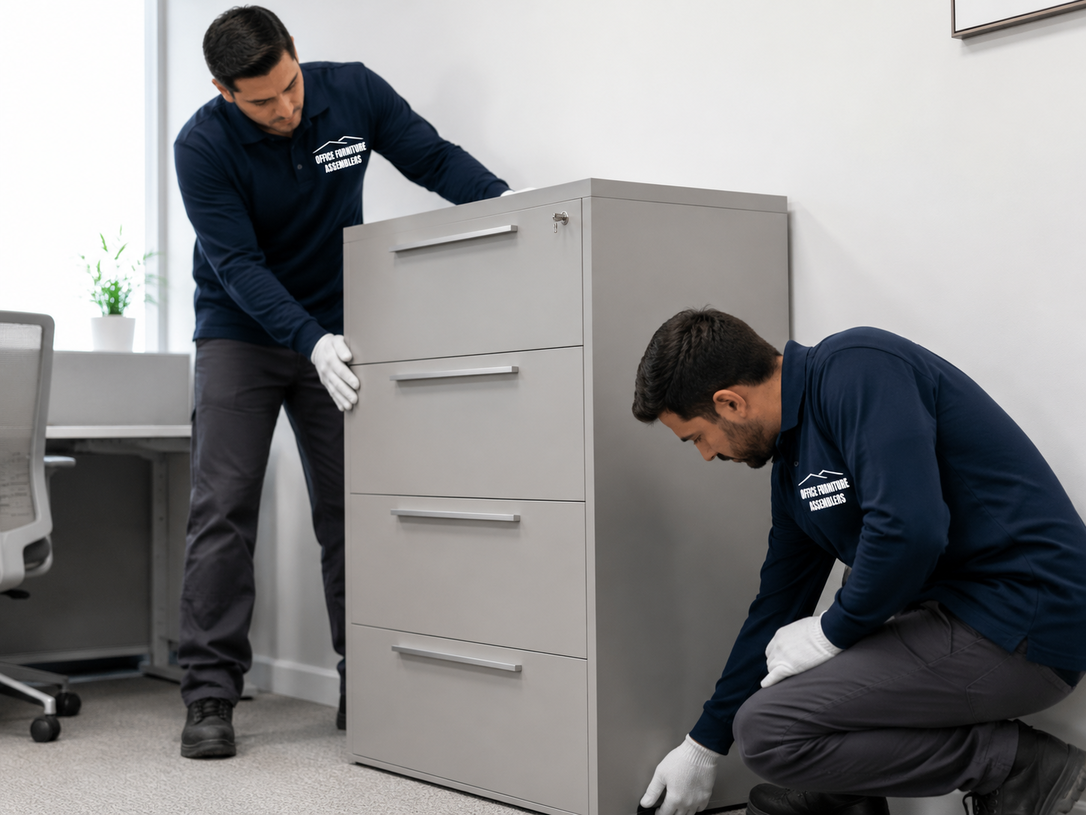
Professional installation prevents long-term issues by ensuring cabinets are leveled, anchored, aligned, and tested before use. Trained installers catch defects early, calibrate slides correctly, and confirm load capacity, saving offices from repair costs and safety incidents months down the road.
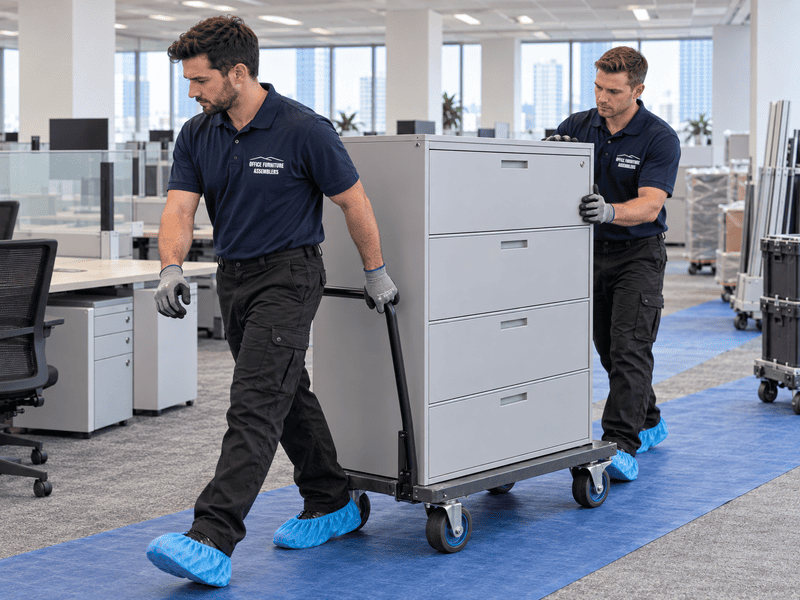
DIY installs often miss small details like rail tension or anchor depth. A trained office furniture assembly crew checks each drawer, levels every corner, and secures the unit to studs or floor brackets. For larger projects involving relocations, office furniture disassembly and reassembly should follow the same careful approach to avoid frame damage.
When Offices Should Upgrade Filing Cabinet Systems
Offices should upgrade filing cabinet systems when drawers stick repeatedly, frames warp, locks fail, or storage capacity falls short of current needs. Upgrading also makes sense after expansions, relocations, or compliance audits that reveal outdated equipment.
Common upgrade signals:
- Persistent drawer alignment problems
- Rusted or bent suspension rails
- Missing or broken anti-tip interlocks
- Overflowing storage causing daily clutter
- Renovations changing office floor plans
- Transition to fire-rated or lockable units
Back office storage spaces and shared administrative areas often outgrow their cabinets within five to seven years. When this happens, scheduling workstation breakdown help alongside new cabinet installation keeps the transition smooth, and professional office installation ensures every replacement unit is set up correctly the first time.
Get Reliable Filing Cabinet Installation Help
Office Furniture Assemblers delivers stable filing cabinet installation, smoother drawer operation, organized storage, and compliance-aware setup for every workplace. Avoiding common cabinet installation mistakes protects both staff and budgets, while bundling cabinets with commercial setup services keeps larger projects efficient. Offices planning broader facility improvement ideas can include filing safety in the same scope.
Ready to upgrade your storage setup? Contact office assemblers today to schedule safe, professional filing cabinet installation.
FREQUENTLY ASKED QUESTIONS
How do you prevent filing cabinets from tipping?
Anchor the cabinet to a wall stud or floor bracket, load heavier files in the bottom drawers, and never open more than one drawer at a time. Anti-tip interlocks add an extra layer of protection in busy offices.
Why do filing cabinet drawers get stuck?
Drawers usually stick because of overstuffed folders, bent slide rails, or debris inside the glide track. Misalignment from uneven floors can also cause drawers to bind after months of repeated use.
Do filing cabinets need wall anchoring?
Tall vertical cabinets and units in seismic zones should always be anchored to wall studs or secured with floor brackets. Shorter lateral units may not require anchoring if they include built-in counterweights.
How do you balance drawer weight safely?
Place the heaviest files in the bottom drawer and progressively lighter items toward the top. Keep each drawer below its rated load and avoid stacking folders above the rail line.
How do you fix misaligned filing cabinet drawers?
Start by checking the cabinet's level, then inspect the slide rails for damage or debris. Adjusting the corner feet and cleaning the glide track resolves most alignment issues without replacement parts.
When is professional filing cabinet installation needed?
Professional installation is needed for large lateral units, fire-rated cabinets, anchored systems, and any setup tied to compliance requirements. Trained installers also help during office moves and large furniture rollouts.
How do you maintain filing cabinet safety?
Inspect slides, locks, and anchors every few months, and clean the rails to prevent buildup. Confirm load balance after major file purges or department reorganizations to keep the cabinet stable.
What is the safest way to load a filing cabinet?
Load from the bottom drawer upward, keep each folder within the rail height, and avoid overpacking. This approach lowers the center of gravity and keeps drawers gliding smoothly during daily use.